Why Vinegar-Forward Cooking Is Showing Up Everywhere
Vinegar-forward cooking makes rich dishes taste brighter through pickles, dressings, sauces, braises, and finishing splashes used with control.
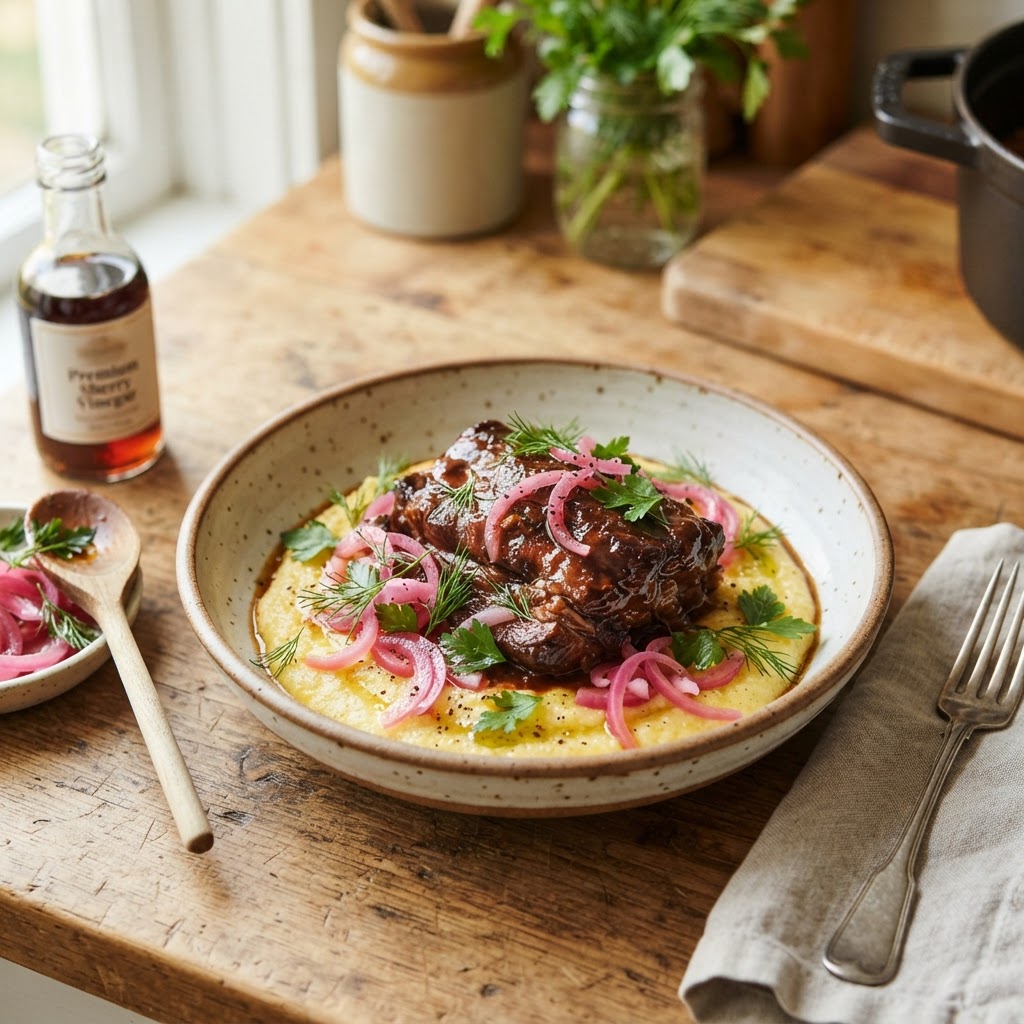
Quick reference
- Pickles: Crunch and contrast Serve with rich meats or sandwiches
- Dressings: Brighten greens and grains Start with 3 parts oil to 1 part vinegar
- Sauces: Cut richness Add gradually after tasting
- Braises: Lift deep flavors Use a small splash near the end
- Finishing splash: Immediate brightness Apply just before serving
Why the flavor works
Vinegar-forward cooking is showing up everywhere because a small amount of acidity can make rich, salty, sweet, or slow-cooked food taste more balanced. It does not simply make a dish sour. Used carefully, vinegar sharpens savory flavors, keeps creamy textures from feeling heavy, and gives roasted or braised foods a cleaner finish. The appeal is practical: one inexpensive ingredient can change the character of a familiar meal in seconds.
Pickles bring contrast
Pickled onions, cucumbers, cabbage, and chilies add both acidity and texture. Their crisp bite is especially useful alongside fried chicken, pulled pork, burgers, creamy beans, or grilled cheese. For a quick pickle, cover thinly sliced vegetables with a mixture of vinegar, water, salt, and a little sugar, then rest until softened and bright. The exact waiting time depends on slice thickness; thin onions can be ready quickly, while larger pieces need longer.
- Use rice vinegar for a softer, lightly sweet profile.
- Use cider vinegar with pork, beans, and fall vegetables.
- Drain well before adding pickles to sandwiches or salads.
Dressings and sauces need restraint
A dressing is the easiest place to practice acidic flavor balance. Start with roughly three parts oil to one part vinegar, then adjust with salt, mustard, herbs, or a touch of sweetness. For pan sauces, stir vinegar into the reduced juices after the main cooking is complete; a small splash often does more than a large pour. Taste after each addition because vinegar becomes more pronounced as a sauce reduces.
Braises benefit from a late lift
Long-cooked dishes develop deep, rounded flavors, but they can also taste dense. A teaspoon or two of red wine vinegar, sherry vinegar, or cider vinegar stirred in near the end can separate the flavors and make the dish seem less heavy. Add it after the meat and vegetables are tender, simmer briefly, and taste before adding more. This approach works with lentils, mushrooms, pot roast, tomato sauces, and braised greens.
Finishing splashes make food feel fresh
A final splash is useful when a dish tastes flat despite having enough salt. Try lemony white wine vinegar on roasted vegetables, malt vinegar with potatoes, sherry vinegar on lentils, or balsamic vinegar on grilled mushrooms. Add it off the heat or directly at the table so its aroma stays noticeable. For a reliable method, consult a practical vinegar guide covering types, substitutions, and when to add each one.
- Taste the food first; acidity should support, not dominate.
- Add a few drops, stir, and wait before deciding.
- Pair strong vinegars with bold foods and delicate vinegars with mild ones.