Why Slow Cooker Meat Turns Tough
Slow cooker meat turns tough when the cut, liquid, heat, or timing is wrong. Match connective-tissue cuts with enough low cooking time, then rest and slice properly.
Quick reference
- Meat problem: Likely cause Best correction
- Chewy roast: Undercooked connective tissue Cook longer on low
- Dry, shredding meat: Overcooked lean cut Use less time or a fattier cut
- Firm outer edges: Too little liquid or uneven size Add measured liquid; cut evenly
- Stringy slices: Sliced with the grain Cut across the fibers
The two kinds of tough meat
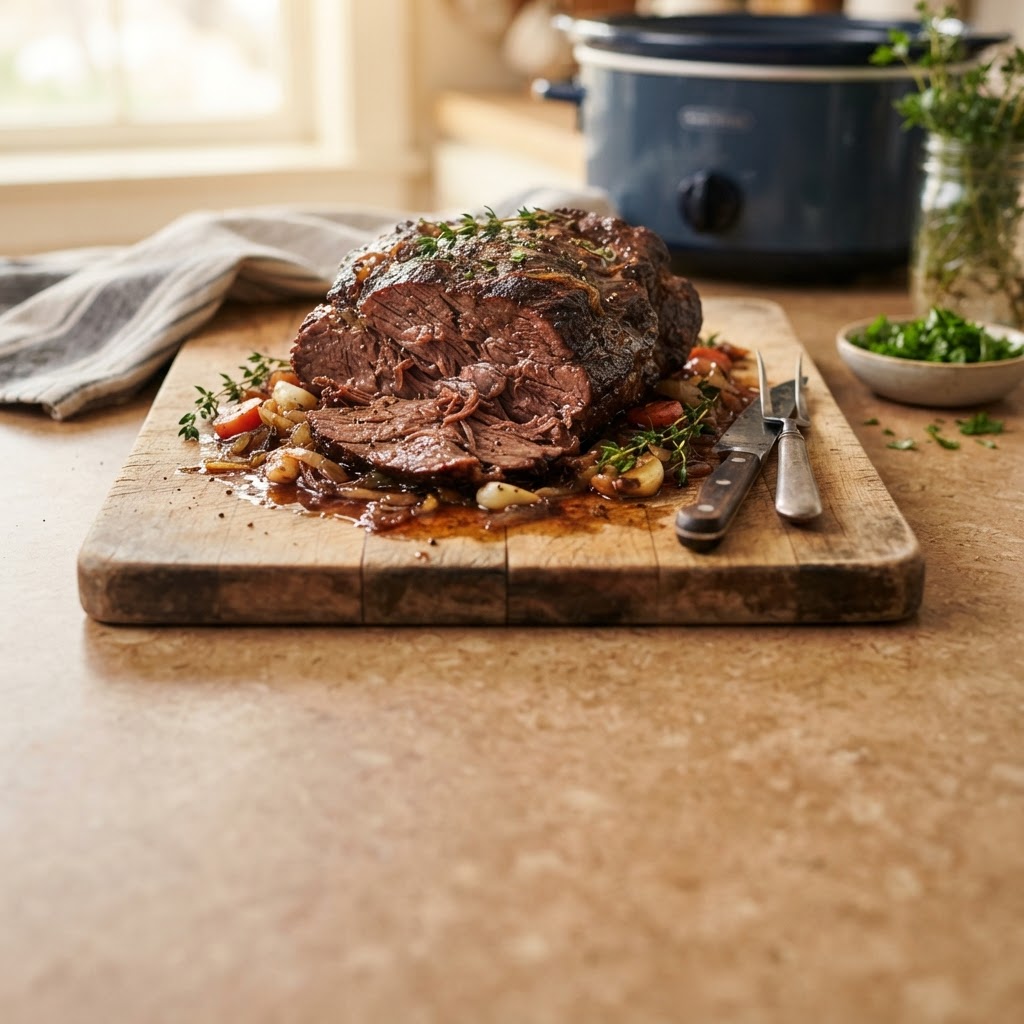
When slow cooker meat is tough, first decide whether it is undercooked or overcooked. A chuck roast, brisket, pork shoulder, or beef short rib can stay chewy for hours because its connective tissue has not softened yet. Keep cooking these cuts gently until they yield to a fork. Lean meat such as chicken breast, pork loin, or eye of round behaves differently: too much time can leave it dry, tight, and crumbly. More cooking will not fix overcooked lean meat.
Choose a cut built for slow cooking
Slow cooking works best with cuts that contain connective tissue, some fat, and enough thickness to stay moist. Beef chuck, pork shoulder, lamb shoulder, chicken thighs, and meaty legs are dependable choices. Save very lean steaks, tenderloin, chicken breast, and thin chops for faster methods unless the recipe gives a carefully limited cooking time. Size matters too: similarly sized pieces cook more evenly than a mixture of thin and thick portions.
- Best for long cooking: chuck, brisket, shoulder, shanks
- Better for shorter cooking: loin, breast, tenderloin
- Trim excess surface fat, but do not remove every bit of marbling
Use liquid, but do not drown the meat
A slow cooker needs less added liquid than a covered pot because evaporation is limited. Add enough stock, wine, tomatoes, or sauce to create a moist cooking environment, usually following the recipe rather than covering the meat completely. Too little liquid can dry exposed surfaces and concentrate the sauce; too much can dilute flavor and make the dish seem boiled. Keep the lid closed as much as possible, since repeated peeking releases heat and extends the cooking time.
Low-and-slow timing is about tenderness
For connective-tissue cuts, low heat and a generous cooking window usually produce the best texture. A roast may need roughly 7–10 hours on low, while smaller pieces can finish sooner; appliance strength, cut thickness, starting temperature, and how full the cooker is all matter. Use the recipe’s timing as a guide, then test the thickest piece with a fork. If it is safe to eat but still resists, it likely needs more time—not higher heat. Lean cuts need a shorter, more controlled schedule.
Rest, then slice across the grain
Let cooked meat rest for about 10–20 minutes before cutting, especially a large roast. Resting makes handling easier and helps retain juices. For sliceable beef, pork, or lamb, identify the long muscle fibers and cut across them rather than parallel to them; short fibers feel more tender. If a connective-tissue roast is fully tender, pull or slice it while warm. If it is dry despite being tender, serve it with some of the cooking liquid rather than continuing to cook it.
Quick checks before serving
Texture is the final test, but temperature still matters. Poultry should reach 165°F (74°C); ground beef, pork, lamb, or veal should reach 160°F (71°C). Whole beef, pork, lamb, and veal should reach 145°F (63°C) and rest for 3 minutes. Refrigerate leftovers within 2 hours, or within 1 hour when the temperature is above 90°F (32°C), and use most cooked leftovers within 3–4 days.