Why Sheet-Pan Potatoes Are Not Crispy
Sheet pan potatoes not crispy? Fix sogginess by drying and parboiling potatoes, using enough oil, a hot oven, and space between pieces.
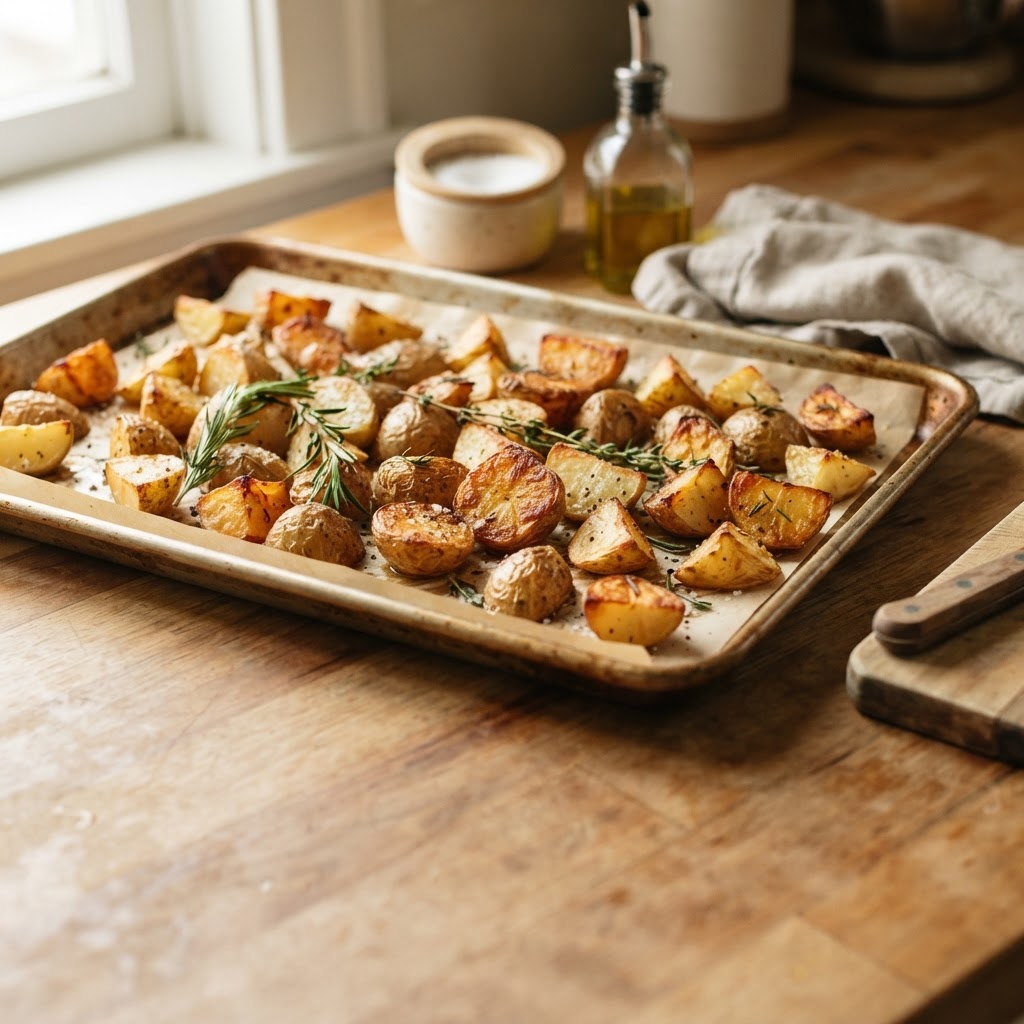
Quick reference
- Problem: Quick fix What to change
- Crowded pan: Leave gaps Use two pans if needed
- Wet potatoes: Dry thoroughly Steam is the enemy of browning
- Low heat: 425–450°F Check oven calibration
- Cold pan: Preheat it Add potatoes carefully
The short answer
When sheet pan potatoes are not crispy, the usual cause is excess moisture or insufficient heat. Potatoes need a dry surface, enough oil to coat the edges, and room for hot air to circulate. A crowded pan makes them steam; a cold pan slows browning; and an oven below 425°F may leave the centers tender before the exteriors turn crisp. Fix those conditions before changing the recipe.
1. Give the potatoes space
Spread the pieces in one layer with a little room between them. If they touch, moisture collects and the potatoes soften instead of browning. This matters especially with a small oven, where a full sheet pan can block airflow and lose heat when the door opens. Use two pans, cook in batches, or reduce the amount rather than piling everything onto one tray.
- Keep cut sides facing down where possible.
- Do not overlap pieces.
- Rotate pans if your oven browns unevenly.
2. Dry them—and build rough edges
Wet potatoes are one of the most common reasons roasted potatoes stay pale and soft. After rinsing or soaking, drain them well and pat them dry with a clean towel. For a crisper crust, parboil the pieces until the outside is just tender, drain, then shake them gently in the pot. The softened surface develops rough edges that catch oil and brown well in the oven.
- Avoid sending visibly wet potatoes to the pan.
- Do not overboil; the pieces should hold their shape.
- Let parboiled potatoes steam-dry briefly before oiling.
3. Use a hot oven, hot pan, and enough oil
Roast at 425–450°F, adjusting for your oven and the size of the pieces. A cold pan can delay browning, so preheat a sturdy sheet pan while the oven heats, then add the oiled potatoes carefully. Use enough oil to lightly coat every piece; too little leaves dry, pale patches, while excessive oil can make the exterior greasy. Dark metal usually browns more quickly than a pale or insulated pan.
- Coat potatoes evenly rather than drizzling oil in one spot.
- Avoid lining the pan if maximum browning is the priority, or use parchment if sticking is a concern.
- Leave room around the pan for air circulation.
4. Turn once and finish with patience
Place potatoes cut-side down when possible and roast without disturbing them until the underside is browned. Turn once, then continue roasting until crisp and tender. Frequent turning can prevent a good crust from forming. Timing varies with potato variety, piece thickness, pan material, and oven performance, so use color and tenderness as your guide rather than relying on a fixed minute count.
- Wait for a browned underside before turning.
- Cut pieces to a similar size.
- Serve soon after roasting; trapped steam softens the crust.
A reliable troubleshooting routine
For consistently crispy roasted potatoes, cut evenly, parboil if you have time, drain and roughen the surfaces, then dry them thoroughly. Toss with enough oil and seasonings, preheat the pan, and roast at 425–450°F in a single uncrowded layer. If the potatoes still soften, the likely culprit is moisture, an overloaded small oven, or an oven running cooler than its setting. Test the oven temperature if the problem repeats.