Why Roasted Vegetables Turn Watery Instead of Brown
Watery roasted vegetables usually come from excess surface moisture, crowding, low heat, or early salting. Fix the setup for crisp, browned edges.
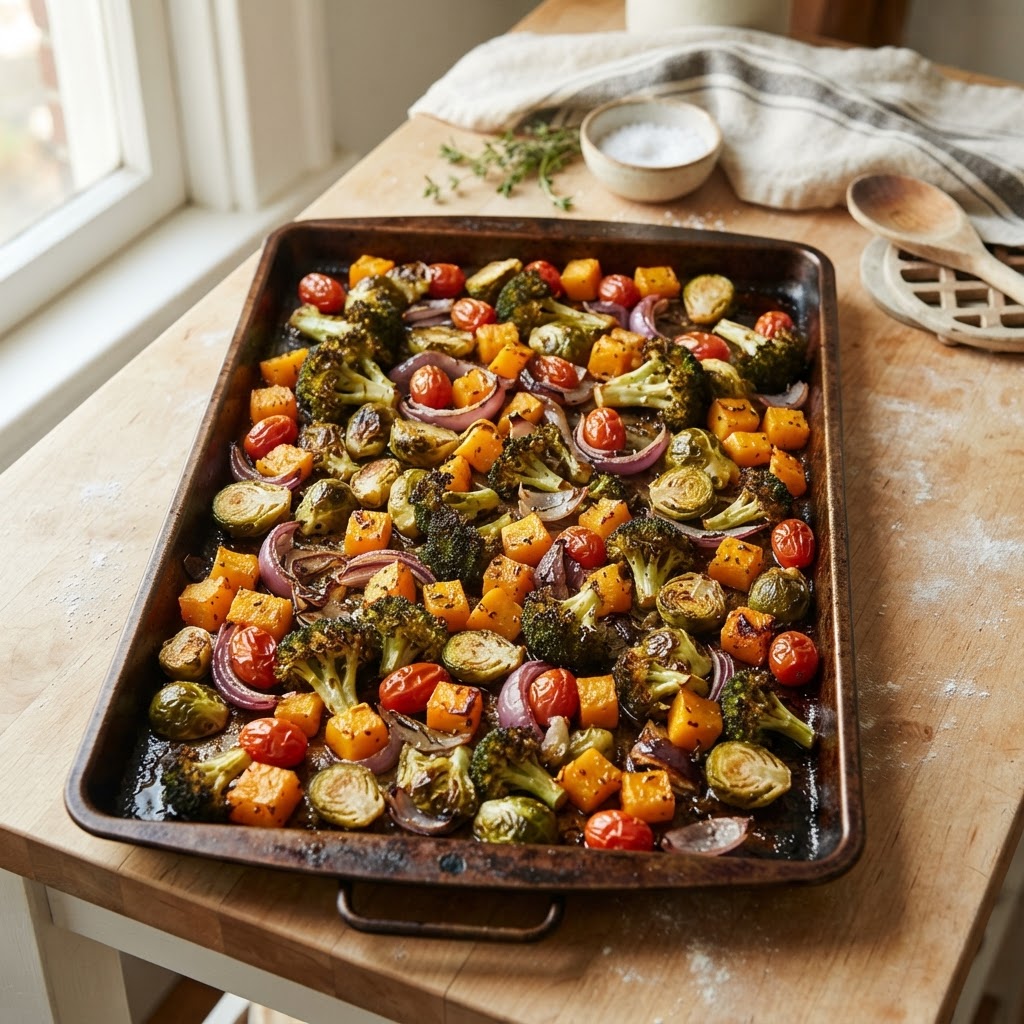
Quick reference
- Problem: Likely cause Best fix
- Wet surfaces: Rinsing or condensation Dry thoroughly
- Pale, soft pieces: Crowded pan Leave space
- Frozen vegetables: Ice and released water Roast hot, in a single layer
- Weak browning: Low oven heat or poor pan Preheat fully; use metal
The short answer: moisture is winning
Roasted vegetables brown only after their surface moisture evaporates. If the pieces arrive wet, sit too close together, or release more liquid than the oven can drive off, they steam in their own moisture instead of developing browned edges. The result is soft, pale vegetables—even when the oven is set to a roasting temperature. Start with dry surfaces, enough space, and a fully heated oven.
Dry the vegetables before seasoning
Rinsed vegetables should be dried thoroughly with towels, especially dense pieces such as cauliflower, broccoli, mushrooms, and zucchini. Water left on the surface delays browning. Cut pieces to a similar size so thin edges do not overcook while thick centers remain wet. For especially juicy vegetables, a brief towel-drying pause after cutting can make a noticeable difference.
- Drain washed vegetables well.
- Pat off visible water and condensation.
- Use a moderate coating of oil; excess oil does not replace dry surfaces.
Give each piece room
Crowding is one of the most common reasons roasted vegetables turn watery. When pieces touch or overlap, steam becomes trapped and the pan temperature drops as the vegetables release liquid. Spread them in one uncrowded layer with small gaps between pieces. Use two pans rather than piling everything onto one. Turn or stir only when needed; opening the oven repeatedly also slows cooking.
- Choose a larger sheet pan before adding more oil.
- Keep high-moisture vegetables away from dense piles.
- Avoid lining the pan with a deep, absorbent layer of vegetables.
Check salt timing and oven heat
Salt draws moisture toward the surface, so salting far ahead can make tender or juicy vegetables wetter by the time they roast. For reliable browning, season shortly before the pan goes into the oven, or salt after roasting if the ingredient is particularly water-rich. Preheat completely and verify that the oven is actually hot; a weak or crowded oven encourages softening. Roast until the surfaces are dry and browned, not merely until the centers are tender.
- Preheat the oven and pan when the recipe allows.
- Use a hot oven suited to the vegetable and piece size.
- Add delicate finishing ingredients after browning.
Frozen vegetables need a different setup
Frozen vegetables carry ice and often release extra water as they thaw. Do not let them sit in a bowl until they become limp and wet. Roast them straight from frozen, in a single layer, on a spacious metal pan. They may need more time than fresh vegetables, and smaller batches brown better. If the pan fills with liquid, transfer the vegetables to a clean hot pan so they can continue roasting instead of simmering.
- Do not thaw frozen vegetables on the counter.
- Expect less browning from heavily glazed or sauced frozen mixes.
- Add sauce only after excess moisture has cooked away.
Choose a pan that encourages browning
A broad, sturdy metal sheet pan transfers heat efficiently and gives moisture room to escape. Deep baking dishes, small pans, and glass vessels can hold steam around the vegetables, especially when the load is large. Dark metal may brown food faster than shiny metal, so adjust as needed for your oven. If vegetables are browned underneath but pale on top, turn them once; if they are pale everywhere, improve drying, spacing, or heat first.