Why Pumpkin Bread Turns Gummy
Find out why pumpkin bread turns gummy and how puree, flour, mixing, baking, cooling, and pan size affect the loaf’s texture.
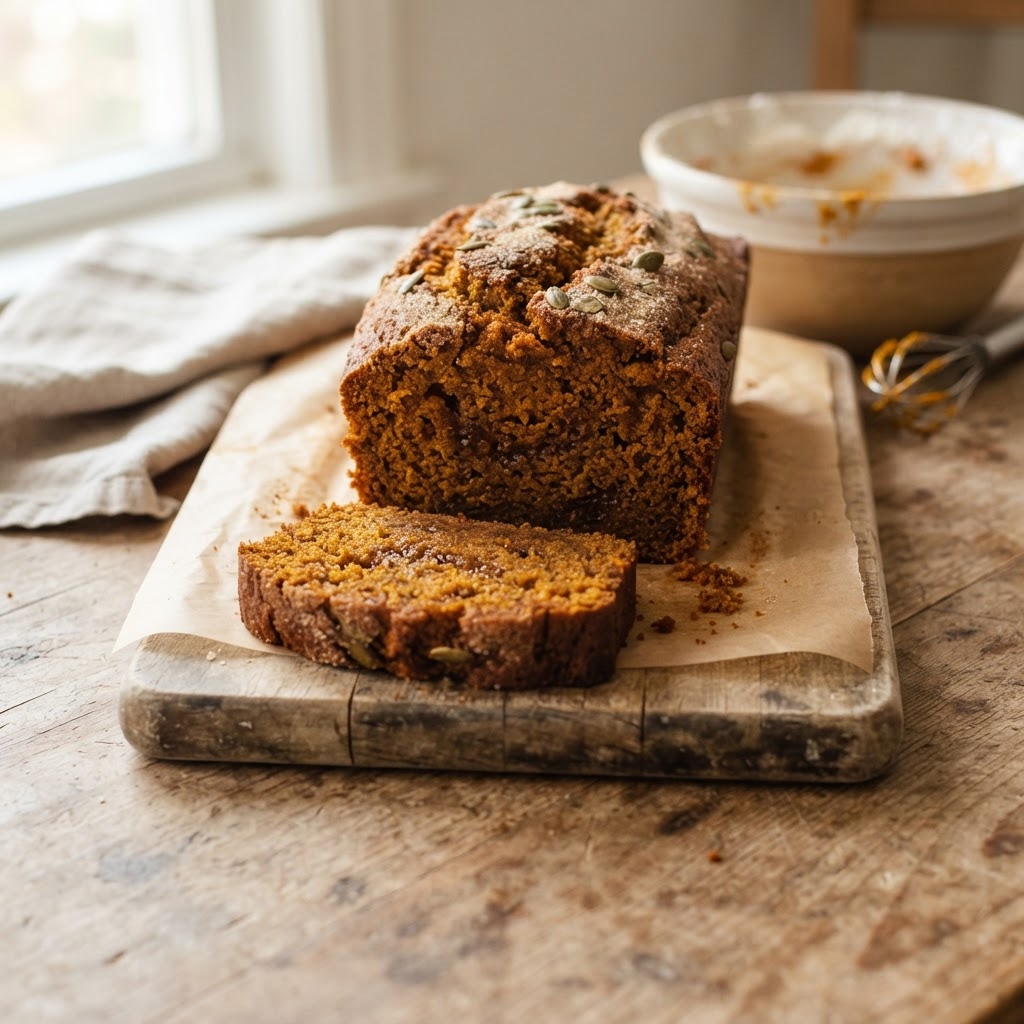
Quick reference
- Too much puree: Wet, dense center Measure accurately; don’t add extra
- Underbaking: Sticky middle Use the toothpick cue
- Overmixing: Tight, heavy crumb Stir only until combined
- Hot slicing: Compressed, gummy slices Cool fully first
- Wrong pan size: Uneven baking Match the recipe’s loaf pan
Why pumpkin bread turns gummy
A pumpkin bread gummy center usually means the loaf contains more moisture than its structure can set, or it was cut before the crumb finished firming. The most common causes are too much pumpkin puree, inaccurate flour, underbaking, overmixing, and slicing while hot. Pan size also matters: a smaller or narrower pan makes the batter deeper and may require more baking time.
Measure the wet and dry ingredients carefully
Pumpkin puree varies in thickness, and an overfilled cup can add enough moisture to make a loaf dense. Use the amount specified rather than adding extra puree for flavor. For flour, spoon it into a dry measuring cup and level it, or weigh it if the recipe gives a weight. Scooping directly from the bag can either compress the flour or produce an inconsistent amount, changing the batter’s balance.
- Use plain pumpkin puree, not pumpkin pie filling.
- Drain unusually watery puree briefly if the recipe allows.
- Do not reduce the flour to make the batter seem easier to stir.
Mix gently, then bake until the center is set
Overmixing develops a tighter crumb and can make pumpkin bread feel heavy or gummy. Stir the wet and dry mixtures together only until no broad streaks of flour remain; a few small lumps are acceptable. Underbaking is another leading cause. The outside may look finished while the center remains wet, especially in a deep pan. Insert a toothpick into the center, avoiding a pocket of pumpkin or chocolate: it should come out clean or with a few moist crumbs, not streaks of wet batter.
Loaf-pan size changes the result
Use the pan size called for in the recipe. A smaller pan creates a taller loaf that needs longer to bake, while a larger pan makes a shallower loaf that may finish sooner. If you change pans, begin checking at a different point rather than copying the original bake time. Keep the pan no more than about two-thirds full when possible, and allow extra time for a deeper loaf while watching the top for overbrowning.
Cool fully before slicing
Freshly baked pumpkin bread continues to set as it cools. Cutting into it while hot releases steam, compresses the tender crumb, and can make an otherwise properly baked loaf seem gummy. Let the loaf cool in the pan briefly, then transfer it to a rack and wait until it is fully cool before slicing. If the center is still wet after cooling, return the loaf to the oven and bake it gently until the toothpick test improves.