Why Pizza Crust Gets Soggy in the Middle
A wet pizza center usually comes from excess sauce, watery toppings, thick dough, or an underheated oven and baking surface. Fix each at home.
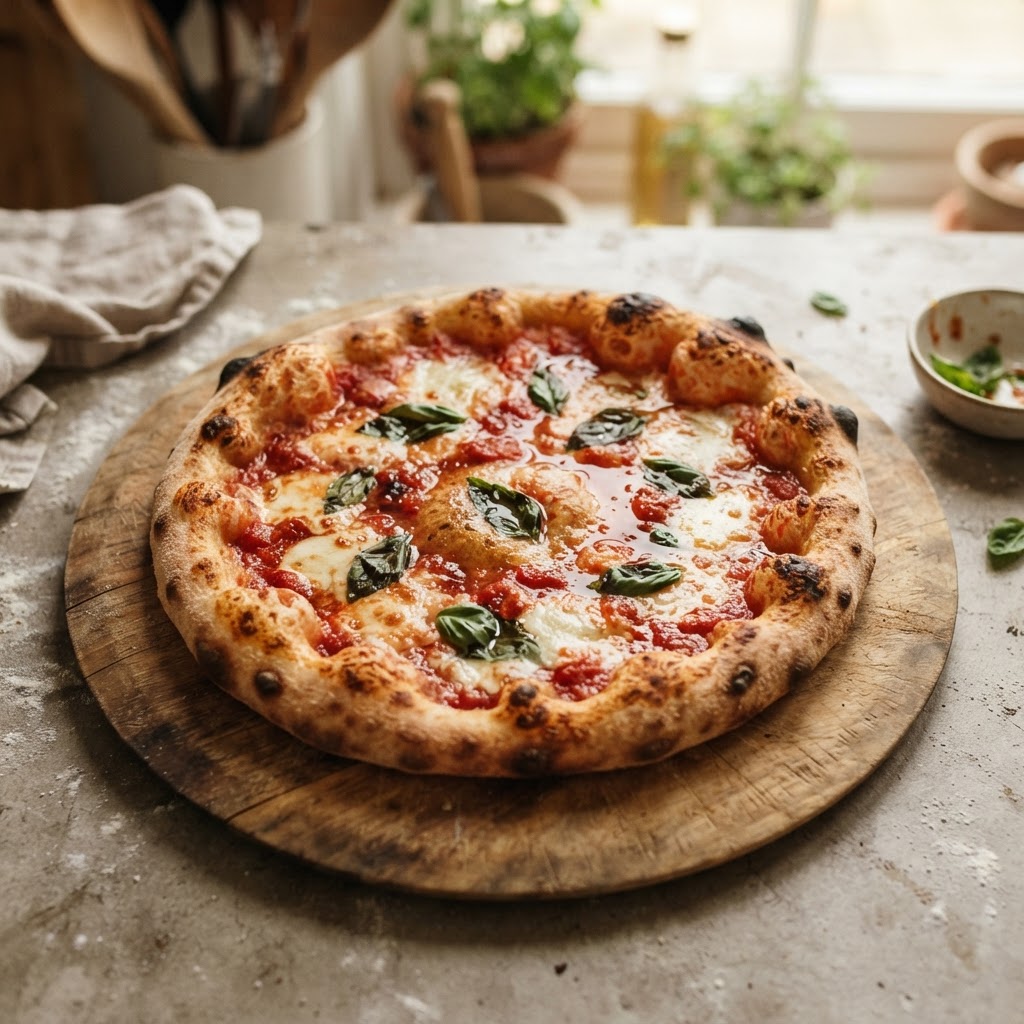
Quick reference
- Likely cause: What to do Main fix
- Too much sauce: Use a thin layer Leave a small border
- Watery toppings: Drain or pre-cook Add them sparingly
- Cool baking surface: Preheat thoroughly Use steel, stone, or tray
- Thick dough: Stretch thinner Especially at the center
The short answer
A pizza can brown at the rim while staying wet in the middle because the center receives moisture faster than heat can drive it off. The usual combination is too much sauce, juicy toppings, thick dough, and a baking surface that is not fully hot. Build a lighter pizza and bake it on a thoroughly preheated surface; those two changes solve most cases of a soggy pizza crust.
Control the sauce and dough
Spread sauce thinly and evenly, stopping just short of the edge. A heavy layer adds water and cools the center. If your dough is thick in the middle, it will also need longer to cook through. Stretch or roll it to an even thickness, checking for a thicker patch before topping. For a very saucy pizza, use a smaller amount than you would on a flatbread, or briefly reduce a loose sauce in a pan first.
- Use enough sauce to coat, not pool.
- Avoid pressing toppings into the dough.
- Leave the center thinner than the rim, but not paper-thin.
Manage watery toppings
Fresh mozzarella is a common culprit, especially when it releases liquid during baking. Tear it into small pieces, drain it well, and pat it dry before using. Tomatoes, mushrooms, zucchini, spinach, and other high-moisture ingredients can have the same effect. Slice them thinly and use modest amounts. Pre-cook mushrooms, zucchini, spinach, or other especially wet toppings until their excess moisture cooks away, then cool them before topping the pizza.
- Drain fresh mozzarella for several minutes; pat it dry.
- Pre-cook mushrooms and zucchini when they look unusually juicy.
- Add delicate greens near the end or after baking when suitable.
Heat the oven and surface
A fully heated oven matters as much as the oven’s stated temperature. Place a pizza steel, stone, or heavy baking sheet inside while the oven preheats, then give it additional time to heat through; the exact time varies by oven and surface. Transfer the pizza quickly so the base contacts the hot surface immediately. If the top browns before the center firms, lower the rack or adjust the oven setting according to your appliance rather than simply adding more toppings.
- Preheat the oven and baking surface completely.
- Use parchment only if needed; it can slow browning slightly.
- Bake one pizza at a time when crowded racks reduce heat.
A reliable correction for the next pizza
Start with an evenly stretched crust, a light sauce layer, well-drained cheese, and fewer wet toppings. Bake until the underside is browned and the center no longer looks glossy or soft. If the rim is done first, try a thinner center, less topping moisture, or a hotter preheated surface. For recipes using a thick flatbread base, par-bake the plain dough briefly before adding wet toppings. This gives the base a head start without drying the finished pizza.
Quick troubleshooting checklist
When asking why pizza crust gets soggy in the middle, inspect the pizza in this order: surface heat, dough thickness, sauce quantity, then topping moisture. Changing one factor at a time makes the cause easier to identify. A crisp edge alone does not prove the pizza is fully baked; check the center and underside before slicing.
- Wet center and pale underside: heat the surface longer.
- Firm underside but wet top: reduce sauce or toppings.
- Glossy center with thick dough: stretch thinner or par-bake.