What Happens If You Overmix Pancake Batter?
Overmixed pancake batter can turn pancakes tougher and less tender. See the right mixing texture and how to adjust batter that is too thick or thin.
Quick reference
- Mixing cue: Stop at dry streaks disappearing A few lumps are fine
- Rest: 5–10 minutes Helps flour hydrate
- Too thick: Add milk gradually Use 1 tablespoon at a time
- Too thin: Add flour gradually Use 1 tablespoon at a time
Why overmixing causes problems
Overmixed pancake batter develops more gluten, the network formed when flour meets liquid and agitation. That structure can make pancakes chewy, dense, or rubbery instead of tender. Mixing also knocks out some of the air created by leaveners and makes the batter less able to spread into a soft, even pancake. For light results, stir only as much as needed to combine the ingredients.
Lumps are okay
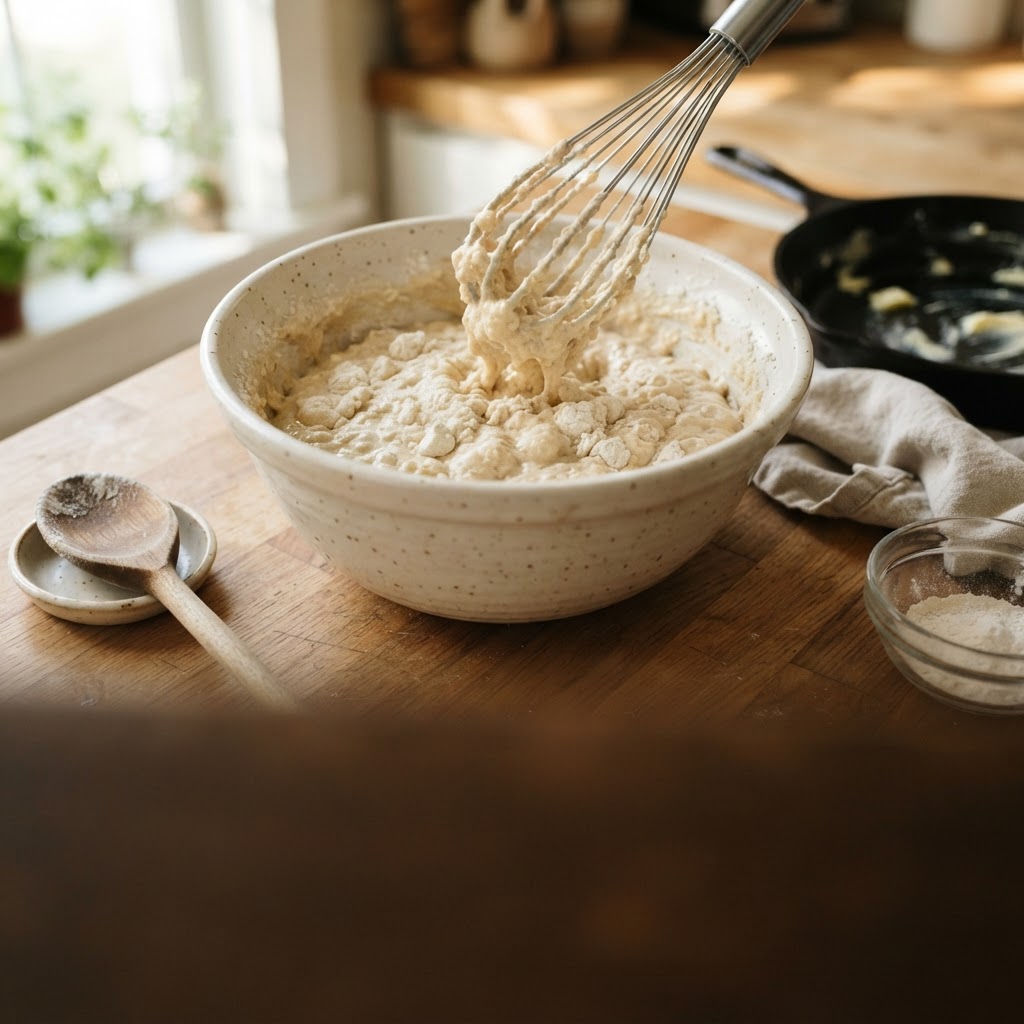
Do not chase a perfectly smooth batter. Small flour lumps usually disappear as the batter rests and cooks, while aggressive stirring can do more harm than good. Use a whisk or spatula with a light hand, scraping the bottom and sides of the bowl. Stop when the dry streaks disappear; a few visible lumps are a sign that you have avoided overworking the mixture.
- Fine: small, soft lumps
- Avoid: large pockets of dry flour
- Stop: when no dry streaks remain
Give the batter a short rest
Let the mixed batter rest for about 5 to 10 minutes before cooking. This gives the flour time to absorb liquid, so the consistency becomes easier to judge and the remaining small lumps soften. Stir once gently after resting, only if needed. If the batter thickens noticeably, adjust it before heating the pan rather than compensating with extra mixing.
How the right batter should look
Pancake batter should be thick enough to fall from a spoon in a slow ribbon, but loose enough to spread slightly when poured. The exact texture depends on the flour, liquid, pan, and pancake size. If batter sits in a mound without spreading, it is likely too thick. If it runs quickly across the pan, it may be too thin.
Fix batter that is too thick or thin
For thick batter, add milk or another recipe liquid one tablespoon at a time, folding gently after each addition. For thin batter, add flour one tablespoon at a time and stop as soon as the batter reaches a slow, pourable consistency. Let either adjustment rest briefly before judging again. Avoid correcting with a long stir, which can turn a simple fix into overmixed pancake batter.
- Too thick: add liquid gradually
- Too thin: add flour gradually
- After adjusting: rest briefly, then reassess
Mix with a light hand from the start
Combine dry and wet ingredients in one bowl only until incorporated. If you are adding melted butter, fruit, chocolate, or other extras, fold them in with a few broad strokes. Cook a test pancake first; it reveals the spread and thickness better than the bowl alone. If the test pancake is tender and evenly browned, keep the remaining batter mixing to a minimum.