Why Pan Sauces Taste Greasy—and How to Rebalance Them
Fix a greasy pan sauce by removing excess fat, reducing weak liquid, and finishing with acid or cold butter for a smooth, balanced result.
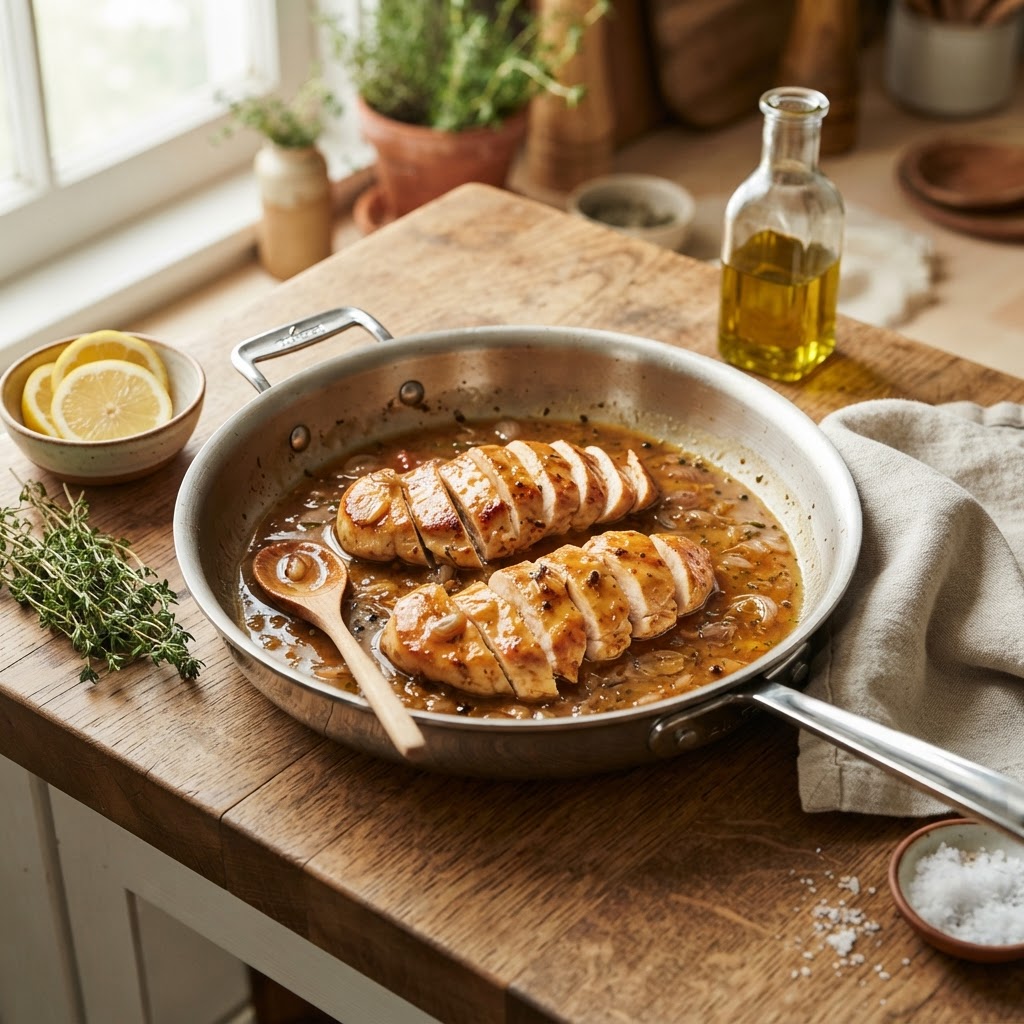
Quick reference
- What you see: Likely problem Best first move
- Oil pooling: Too much rendered fat Spoon off excess
- Thin, slick sauce: Weak reduction Simmer uncovered
- Sharp or heavy flavor: Poor balance Add liquid or acid
- Butter separating: Broken emulsion Whisk off heat
Start by removing excess fat
A pan sauce tastes greasy most often because the fond is sitting in more rendered fat than the sauce can absorb. After transferring the cooked meat, let the pan stand briefly, then spoon off most of the fat, leaving about 1 tablespoon to carry flavor. If the meat released a large amount, pour it into a heatproof container and return only a little to the pan. Do not scrape all the liquid away: the browned bits and meat juices are valuable.
Build flavor with a proper reduction
Deglaze the hot pan with wine, stock, cider, or another suitable liquid, scraping up the browned fond. If the liquid stays thin and oily, the sauce may simply need more concentration. Simmer uncovered until reduced enough to lightly coat a spoon; the timing depends on pan size, heat, and liquid volume. A weak reduction leaves fat floating on top instead of integrating into a concentrated sauce.
- Use moderate heat so the fond does not scorch.
- Reduce before adding cream or butter.
- Taste after each reduction stage.
Rebalance with liquid, acid, or both
When a sauce tastes heavy rather than merely oily, add a small splash of stock, water, wine, or citrus juice and simmer briefly. Acid cuts through richness, but add it gradually so the sauce does not become sharp. A teaspoon of lemon juice, vinegar, or wine can change the balance more effectively than adding more seasoning. Salt should be adjusted last, especially if the stock or pan juices are already concentrated.
- For a rich meat sauce: try stock plus a few drops of vinegar.
- For a cream sauce: use lemon juice sparingly.
- For a wine-based sauce: reduce a little longer before correcting.
Finish the emulsion gently
A smooth pan sauce is an emulsion: small droplets of fat dispersed through liquid. To encourage that texture, lower the heat or remove the pan from it before whisking in cold butter, one piece at a time. Keep the sauce moving, but stop once it looks glossy. Boiling can make the butter separate again. If oil begins pooling, whisk in a teaspoon of warm water or stock off heat; add only enough to bring the sauce together.
A quick rescue sequence
For a sauce that is already on the plate or still in the pan, skim visible oil first. Then warm the sauce gently, whisk in a tablespoon of water or stock, and taste. Add a few drops of acid if it remains flat or fatty. If the flavor is too diluted, reduce it briefly afterward. This order matters: reducing a sauce before removing excess fat can concentrate the greasy flavor rather than fix it.
- Skim.
- Loosen and whisk.
- Acid-adjust, then reduce if needed.
Prevent the problem next time
Trim excess surface fat from very fatty cuts, and check the pan before deglazing. Keep enough drippings to flavor the sauce, but not so much that the liquid becomes an oil bath. Build the sauce in stages—deglaze, reduce, season, then emulsify with butter or cream. QuickDinner’s pan-sauce technique works best when each stage is tasted before the next ingredient goes in.