Why Mashed Potatoes Turn Gluey—and How to Keep Them Fluffy
Gluey mashed potatoes usually come from the wrong variety, excess starch, or overworking. Choose fluffy potatoes and handle them gently for better results.
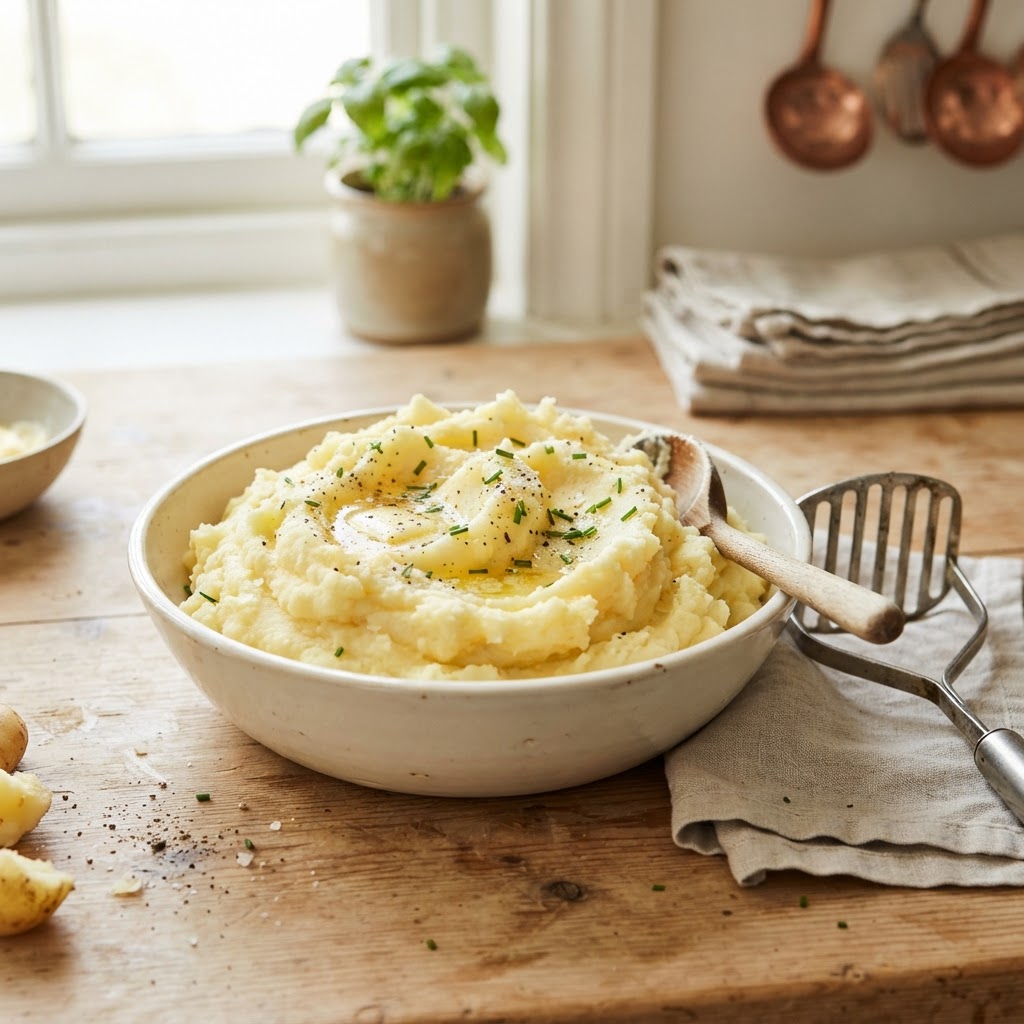
Quick reference
- Potato choice: Russet or Yukon Gold Use one or a blend
- Cooking method: Simmer until tender Avoid waterlogged potatoes
- Mashing tool: Ricer or food mill Gentle texture control
- Dairy temperature: Warm Blends in smoothly
Why mashed potatoes turn gluey
Sticky or gummy mashed potatoes usually result from too much starch being released and then overworked. Vigorous stirring activates the potatoes’ starch, turning a fluffy mash into a stretchy paste. Waterlogged potatoes can make the problem worse because they need more mixing to reach a creamy consistency. The fix is gentle handling from the moment the potatoes finish cooking.
Choose the right potato
Russets produce a light, fluffy mash because they are relatively starchy and dry. Yukon Golds have a naturally creamy texture and buttery flavor, though they make a denser mash. A blend gives you both lift and richness. Waxy potatoes, such as red or new potatoes, hold their shape well but can become pasty when heavily mashed.
- For fluffiest results: use mostly russets.
- For a creamy, slightly dense mash: use Yukon Golds.
- Avoid relying on waxy potatoes for a smooth mash.
Control moisture and starch
Cut potatoes into evenly sized pieces and simmer them in salted water until a knife slides through easily. Drain thoroughly, then return them to the warm pot for a minute or two so surface moisture can evaporate. Do not rinse cooked potatoes. Press them through a ricer or food mill while hot, or mash gently with a hand masher; skip the blender and food processor, which work the starch too aggressively.
Add butter before dairy
Melted butter should go in before milk, cream, or buttermilk. The fat coats the potato particles and helps the mash stay smooth as you fold in liquid. Warm the dairy separately so it does not cool the potatoes or encourage excessive mixing. Add it gradually, stopping as soon as the potatoes are soft and spoonable. Stir only enough to combine.
- Use warm, not boiling, dairy.
- Fold with a spatula or wooden spoon.
- Taste for salt after the texture is right.
A simple fluffy-potato method
Boil peeled, evenly cut potatoes until tender, drain well, and briefly dry them in the pot. Rice or gently mash them, then fold in butter. Add warm dairy a little at a time until the texture is creamy but still holds soft peaks. If you are serving later, use QuickDinner’s make-ahead mashed-potato guide for holding instructions, then follow the reheating mashed-potato guide to restore moisture without overmixing.
Can gluey mashed potatoes be fixed?
A fully gummy mash cannot become fluffy again, but you can improve it. Stop stirring, then fold in warm butter or cream in small amounts. If the texture remains heavy, turn it into a topping for a shepherd’s pie, spread it in a baking dish with cheese, or use it for potato cakes. For the next batch, reduce the liquid and handle the potatoes less.