Why Cookies Spread Too Much—or Not Enough
Cookies spread when butter, sugar, dough temperature, or oven heat is out of balance; use this troubleshooting guide to correct flat or thick batches.
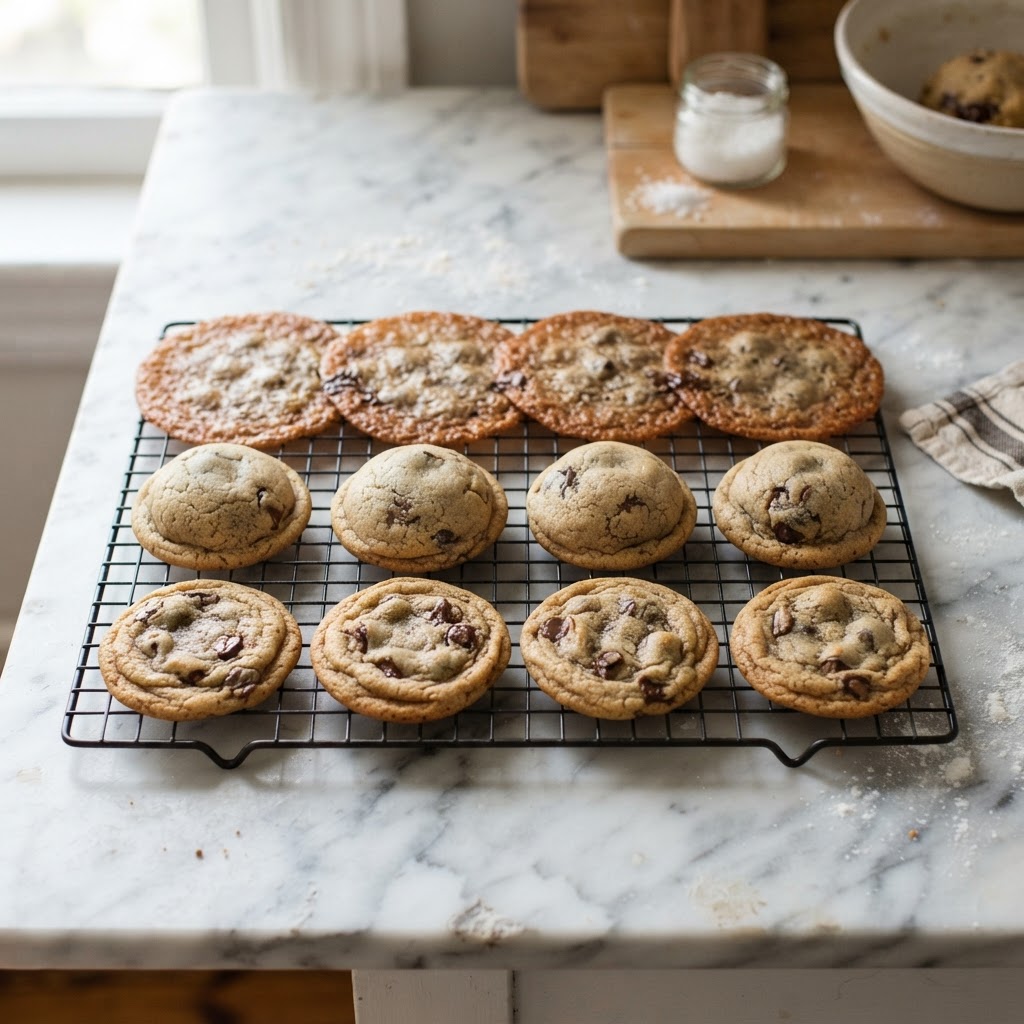
Quick reference
- Flat and greasy: Butter too warm; dough too hot Chill dough before baking
- Thick and dense: Too much flour; cool oven Measure flour by weight if possible
- Pale, wide cookies: Low oven heat or hot pan Verify oven and use a cool sheet
- Uneven spread: Mixed dough or crowded pan Portion evenly; leave space
Start with the butter
Butter temperature controls how quickly dough loosens in the oven. Soft butter should yield when pressed but still look cool, not shiny, oily, or partly melted. Melted butter usually produces wider, flatter cookies unless the recipe is designed for it. Butter that is too firm may not blend properly with the sugar, leaving a dense dough. If the dough feels greasy or soft after mixing, chill it until scoopable before baking.
Check flour and sugar
Too little flour leaves cookies unable to hold their shape, while too much makes them thick, dry, or dense. Spoon flour into a dry measuring cup and level it, or use the recipe’s weight if provided; scooping directly from the bag can pack in excess flour. Sugar also affects spread: more white sugar generally encourages a crisper, wider cookie, while brown sugar adds moisture and chew. Change one ingredient at a time when troubleshooting.
Leavening changes height
Baking soda often encourages browning and spread, while baking powder tends to provide more lift. An incorrect amount—or an old, weakened leavener—can leave cookies unusually flat or puffy. Use the specified leavener rather than substituting casually, and check that it is still active. Dense cookies can also result from overmixing after flour is added, which develops a tighter dough. Mix only until no dry streaks remain.
Dough and pan temperature matter
Warm dough spreads before its structure sets. This is especially common in a hot kitchen or after several trays sit on the counter. Chill soft dough briefly, then bake a test cookie. Always place dough on a cool, ungreased sheet unless the recipe says otherwise; a warm pan starts melting the butter immediately and can cause excessive spread. For thick cookies that barely spread, let refrigerated dough soften slightly and flatten tall scoops.
Audit the oven
An oven that runs cool allows butter to melt before the cookie sets, producing pale, wide results. Excessive heat can set the edges quickly and leave the centers thick, dry, or under-spread. Preheat fully and check the oven with a thermometer if batches repeatedly behave differently from the recipe. Bake one test portion first, use the recommended rack, and avoid opening the door repeatedly. Baking time varies with dough size, sheet color, and oven type.
A practical test-batch fix
Bake one cookie before committing the whole batch. If it spreads too far, chill the dough and confirm the flour measurement; if it stays domed, flatten the next portion slightly and check whether too much flour or an overly cool oven is responsible. Keep notes on butter texture, dough temperature, pan temperature, and rack position. Once one test cookie has the right edge, center, and spread, repeat those conditions for the remaining dough.