Why Chicken Breast Turns Rubbery—and How to Prevent It
Chicken breast turns rubbery mainly from overcooking, uneven thickness, and excessive heat. Use even pieces, moderate heat, and a thermometer.
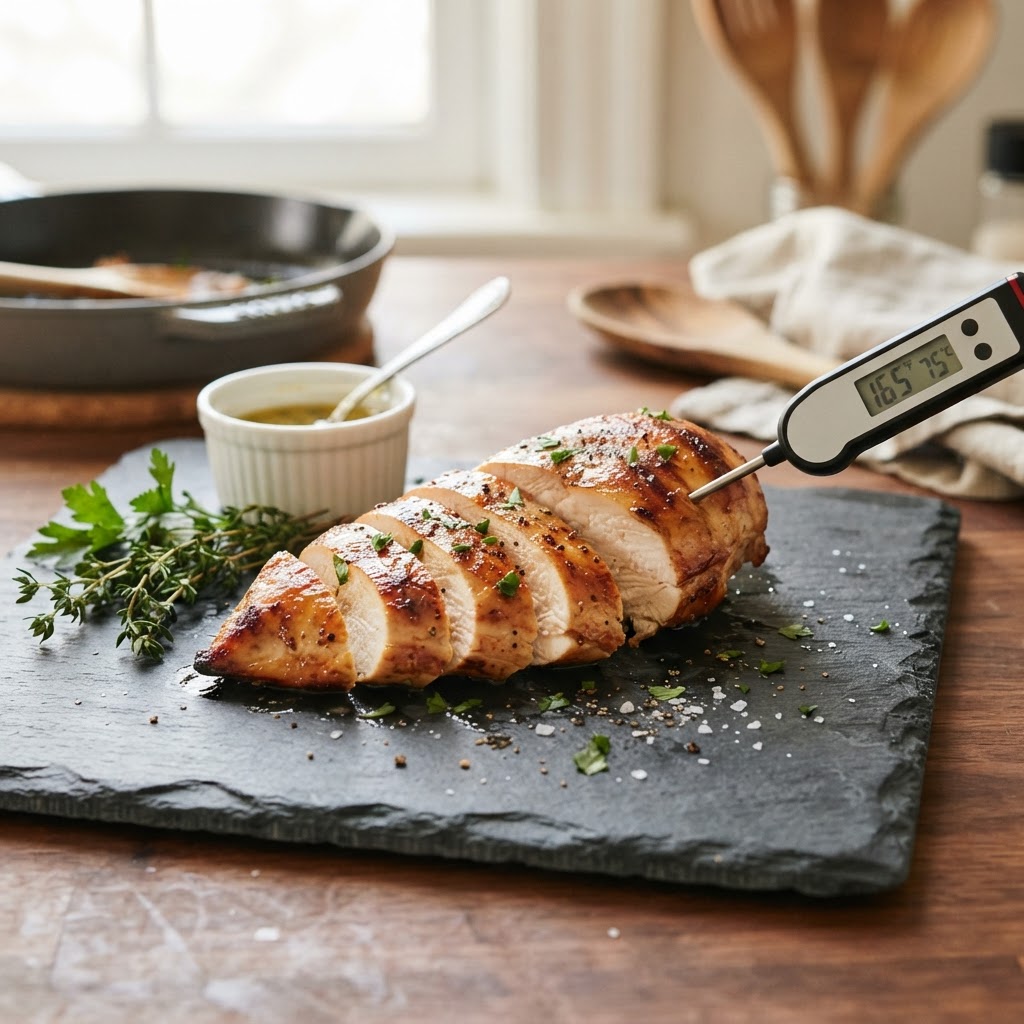
Quick reference
- Problem: Common cause Better move
- Rubbery texture: Overcooking Check temperature early
- Dry center, dark edges: Uneven thickness Pound pieces evenly
- Burned outside: Heat too high Use moderate heat
- Perfect off heat, dry later: Carryover cooking Rest briefly, then slice
The main reason: it stayed on the heat too long
Chicken breast becomes tough or rubbery when its lean muscle proteins tighten from excess heat. The longer the thickest part remains hot, the more moisture is pushed out. A thermometer is more reliable than color or cooking time: poultry is safe at 165°F / 74°C in the thickest part. Remove the pan from heat when the chicken is nearly there, allowing a short rest for the temperature to finish rising.
Uneven thickness creates uneven cooking
A whole breast is often thick in the middle and thin at the tapered end. By the time the center cooks through, the thinner section may already be dry and chewy. Flatten pieces to a more even thickness before cooking, or separate thick and thin portions so each can finish at the right time. This simple step improves both texture and timing.
- Aim for pieces with a consistent thickness.
- Check the thickest section, not the edge.
- Turn thinner pieces sooner if needed.
Very high heat can scorch the outside
High heat browns chicken quickly but leaves little margin for error. The surface may darken before the center is ready, encouraging you to keep cooking until the outside is overdone. Use enough heat to develop color without scorching, then lower it if the breast is browning faster than it is cooking through. Pan size, burner strength, and piece thickness all affect the result.
Account for carryover cooking
Chicken continues cooking for a few minutes after it leaves the pan, especially when the pieces are thick or crowded together. That rise can turn a just-cooked breast into an overcooked one. Check the temperature near the end, remove the chicken from direct heat when appropriate, and let it rest briefly. Resting also helps the juices redistribute instead of running out immediately when cut.
Slice at the right time and direction
Cutting immediately can release hot juices, while slicing with the muscle grain can make a properly cooked breast seem chewier. Give the chicken a short rest, then cut across the grain into deliberate slices. For a complete pan-searing approach, use QuickDinner’s existing [juicy pan-seared chicken guide](#) rather than treating the troubleshooting steps here as a separate recipe.
- Rest briefly before slicing.
- Use a sharp knife.
- Cut across the visible grain.
A quick prevention checklist
When chicken breast turns rubbery, review the sequence: was the piece evenly thick, was the pan excessively hot, and did the center spend too long above its target temperature? Correct those variables first. A thermometer, moderate heat, and a short rest usually do more for tenderness than adding extra oil or extending the cooking time.