Why Cakes Sink in the Middle
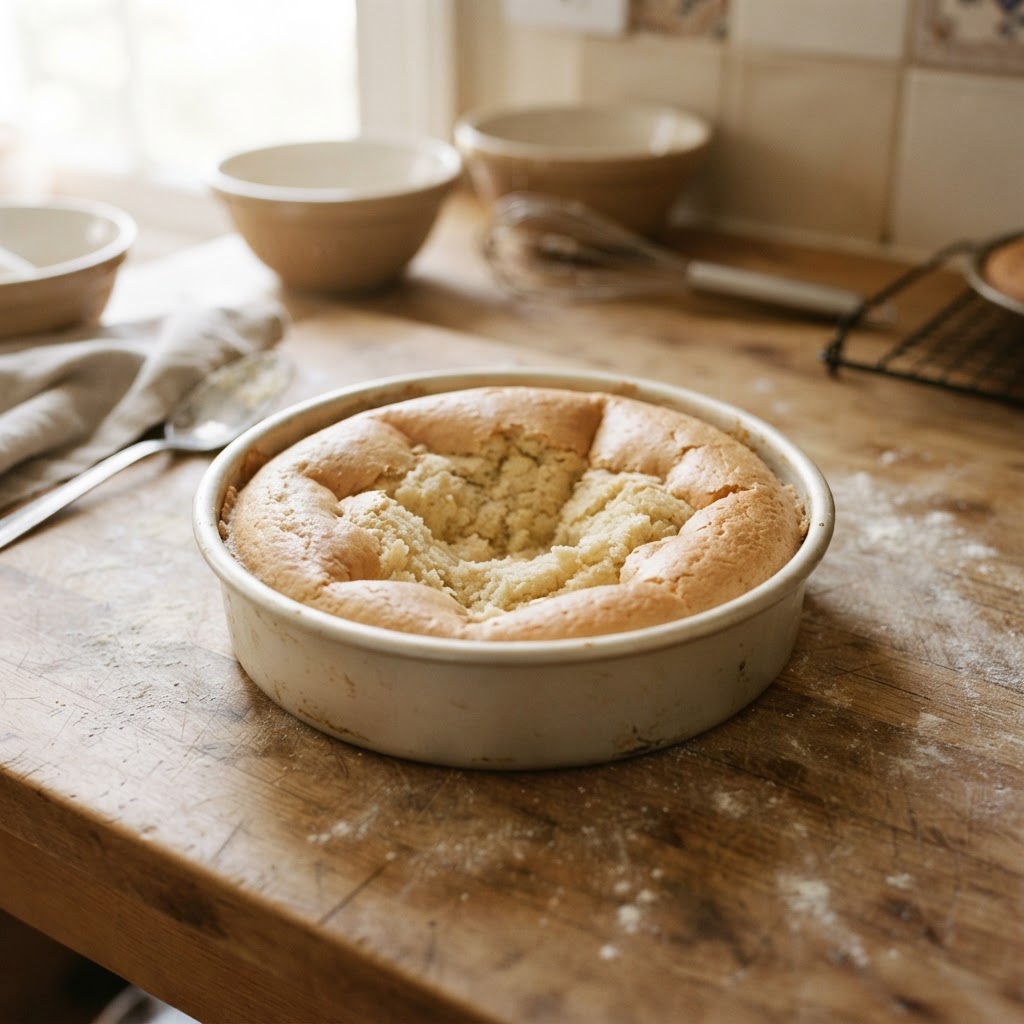
A cake that rises then collapses is usually underbaked, over-leavened, overmixed, or affected by oven heat, excess liquid, or pan size.
Quick reference
- Symptom: Likely cause What to check
- Wet center: Underbaking Test the thickest area
- Tall rise, sharp collapse: Too much leavener Measure carefully
- Dense, chewy middle: Overmixing Mix only to combine
- Edges done, center low: Wrong pan or uneven heat Check size and oven
Start with the symptom
A cake rises because trapped air and expanding leaveners lift the batter, then sinks when the center has not set strongly enough to hold that height. The most useful clue is what the middle looks and feels like: wet suggests underbaking or excess liquid; a dense, rubbery crumb points to mixing; a broad dip with firm edges often signals pan size or uneven heat. A small dip can also be normal in very moist cakes, but a deep collapse usually has a specific cause.
If the center is wet or glossy
Underbaking is the first suspect. The outside can look finished while the thickest part remains fluid, especially in deep pans, loaf tins, or cakes with fruit, chocolate, or extra moisture. A skewer should emerge with a few moist crumbs rather than liquid batter, and the center should spring back lightly when pressed. If the top browns early, shield it loosely with foil and continue baking; extending the bake is more reliable than raising the oven temperature.
- Check the thickest point, not the edge.
- Use the recipe’s pan size; a smaller pan makes a deeper cake.
- Allow extra time when adding wet ingredients or dense mix-ins.
When leavening or mixing is responsible
Too much baking powder or baking soda can produce a dramatic rise that the crumb cannot support, followed by collapse and sometimes a coarse, bitter-tasting interior. Measure with level spoons and do not assume more leavener will fix a heavy batter. Overmixing can also weaken the result by developing excess gluten, leaving a tight, chewy middle that falls as it cools. Once flour is added, mix only until no dry streaks remain.
Check the oven and the door
Opening the oven early can let the structure lose heat and air before it has set, particularly during the first two-thirds of baking. A low or fluctuating oven temperature has a similar effect, while an overly hot oven may brown the outside before the center catches up. Avoid repeated peeking, keep the pan centered, and verify the oven with a thermometer if this happens regularly. Baking times vary with oven type, pan material, cake thickness, and altitude.
Pan size and structural problems
A pan that is too small makes the batter deep, so the edges finish before the center. A pan that is too large creates a thin layer that may dry before it develops enough lift. Dark metal pans can brown faster than light metal or glass, and crowded oven shelves can restrict even heat. Excess liquid, too much sugar, heavy add-ins, or reducing flour can also leave the crumb unable to support itself. Compare the measured pan dimensions and ingredients with the original formula before changing the bake.
- Fill the pan only as directed; overfilling encourages a fragile rise.
- Distribute fruit or nuts evenly instead of concentrating weight in the center.
- Cool the cake on a rack; do not cut it while the crumb is still setting.