Why Cabbage Smells Strong When Cooked—and How to Reduce It
Cabbage smells strongest when cooked too long. Use shorter cooking, plenty of ventilation, and roasting, sautéing, or steaming to keep aroma milder.
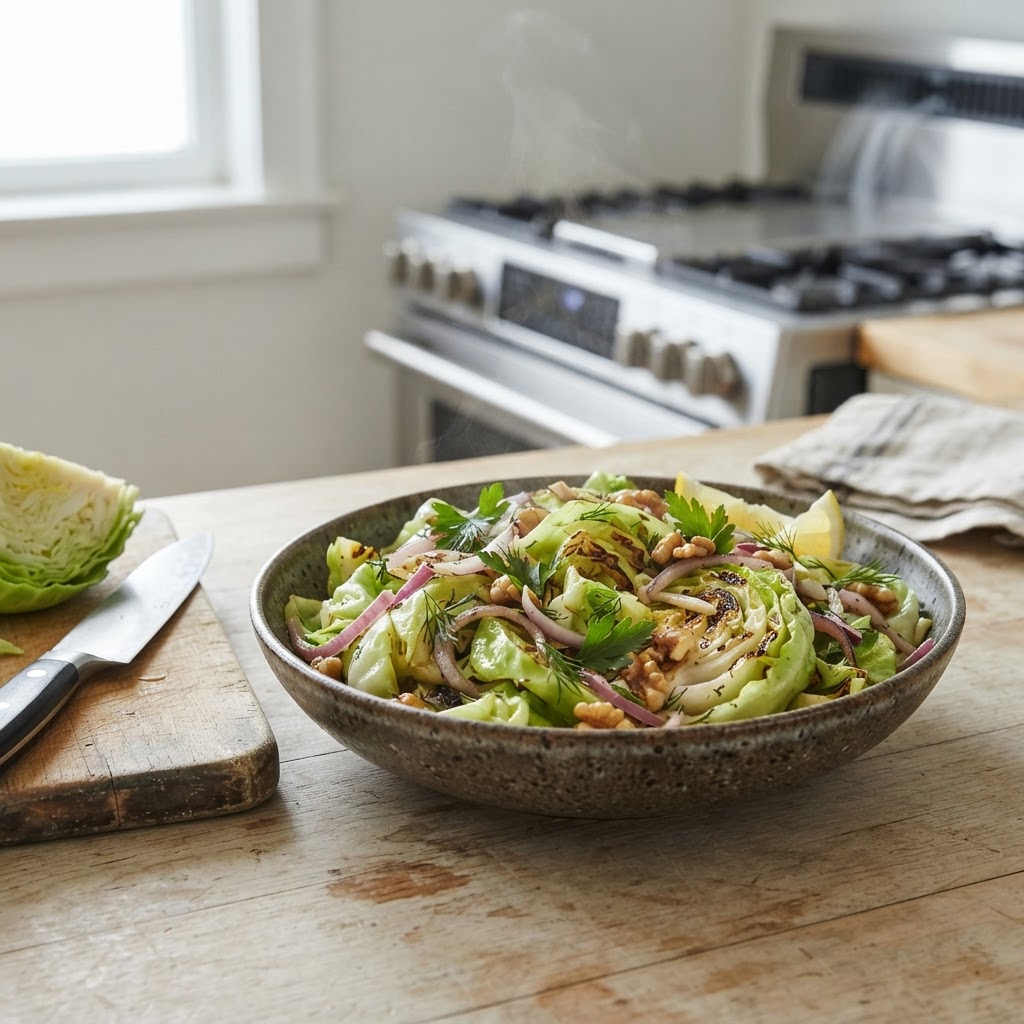
Quick reference
- Method: Typical approach Aroma control
- Quick sauté: 5–8 minutes Mild, browned edges
- Steam: 5–10 minutes Keep covered briefly
- Roast: 425°F / 220°C Dry heat, less boiled odor
- Long simmer: 20+ minutes Strongest aroma
Why cooked cabbage smells strong
Cabbage naturally contains sulfur compounds. When heat breaks down its cells, those compounds become more noticeable—especially in the steam released during boiling or simmering. The longer cabbage cooks, the more its texture softens and its aroma can intensify. This is normal and does not mean the cabbage has spoiled. Fresh cabbage should smell clean and vegetal before cooking, without sour, rotten, or ammonia-like notes.
The biggest fix: cook it briefly
Avoid cooking cabbage far past tender. Thinly sliced cabbage often needs only 5 to 8 minutes in a hot skillet, while wedges may take longer depending on thickness. Stop when it is tender-crisp rather than collapsing. If a recipe calls for a long braise, add cabbage later so it does not spend the entire cooking time in the pot. Smaller batches also cook faster and release less prolonged steam.
- Slice evenly so pieces finish together.
- Use a timer the first time you try a method.
- Remove the lid once cabbage is nearly tender.
Choose dry or fast cooking methods
Boiling and long simmering create a large volume of cabbage-scented steam, which can make the odor seem particularly strong. Sautéing, roasting, grilling, and quick steaming usually produce a milder kitchen aroma. For roasting, spread cabbage in a single layer so moisture can escape and the edges brown. A quick sauté with oil gives sliced cabbage flavor and color without the prolonged wet cooking that often causes the strongest smell.
Ventilate while it cooks
Turn on the range hood before the pan heats, and use the hood’s outside vent when available. Open a nearby window if practical, but avoid creating a strong cross-breeze around a gas flame. Keep pot lids slightly ajar only when the recipe allows; trapping steam can make the smell linger when the lid is removed. Emptying the cooking water promptly and rinsing the pot can also prevent the aroma from hanging around.
Small additions that help balance the aroma
Acidic and aromatic ingredients can make cabbage taste fresher, though they do not eliminate the sulfur compounds. Add a splash of vinegar or lemon juice near the end, or cook cabbage with garlic, onion, caraway, mustard, ginger, or herbs. Use these to complement the vegetable rather than cover up overcooking. If cabbage already smells unusually sour or unpleasant before it goes into the pan, discard it instead of trying to mask the odor.
- Add acid after cabbage is nearly tender.
- Brown cabbage before adding liquid to a braise.
- For the mildest result, combine quick cooking with ventilation.
A practical rule for your broader cabbage cooking
For a milder cabbage aroma, use fresh cabbage, high heat, a short cooking time, and enough space for steam to escape. Reserve long simmering for dishes where soft texture and a deeper broth are the goal, and expect a stronger smell while they cook. The same principles work across green cabbage, red cabbage, and Savoy cabbage, although leaf thickness and moisture can change the timing.