Why Breading Falls Off—and How to Make It Stick
Breading usually slips because the food is wet, the coating is incomplete, or it cooks before the layers set. Fix each stage for a crisp, even crust.
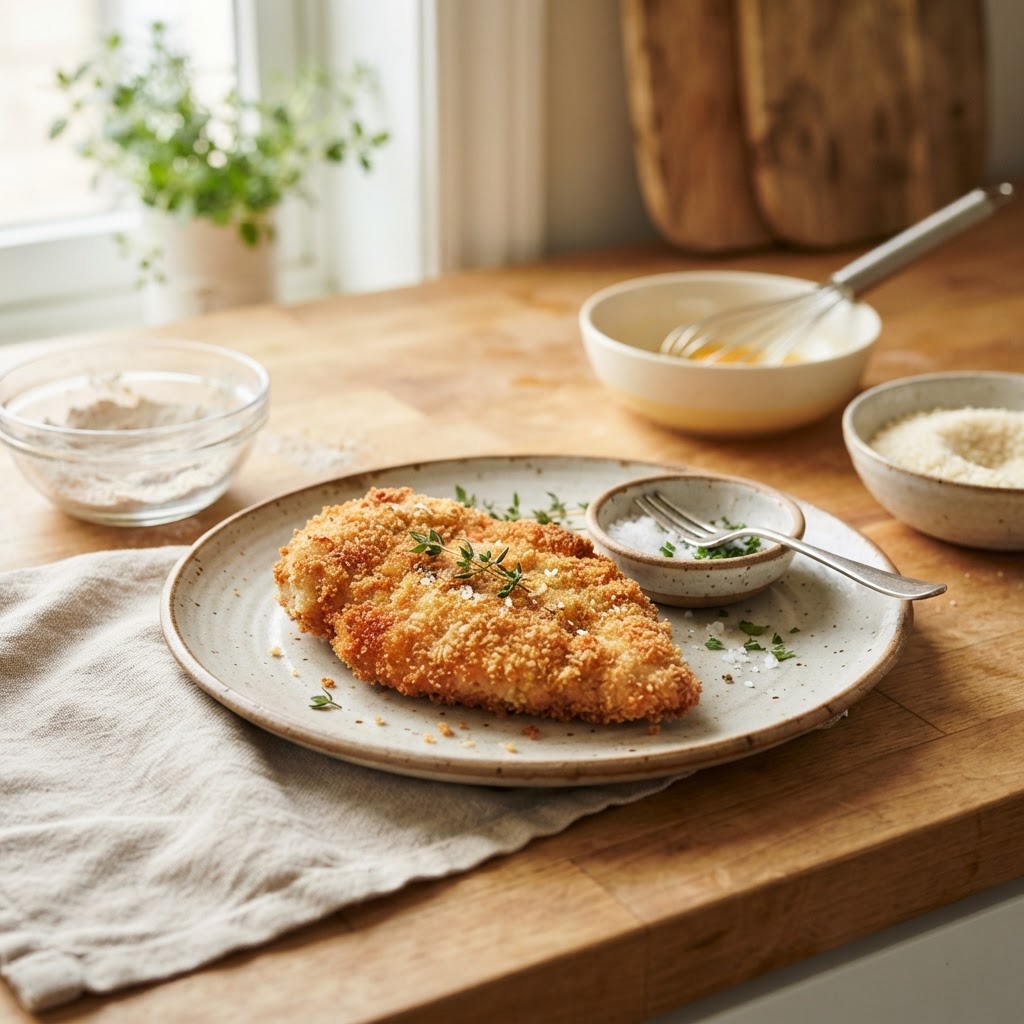
Quick reference
- Problem: Wet food Pat dry before flouring
- Problem: Patchy coating Use flour, egg, then crumbs
- Problem: Loose crumbs Press gently and rest
- Problem: Soggy crust Leave space for airflow
The short answer
Breading separates when it cannot grip the food or when steam loosens it during cooking. Moisture on the surface, a skipped flour layer, too little egg, and loose crumbs are the usual causes. Crowded pans, early flipping, and a low or uneven cooking temperature can finish the job. Build a dry, complete coating, let it rest, and cook it with enough room for heat to circulate.
Build a coating that bonds
Start by patting the food thoroughly dry with paper towels. Season it, then coat it lightly in flour, shaking off excess. The flour gives the egg something to hold. Dip next in beaten egg, turning until every area is covered; drain briefly so it is wet but not dripping. Finish with crumbs, pressing them gently into the surface rather than simply rolling the food through them.
- Dry surface → flour → egg → crumbs
- Shake off excess flour and crumbs
- Use one hand for wet ingredients and one for dry, if possible
Rest before cooking
Place coated pieces on a rack or parchment-lined tray without stacking them. A short rest of about 10 to 20 minutes helps the layers adhere; refrigeration can help if the food is perishable or the coating feels soft. Do not leave raw poultry, meat, or seafood at room temperature for an extended period. If the coating looks patchy, dab a little egg onto the bare spot and add crumbs before resting.
Control the cooking environment
Overcrowding traps moisture and makes breading soften or slide. Leave space between pieces, and cook in batches when needed. In a pan, use enough oil to contact the coating evenly and wait until it is properly heated before adding food. In an oven or air fryer, lightly oil the coating and use a rack or perforated basket when available. Turn only when the first side is firm and browned; moving it too soon tears the crust.
- Keep pieces in a single layer
- Avoid covering freshly cooked breaded food
- Use the appliance’s recommended temperature as a starting point, since models vary
If the crust still turns soggy
Excess steam is often the culprit after cooking. Transfer fried or baked pieces to a wire rack instead of a flat plate, where condensation can collect underneath. For air-fried food, avoid lining the basket so tightly that air cannot move around the pieces. Thicker foods may need more time before the coating firms, while a very thick coating may brown before the center cooks. Check doneness with a thermometer when appropriate, then serve promptly.
A reliable troubleshooting sequence
When breading falls off, inspect the process in order: Was the food dry? Did flour cover it completely? Was the egg layer even? Were the crumbs pressed on? Did the coating rest? Finally, consider crowding and whether you flipped or moved the food too early. For more techniques on keeping coatings crisp across frying, baking, and air-frying, see our broader crisp-coating guide.