Whole Chicken Internal Temperature and Where to Check It
Whole chicken should reach 165°F (74°C). Check the thickest breast and innermost thigh without touching bone before serving.
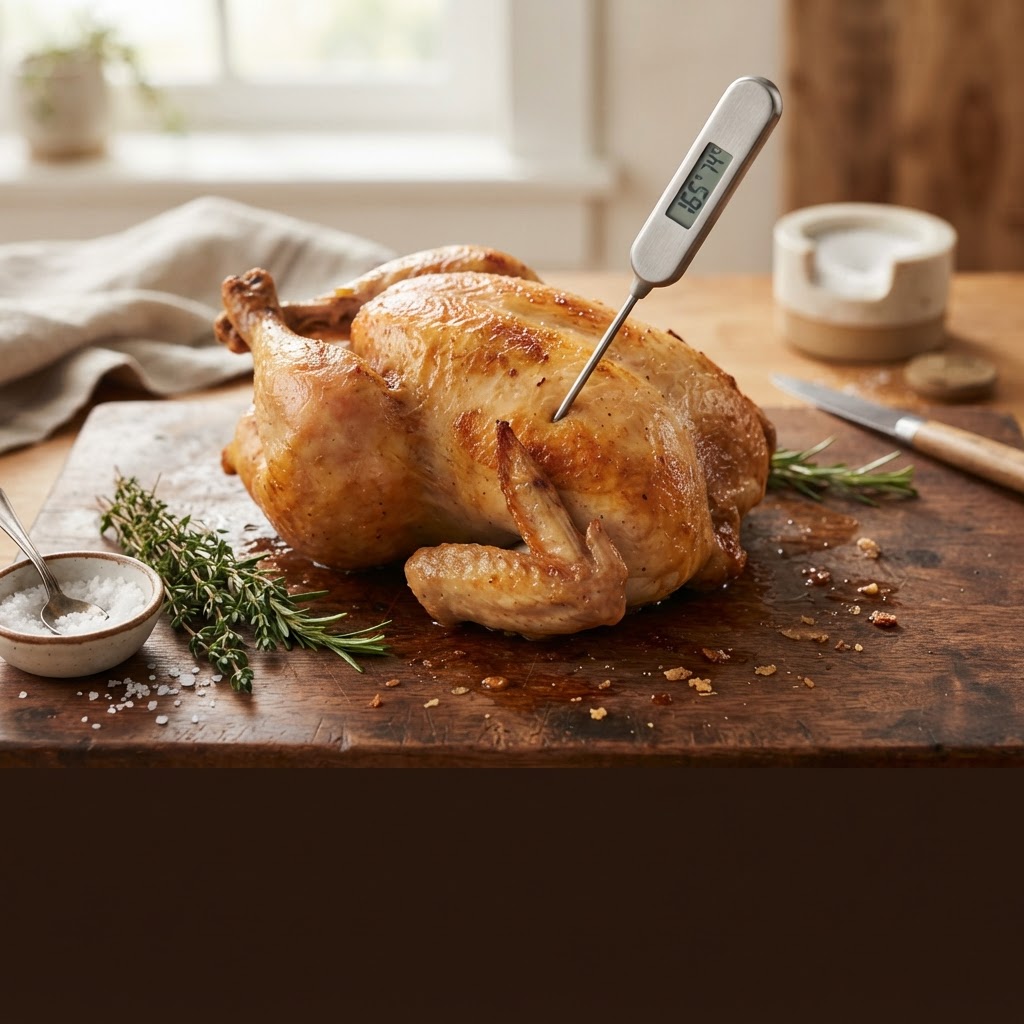
Quick reference
- Minimum safe temperature: 165°F / 74°C Check before serving
- Thigh location: Innermost thigh Avoid the bone
- Breast location: Thickest section Avoid the bone
- After cooking: Rest before carving Temperature may rise slightly
The temperature to aim for
The whole chicken internal temperature must reach at least 165°F (74°C) for safe serving. Check the bird in more than one place because the breast and thigh can cook at different rates. Use an instant-read thermometer rather than relying on the cooking time alone; oven temperature, bird size, pan material, and whether the chicken is stuffed can all change how long it takes.
Where to check a whole chicken
Insert the thermometer into the innermost part of the thigh, guiding the tip into the thickest meat without touching bone. Then check the thickest part of the breast, again keeping the probe away from bone and the cavity. If either reading is below 165°F, return the chicken to the oven and check again after a few minutes.
- Innermost thigh: probe the meaty area near the joint.
- Thickest breast: insert from the side if that gives a better angle.
- Avoid bone, the cavity, and contact with the roasting pan.
How to take an accurate reading
Open the oven briefly, remove the pan if needed, and place the thermometer tip in the meat’s center rather than just beneath the surface. Wait for the number to stop changing. For a large bird, take readings on both sides of the breast and at both thighs; use the lowest reliable reading as your guide.
Resting and carryover cooking
Once the chicken reaches the safe minimum, transfer it to a cutting board and rest it before carving. A short rest helps the juices settle and gives the temperature time to stabilize, though the exact rise varies with bird size and cooking conditions. Loosely tent with foil if desired, but avoid wrapping it tightly, which can soften the skin.
Why color and juices are not enough
Clear juices, browned skin, and white-looking meat can be useful visual cues, but none reliably confirms that the chicken has reached a safe temperature. Meat near the bone may look darker even when cooked, while breast meat can appear done before the center reaches 165°F. The thermometer reading is the dependable final check.