What to Serve With Curry: Rice, Breads, Vegetables, and Cooling Sides
Pair rich or spicy curry with the right rice, bread, vegetables, pickles, or cooling side, choosing accompaniments that match its sauce and heat.
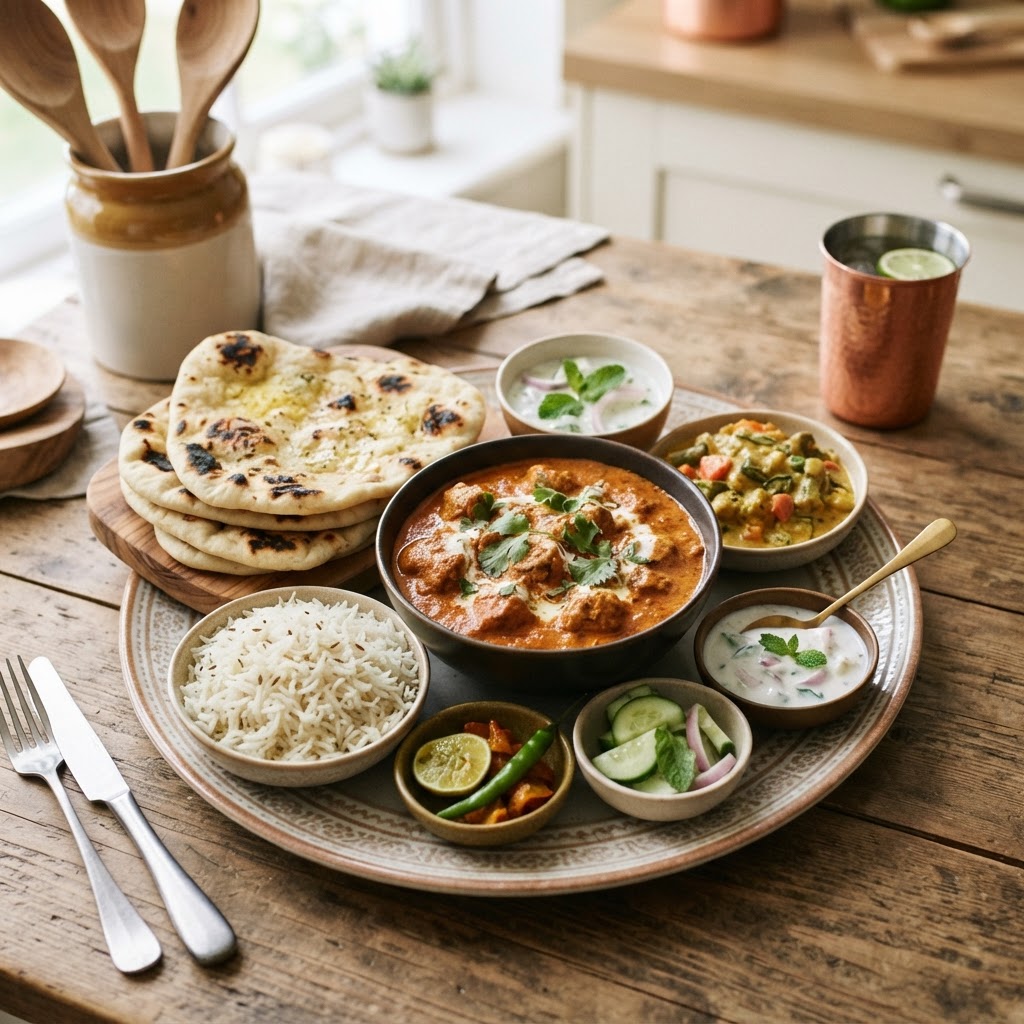
Quick reference
- Rich, saucy curry: Basmati rice or naan Absorbs sauce
- Dry or thick curry: Chapati and salad Adds contrast
- Very spicy curry: Raita and cucumber Cool, creamy balance
- Fragrant curry: Plain rice and herbs Keeps aromas clear
Start with the curry’s texture
The best curry accompaniments depend on the dish, not on one universal regional formula. Rich, saucy curries benefit from plain rice or a bread that can scoop and absorb gravy. Thick, dry, or roasted curries need fresh vegetables and something crisp. Consider the curry’s heat, richness, and texture before adding several sides; one starch, one fresh element, and one sharp accent is often enough.
Choose rice for sauce and aroma
Plain basmati rice is a reliable partner for creamy, tomato-based, or strongly spiced curries because it provides a quiet base. Jeera rice adds fragrance to milder sauces, while coconut rice suits curries with South Indian or tropical flavors. For a thick curry, keep the grains separate; for a looser sauce, a softer rice can catch more gravy. Avoid heavily seasoned rice when the curry already contains many spices.
- Creamy curry: plain basmati
- Mild, aromatic curry: jeera rice
- Coconut-forward curry: coconut rice
Use breads for scooping
Naan, roti, chapati, paratha, and other flatbreads bring different textures to the plate. Soft naan works well with rich sauces, while thinner roti or chapati feels lighter beside a dry curry. Layered paratha is substantial and pairs best with boldly flavored dishes. Warm bread briefly before serving, and offer enough for scooping rather than treating it as a separate course.
Add vegetables and fresh salads
Fresh vegetables keep a rich meal from feeling one-note. Cucumber, tomato, onion, shredded cabbage, carrots, or herbs can be served simply with salt and lemon. Roasted cauliflower, green beans, or sautéed greens are better when the curry is light or brothy and needs a warm side. Keep raw salads gently dressed so their crunch and freshness remain distinct from the cooked sauce.
- Cucumber and herbs for creamy curry
- Tomato-onion salad for rich curry
- Roasted vegetables for lighter curry
Finish with pickles and cooling sides
Pickles, chutneys, and relishes provide concentrated sour, salty, sweet, or spicy flavor, so a small spoonful is usually enough. Yogurt-based sides such as cucumber raita or a lightly seasoned yogurt salad soften the overall impression of a hot curry and add a cool, creamy contrast. They are especially useful with heavily spiced dishes, but are optional; not every curry traditionally calls for dairy or pickle.
Build a balanced plate
For an easy serving plan, pair a saucy curry with basmati rice, a crisp cucumber salad, and either pickle or raita. Serve a dry curry with chapati, roasted vegetables, and a sharp relish. If the curry is already creamy, choose a fresh, acidic side instead of another rich one. Match the accompaniments to the curry’s own culinary tradition when known, while keeping the final plate practical for your table.