What Makes Fried Rice Taste Better? Heat, Rice Texture, and Seasoning
Fried rice tastes better with chilled, dry grains, a hot pan, small batches, and layered seasoning that builds savory aroma without sogginess.
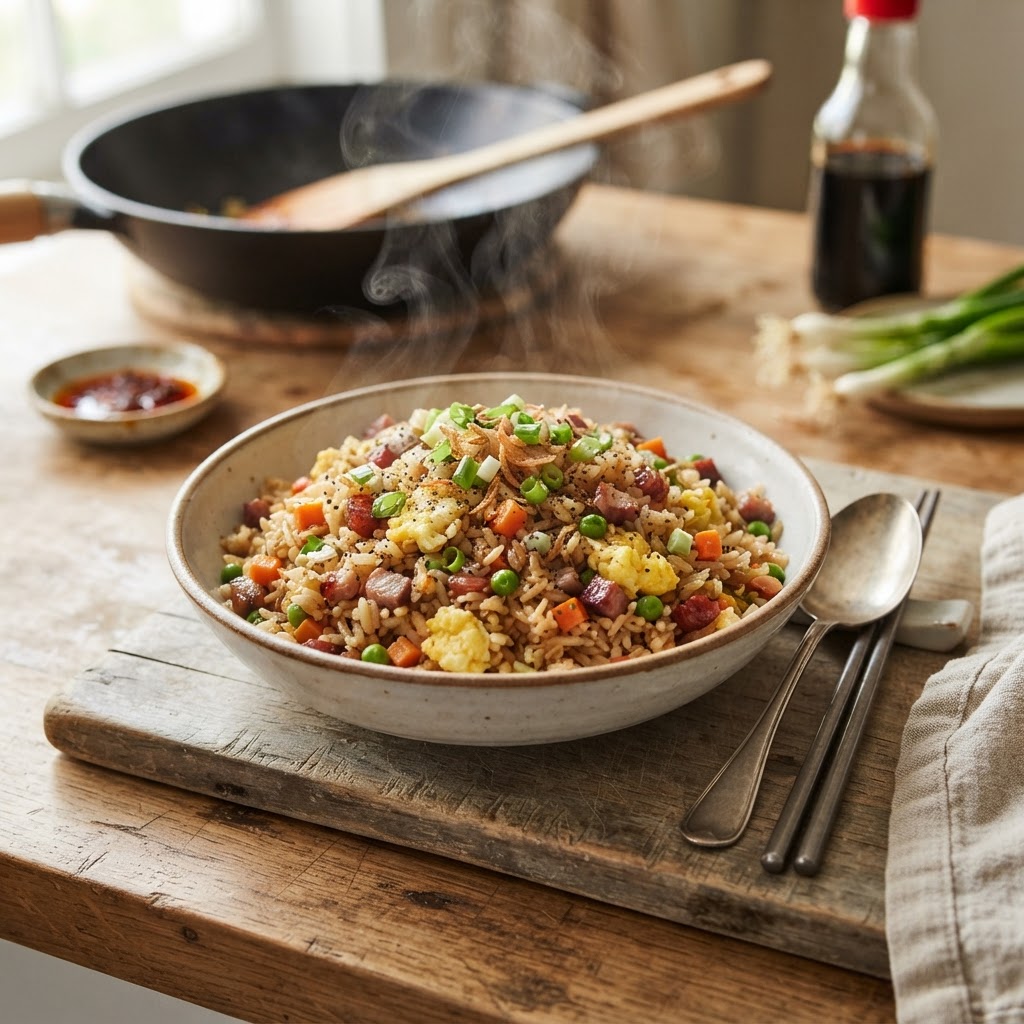
Quick reference
- Rice: Cold and dry Separate clumps before cooking
- Pan: Hot before adding food Use a thin film of oil
- Batch size: Work in small amounts Crowding steams rice
- Seasoning: Add in stages Finish with a light splash
Start with rice that can fry
The biggest upgrade is using cooked rice that has dried slightly. Freshly cooked rice contains more surface moisture, so it tends to soften and clump in the pan. Spread hot rice on a tray to cool, then refrigerate it uncovered or loosely covered until chilled. Before frying, break up firm clumps with your fingers. Long-grain or medium-grain rice works well; the key is separate, resilient grains rather than a particular variety.
Use heat to create flavor, not steam
Preheat the wok or wide skillet until a drop of water evaporates quickly, then add oil and work without delay. The pan should be hot enough to sear small pieces of beef, egg, or vegetables, but not so hot that garlic burns instantly. If the rice sits in a lukewarm pan, it releases moisture and turns soft. Keep ingredients moving, but give the rice brief contact with the surface so it can toast lightly.
- A wide pan gives moisture more room to escape.
- Heat the pan again between batches if needed.
- Use medium-high heat on a thinner or less powerful stovetop pan.
Avoid overcrowding
A full pan is one of the main reasons homemade fried rice tastes flat. Too much rice lowers the cooking temperature and traps steam, preventing browning. Cook the protein and vegetables separately if the pan is small, then combine them with the rice at the end. A shallow layer is easier to toss and season evenly. For a family-size batch, two quick rounds often taste better than one crowded one.
Season in layers
Seasoning works best when it follows the ingredients. Salt or a little soy sauce can season the protein and vegetables early, while a small amount of soy sauce or oyster sauce can be added around the edge of the pan so it sizzles before touching the rice. Add cautiously: excess liquid makes grains wet. Taste after everything is combined, then adjust with salt, white pepper, or a few drops of toasted sesame oil.
- Use soy sauce for salt and color, not as the only source of flavor.
- Add dark soy sauce sparingly when you want deeper color.
- Keep sugary sauces low or add them at the finish to reduce scorching.
Build aroma at the finish
Aromatic ingredients make fried rice taste fuller even when the seasoning is restrained. Fry ginger, garlic, scallions, or shallot briefly in oil, taking care not to burn them. Reserve some fresh scallion greens for the final toss. A little toasted sesame oil, white pepper, chili crisp, or lime can sharpen the finished dish, depending on the style. These finishing touches should support the toasted rice and savory ingredients, not cover them.
A simple troubleshooting check
If the rice is soft, use less at once, dry it more thoroughly, and reduce liquid seasoning. If it is bland, check salt first, then add aroma and a finishing accent rather than pouring in more sauce. If it tastes greasy, the pan may not have been hot enough or the oil may have been added too generously. Once the basics are right, the same approach works for classic beef fried rice, chicken fried rice, shrimp fried rice, and vegetable versions.