What Is Suya Spice? How Yaji Builds Flavor
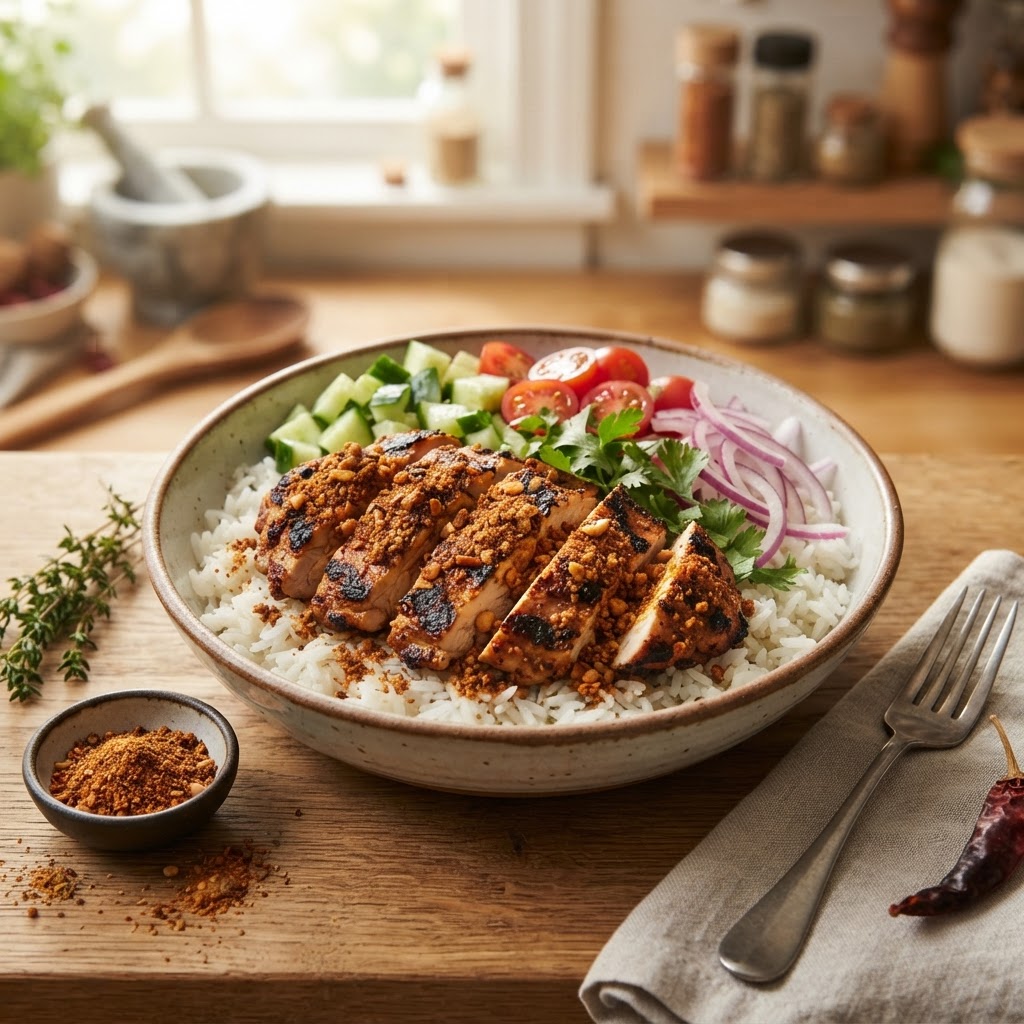
Suya spice, also called yaji, combines ground peanuts, chiles and warm spices for a savory, nutty coating that brings depth to chicken rice bowls.
Quick reference
- Flavor: Savory, nutty, chile-warm Often aromatic and smoky
- Core ingredient: Ground roasted peanuts Use peanut powder or finely ground peanuts
- Best uses: Chicken, beef, lamb, vegetables Apply before cooking
- Storage: Cool, airtight cupboard Refrigerate if homemade blend contains fresh ingredients
What is suya spice?
Suya spice, commonly called yaji, is a West African seasoning blend associated with suya: skewered meat coated in spices and grilled. Its defining character is savory, nutty and chile-driven rather than simply hot. Ground roasted peanuts provide body, while chiles, salt and warm spices create a bold crust. Recipes differ, but the blend is designed to cling to meat and intensify over high heat.
What goes into yaji?
There is no single fixed formula. Ground roasted peanuts are often paired with dried chile, ginger, garlic, onion, salt and spices such as paprika, cayenne, black pepper or cloves. Some blends include local aromatics or a touch of sweetness. Commercial suya seasoning may be finer, saltier or hotter than a homemade version, so taste it before adding more salt to a marinade or sauce.
- Nutty base: roasted peanuts or peanut powder
- Heat: dried chile, cayenne or paprika
- Aromatics: ginger, garlic, onion and warm spices
How regional variation changes the flavor
Yaji varies across households, vendors and regions. One blend may emphasize roasted peanut and ginger; another may be sharply chile-forward, smoky, salty or fragrant with clove and black pepper. Texture matters too: a coarse blend gives a more rustic crust, while a fine powder coats evenly. Treat the ingredient list as a flavor map, not a strict standard, and adjust heat to suit the dish.
Using suya spice for chicken rice bowls
For QuickDinner’s Suya Chicken Rice Bowls, coat chicken with a little oil, yaji and salt, then cook until browned and cooked through. A short marinade is enough; the spice’s flavor develops during cooking. Reserve a clean portion for sprinkling after cooking, rather than reusing seasoning that touched raw chicken. Serve with rice and crisp vegetables to balance the rich, spicy coating.
- Start with about 1 tablespoon yaji per pound of chicken, then adjust.
- Add lemon or lime after cooking for brightness.
- Use less chile-heavy yaji if children or heat-sensitive diners are sharing.
Safe handling with meat
Keep raw chicken separate from cooked rice, vegetables and serving utensils. Cook poultry to 165°F / 74°C in the thickest piece, checking with a thermometer when possible. Refrigerate cooked chicken and rice within 2 hours, or within 1 hour when the temperature is above 90°F / 32°C. Store leftovers for 3–4 days and reheat them to 165°F / 74°C. Never thaw chicken on the counter; use the refrigerator, cold water or a microwave instead.