What Is Sumac? Flavor, Uses, and Pairings
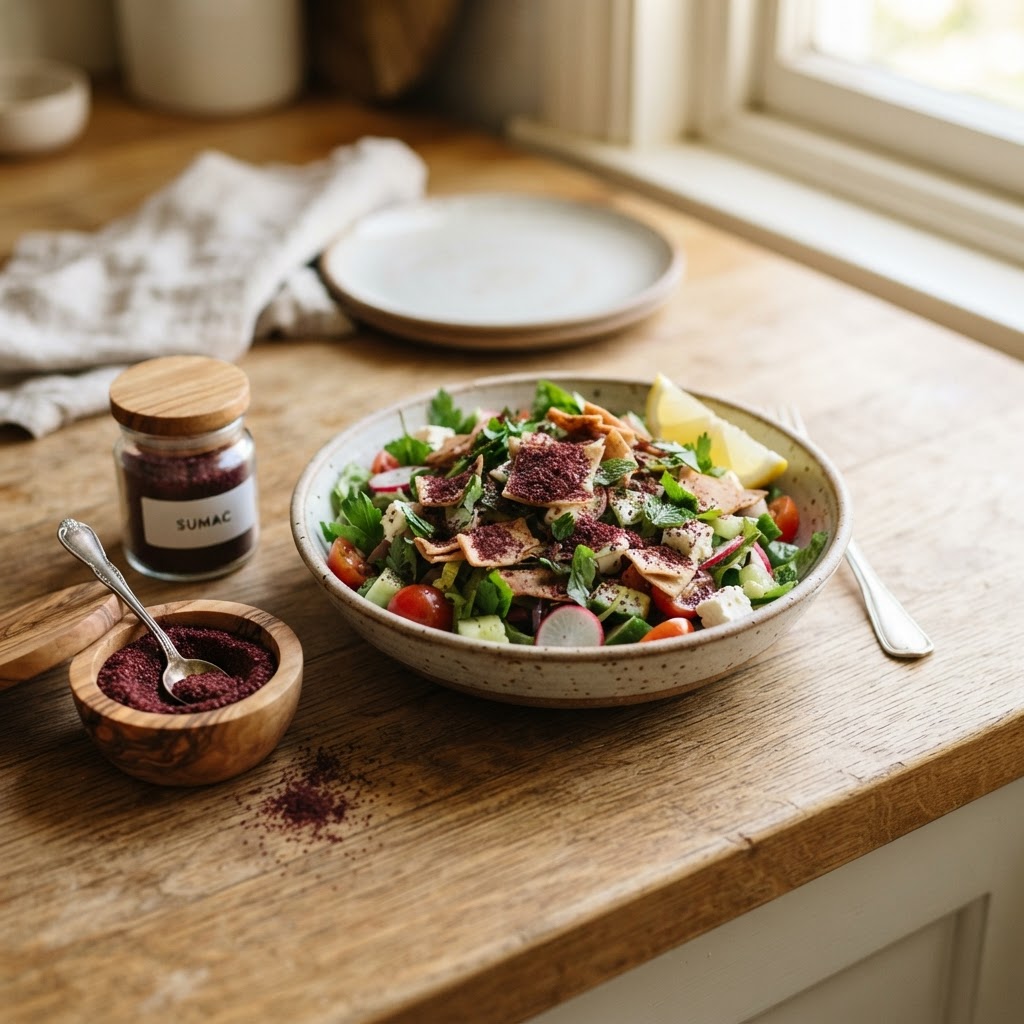
Sumac is a ruby-red spice with a bright lemony tang. Use it to finish salads, grilled meats, rice, dips, and Middle Eastern-inspired dishes.
Quick reference
- Flavor: Tart, lemony, fruity Usually less sharp than lemon juice
- Best use: Finishing spice Add after cooking for brightness
- Pairs with: Herbs, onions, meats Also works with grains and yogurt
- Form: Ground or whole berries Ground sumac is easiest to use
What is sumac?
Sumac is a deep red-purple spice made from dried berries of culinary sumac shrubs, commonly used in Middle Eastern and Mediterranean cooking. The berries are ground into a coarse or fine powder and used much like a seasoning or finishing salt. Culinary sumac is not the same as poison sumac, an unrelated plant associated with skin irritation. Buy food-grade sumac from a reputable spice supplier, and check the ingredient label for added salt or other flavorings.
What does sumac taste like?
Sumac tastes tart, lemony, and lightly fruity, with a dry, savory edge. It adds acidity without the liquid that comes from lemon juice, so it is especially useful when you want a dish to stay crisp or a spice coating to cling. Its flavor is bright rather than hot. Because intensity varies by brand and freshness, start with a small pinch, taste, and add more at the end.
How to use sumac
Treat ground sumac as a finishing spice, especially when a dish needs lift after cooking. Sprinkle it over food just before serving or stir it into a dressing, rub, dip, or grain dish. It can also season ingredients before grilling, though prolonged high heat may soften its fresh tang.
- Toss with sliced onions, parsley, and olive oil for a sharp salad garnish.
- Dust over hummus, labneh, roasted vegetables, or fried eggs.
- Mix into rice, couscous, bulgur, or a simple lemon-free dressing.
Best sumac pairings
Sumac pairs naturally with ingredients that welcome acidity and savory depth. It is excellent with grilled chicken, lamb, beef, fish, and vegetables, particularly when combined with garlic, cumin, coriander, or smoked paprika. Fresh herbs such as parsley, mint, and cilantro balance its tang, while yogurt, tahini, olive oil, and creamy cheeses make it feel rounder.
- Salads: tomatoes, cucumbers, onion, feta, parsley, and olive oil.
- Grilled foods: chicken, lamb, kebabs, fish, and charred vegetables.
- Rice and grains: pilaf, bulgur, couscous, and herbed rice.
Simple ways to add it to dinner
For a quick salad, toss cucumbers and tomatoes with olive oil, salt, parsley, and a generous pinch of sumac. For grilled meat, combine sumac with salt, garlic, and olive oil, then use it as a finishing rub. Stir it into warm rice with butter or olive oil and herbs, or sprinkle it over hummus before serving. In Middle Eastern-inspired recipes, add sumac near the end so its tart character remains clear.