What Is Bang Bang Sauce? Flavor, Heat, and Practical Uses
Bang bang sauce is a creamy, sweet-spicy condiment made for drizzling, dipping, tossing with beef and broccoli, or brightening crispy seafood and vegetables.
Quick reference
- Flavor: Creamy, sweet, tangy Mayonnaise and sweet chili sauce lead
- Heat: Mild to medium Adjust with hot sauce or chili
- Best texture: Thick and spoonable Thin gradually for drizzling
- Good pairings: Beef, shrimp, chicken, vegetables Especially crisp or seared foods
What bang bang sauce tastes like
Bang bang sauce is a creamy sweet-spicy sauce with a gentle tang. A typical version combines mayonnaise with sweet chili sauce, then adds a sharp or savory accent such as lime juice, rice vinegar, garlic, or hot sauce. The first impression is rich and slightly sweet; the finish brings chili warmth rather than an aggressive burn. Because recipes vary, one version may taste more sugary, tangy, smoky, or spicy than another.
What is usually in it
The base is commonly mayonnaise, which gives the sauce body and a smooth texture. Sweet chili sauce supplies sweetness, mild pepper flavor, and a glossy finish. Hot sauce, sriracha, cayenne, or red pepper flakes can raise the heat, while lime juice or vinegar keeps the mixture from tasting heavy. Start with a balanced base, then adjust one element at a time so the sauce does not become oversweet or overly sharp.
- Richness: mayonnaise or plain yogurt
- Sweetness: sweet chili sauce
- Heat and acidity: hot sauce, lime, or vinegar
Practical ways to use it
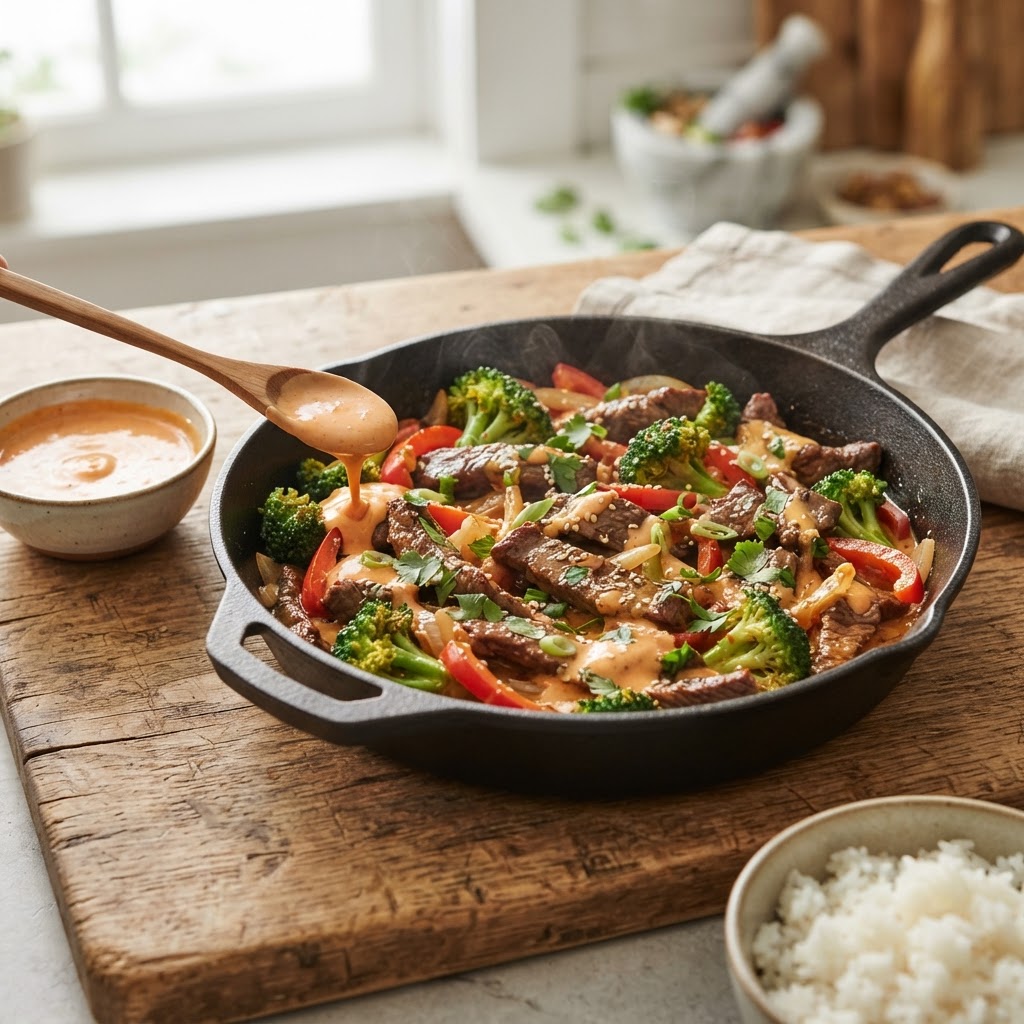
Use bang bang sauce as a dip, drizzle, or finishing glaze. It works especially well with crisp shrimp, chicken tenders, roasted vegetables, fries, rice bowls, and slaws. For QuickDinner’s Bang Bang Beef and Broccoli Skillet, toss the cooked beef and broccoli with enough sauce to coat them, or spoon it over each serving so the seared edges stay distinct. Add the sauce near the end rather than boiling it for a long time.
How to balance the flavor
If the sauce tastes too rich, add lime juice or rice vinegar a teaspoon at a time. If it is too sweet, add acidity and a small pinch of salt rather than simply adding more heat. Too much spice can be softened with extra mayonnaise or plain yogurt; too little heat calls for hot sauce or chili flakes. Taste after each adjustment, and remember that hot food can make the sauce seem looser and less intense.
Texture, serving, and storage
For dipping, keep the sauce thick. For drizzling over beef, broccoli, or rice, loosen it with a little lime juice, water, or milk, adding just a few drops at a time. Chill it briefly if you want a firmer texture. Refrigerate leftover sauce promptly in a covered container and use a clean utensil each time. If it has been mixed with cooked ingredients, refrigerate the leftovers within two hours and use them within three to four days.