The Mix-and-Match Grain Bowl Formula for Weeknight Dinners
Build a balanced grain bowl in about 30 minutes by pairing a hearty base with protein, vegetables, crunch, sauce, and a bright finish.
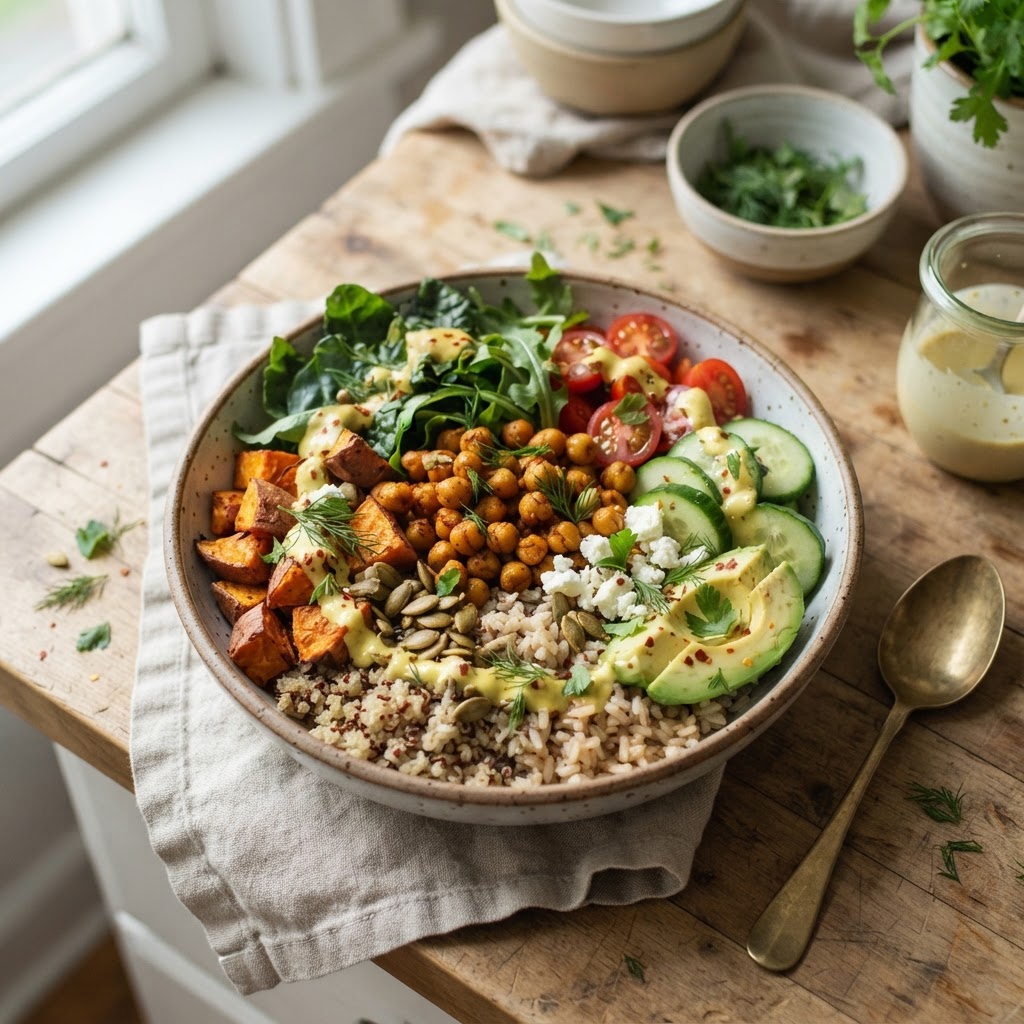
Quick reference
- Base: 1 to 1½ cups cooked grain Rice, quinoa, farro, or barley
- Protein: 3 to 5 ounces Chicken, salmon, beans, eggs, or tofu
- Vegetables: 1 to 2 cups Mix roasted, sautéed, or raw
- Finish: 2 to 4 tablespoons Sauce plus acid and crunch
Start with the bowl’s structure
The easiest way to build a satisfying grain bowl is to choose one ingredient from each of six roles: grain, protein, vegetables, crunch, sauce, and acid. For most weeknights, cook or reheat the grain first, then prepare the protein and vegetables while it warms. Use a modest portion of each element rather than piling everything into one oversized bowl. That keeps the meal varied, saucy, and filling without becoming heavy.
Choose a grain that supports the toppings
Use rice for a soft, neutral base; quinoa for a lighter, slightly nutty bowl; or farro and barley when you want more chew. Leftover rice works especially well, while freshly cooked quinoa can be cooled briefly before serving. Season the grain lightly with salt, a little oil, or chopped herbs. For reliable starting points, use QuickDinner’s rice recipes or quinoa recipes, then let the toppings change from night to night.
- Soft base: white or brown rice
- Nutty base: quinoa
- Chewy base: farro or barley
Add protein and vegetables with contrast
Choose one main protein and prepare it simply: sliced chicken, flaky salmon, crisp tofu, beans, or a jammy egg. QuickDinner’s chicken recipes and salmon recipes make dependable starting points. Pair that protein with at least two vegetable textures, such as roasted broccoli with cucumber, or sautéed peppers with shredded cabbage. Warm vegetables bring depth; raw vegetables add freshness. If the protein is rich, favor crisp or leafy vegetables to keep the bowl balanced.
Make the sauce do useful work
A sauce should season the grain and connect the ingredients, not flood them. Start with 1 to 2 tablespoons, toss, and add more only if needed. Yogurt-herb, tahini-lemon, peanut, salsa, and ginger-soy sauces all work, but match intensity to the bowl: a bold sauce needs plain grains and mild vegetables. Browse QuickDinner’s sauce recipes for a ready-made direction, or thin a thick sauce with water until it coats rather than pools.
Finish with crunch and acid
Crunch prevents a soft bowl from feeling flat. Try toasted seeds, roasted nuts, crispy chickpeas, fried shallots, tortilla strips, or sliced radishes. Add acid at the end, after tasting: lemon juice, lime juice, rice vinegar, or pickled onions can sharpen a rich sauce and wake up plain grains. If the bowl tastes dull, add salt first; if it tastes heavy, add acid or a fresh vegetable before reaching for more sauce.
A simple assembly method
Spread the grain across the bowl, arrange the protein and vegetables in sections, then drizzle the sauce over the top. Finish with crunch and acid so they remain distinct. Keep components separate when packing leftovers, especially crunchy toppings and dressing. Cooked grains, vegetables, and protein should be refrigerated within 2 hours and generally used within 3 to 4 days; reheat leftovers to 165°F / 74°C. For chicken, cook to 165°F / 74°C; fish should reach 145°F / 63°C.