Teriyaki Sauce as Marinade vs Glaze: When to Use Each
Use teriyaki as a marinade for flavoring and a glaze for shine: control contact time, sugar heat, concentration, and raw-meat safety.
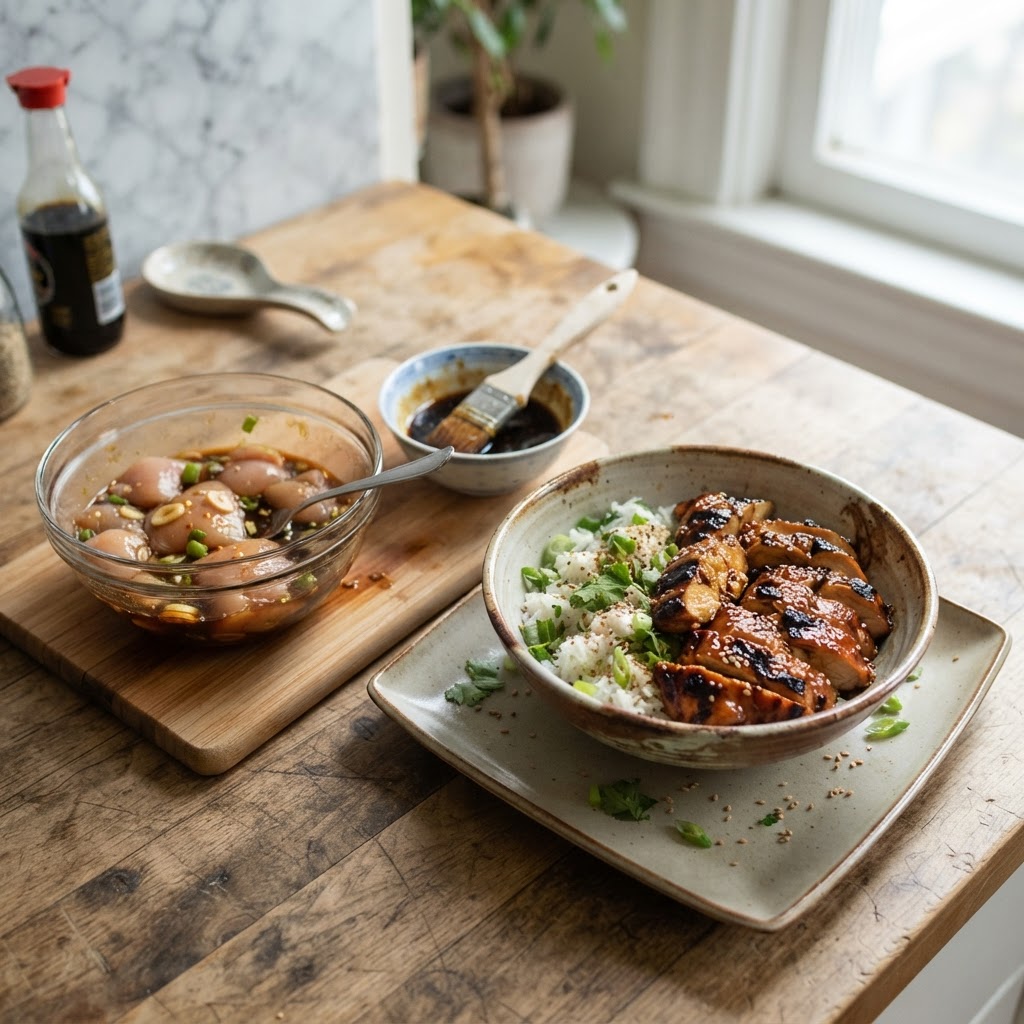
Quick reference
- Use as: Marinade Flavor inside the protein
- Contact time: 15 minutes–8 hours Refrigerate; avoid overmarinating
- Use as: Glaze Shiny, concentrated coating
- Best timing: Final 2–5 minutes Add over moderate heat
- Raw-contact sauce: Boil first Use a clean brush and pan
Choose a marinade for depth
Use teriyaki as a marinade when you want flavor to reach beyond the surface of meat, fish, tofu, or vegetables. Its thinner consistency helps it coat evenly, while a short rest seasons the exterior before cooking. For salmon or other delicate fish, 15–30 minutes is usually enough. Chicken or pork can take about 2–8 hours in the refrigerator, depending on the cut and the sauce’s saltiness. Longer is not automatically better: salty marinades can make surfaces overly firm or intense.
Choose a glaze for shine and flavor
Use teriyaki as a glaze when the goal is a sticky, glossy finish rather than extended seasoning. Brush it on during the last few minutes of grilling, roasting, broiling, or stir-frying. Because teriyaki contains sugar, adding it too early—especially over high heat—can make the sauce scorch before the protein cooks. For a stir-fry, cook the protein and vegetables first, then add the glaze and toss until it clings.
Marinade and glaze are not interchangeable
A marinade is generally looser and less concentrated so it can coat food without becoming excessively salty. A glaze should be concentrated enough to cling, but not so thick that it burns immediately. If you want to turn bottled teriyaki into a glaze, simmer it briefly in a clean saucepan or reduce it in the cooking pan after the raw protein has been removed. Watch closely because thickness increases as water evaporates.
- Marinade: flavoring contact.
- Glaze: finishing sauce.
- For both: use moderate heat once sugar is present.
Handle raw-contact marinade safely
Any teriyaki sauce that has touched raw meat, poultry, or fish should not be served straight from the marinade container. Either discard it or bring it to a full boil in a saucepan before using it as a sauce; boiling alone does not prevent scorching, so transfer it to clean cookware and stir. Marinate raw protein in the refrigerator, never on the counter. Cook poultry to 165°F/74°C, ground meat to 160°F/71°C, whole cuts of beef, pork, lamb, or veal to 145°F/63°C with a 3-minute rest, and fish to 145°F/63°C.
A simple two-sauce method
For the cleanest result, divide the teriyaki before cooking. Reserve one portion as a fresh finishing glaze and use the other for marinating. Pat the protein lightly dry before cooking so it browns instead of steaming, then brush on the reserved sauce near the end. This works especially well in QuickDinner’s Teriyaki Salmon Noodle Stir-Fry, where the salmon cooks first and the sauce can be tossed with the noodles and vegetables at the finish. Explore QuickDinner’s other teriyaki recipes for chicken, beef, tofu, and vegetable variations.