Steaming vs Blanching vs Roasting Vegetables: When Each Method Works Better
Choose steaming for tender, moist vegetables, blanching for crisp color and make-ahead prep, or roasting for browned edges and concentrated flavor.
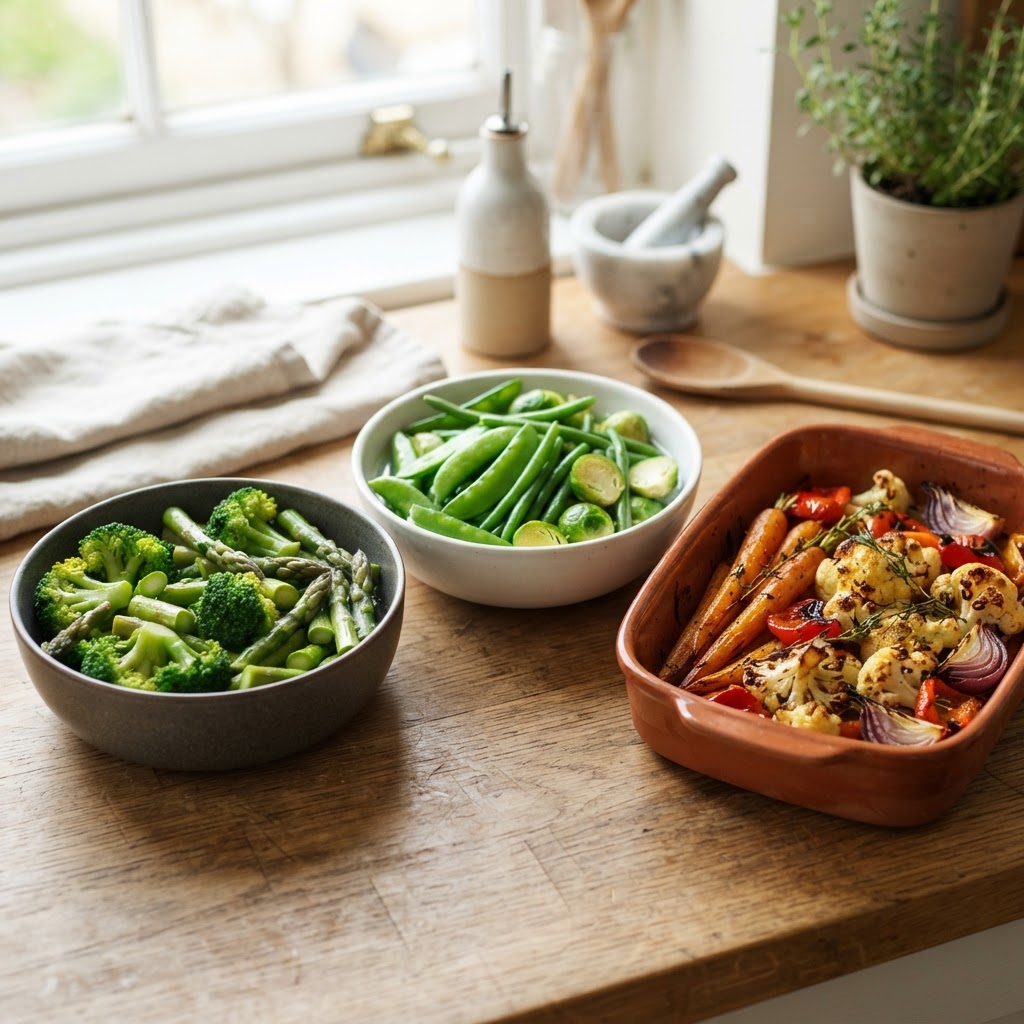
Quick reference
- Steaming: Moist, tender Fast; preserves clean flavor
- Blanching: Crisp-tender Best for color and prep
- Roasting: Browned, firm Deepest savory flavor
The short answer
Choose steaming when you want vegetables moist, tender, and close to their natural flavor. Choose blanching when you need bright color, a crisp-tender bite, or vegetables that will be finished later. Choose roasting when browned edges, firmer texture, and concentrated flavor matter most. Cut size is just as important as method: small pieces cook quickly, while dense or thick pieces need more time.
- Steaming: gentle and juicy
- Blanching: quick and controlled
- Roasting: dry heat and browning
When steaming works better
Steaming cooks vegetables above simmering water, so they soften without soaking up much liquid. It suits broccoli, cauliflower, green beans, carrots, asparagus, and delicate greens. Use a single layer when possible and test with a fork rather than relying only on the clock. Steamed vegetables are ready for butter, sauces, grain bowls, or a quick vegetable side dish, but they will not develop roasted browning.
- Use for moist, clean-tasting sides.
- Keep pieces similar in size.
- Avoid crowding the steamer basket.
When blanching works better
Blanching means briefly boiling vegetables, then cooling them quickly in ice water or very cold water. It gives green beans, peas, asparagus, broccoli, and leafy greens a vivid appearance and crisp-tender texture. It is especially useful before freezing, grilling, stir-frying, or assembling a salad. Drain thoroughly before seasoning or searing; excess water can dilute flavor and prevent browning.
- Salt the cooking water for better seasoning.
- Cool immediately to slow carryover cooking.
- Use shorter times for thin or tender vegetables.
When roasting works better
Roasting is the best choice for browned edges and a fuller, sweeter-tasting vegetable. Toss dry, evenly cut pieces with enough oil to coat lightly, then spread them out so hot air can circulate. A crowded pan traps moisture and makes vegetables soften instead of brown. Potatoes, sweet potatoes, carrots, cauliflower, Brussels sprouts, cabbage wedges, onions, and winter squash are particularly well suited.
- Dry vegetables before oiling.
- Leave space between pieces.
- Turn only when needed to brown another side.
Match the method to the result
Think about the finish before you start. For a soft vegetable to serve with a delicate sauce, steam it. For vegetables that must stay colorful or be prepared ahead, blanch them. For a hearty side with crisp corners, roast them. You can also combine methods: blanch dense broccoli before roasting, steam carrots before glazing, or blanch green beans before a quick sauté. The best vegetable cooking method depends on the texture and flavor you want—not a universal rule.
- Tender and moist: steaming
- Bright and crisp-tender: blanching
- Browned and concentrated: roasting