Soy Sauce Guide: Light, Dark, Tamari, and When Each Works
Choose light soy sauce for seasoning, dark soy sauce for color and body, and tamari for a fuller gluten-free option in stir-fries, marinades, and dips.
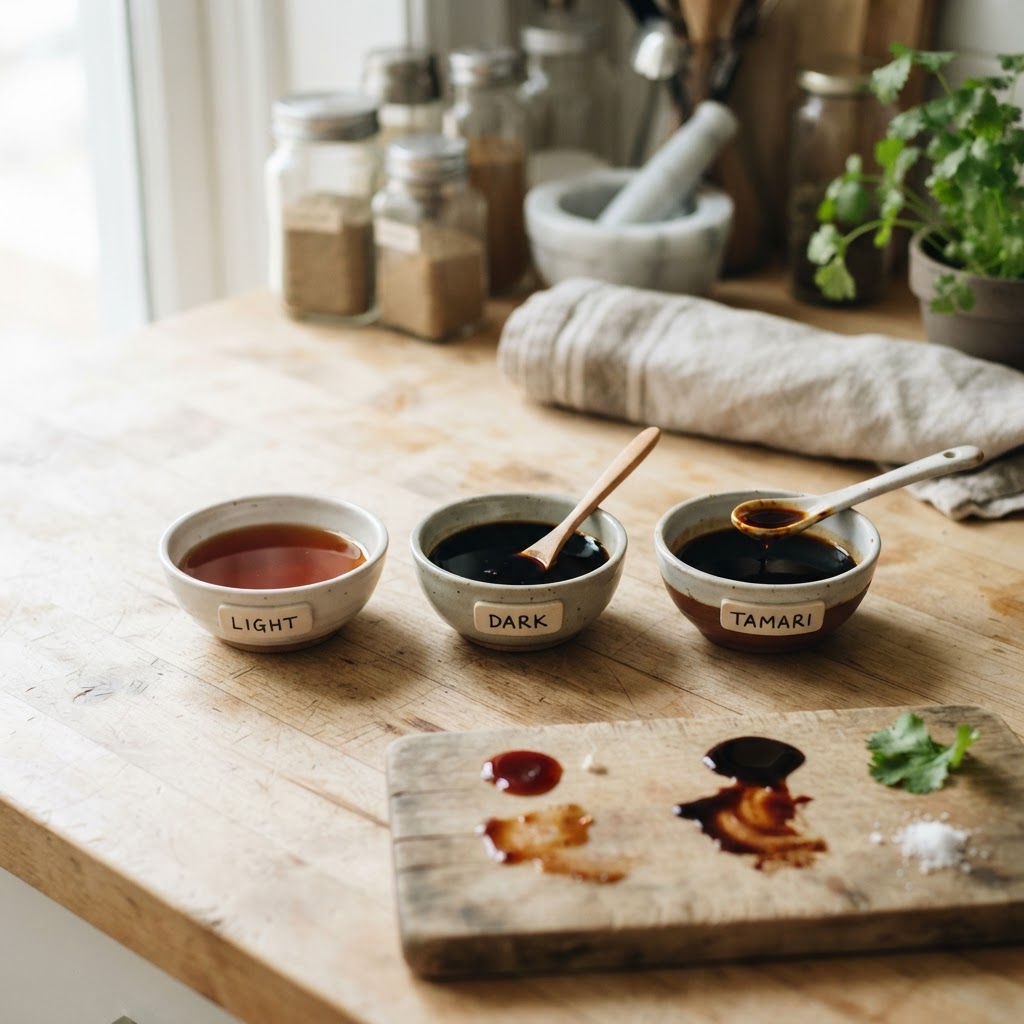
Quick reference
- Light soy sauce: Salty, thin, amber Everyday seasoning
- Dark soy sauce: Darker, richer, thicker Color and body
- Tamari: Full-bodied, rounded Dips and gluten-free cooking
- Sweet soy sauce: Thick and sweet Glazes and finishing
The short answer
Use light soy sauce when you want salt and savory flavor without noticeably darkening a dish. Choose dark soy sauce when color, gloss, and deeper body matter more than extra salt. Tamari is a fuller-tasting style that works especially well for dipping, marinades, and recipes labeled gluten-free, provided the bottle confirms it is gluten-free. These styles can overlap, but they are not automatic substitutes.
Light soy sauce: seasoning first
Light soy sauce is usually the most useful bottle for everyday cooking. It is relatively thin and salty, so it spreads quickly through stir-fries, fried rice, noodle sauces, soups, and marinades. Add it in small amounts near the end of cooking, then taste before adding more salt. For a balanced stir-fry sauce, pair it with aromatics, a little sugar, and an acidic ingredient such as rice vinegar.
- Best for: stir-fries, fried rice, noodles, and savory marinades.
- Use when: you want flavor without much added color.
- Tip: add gradually; brands vary in saltiness.
Dark soy sauce: color and body
Dark soy sauce is generally deeper in color and often thicker, less sharply salty, and slightly sweeter than light soy sauce. Its main job is to give fried rice, braised dishes, teriyaki-style sauces, and noodles a mahogany color and rounded finish. It is usually a supporting ingredient rather than the only soy sauce in a recipe. Combine it with light soy sauce when you need both seasoning and color.
- Best for: glossy noodles, fried rice, braises, and dark sauces.
- Use sparingly: too much can make food look muddy or taste heavy.
- Do not confuse it with sweet soy sauce, which is distinctly sugary.
Tamari: rich and rounded
Tamari tends to have a fuller, smoother flavor and less sharp saltiness than many standard soy sauces. It is excellent as a dipping sauce for dumplings, sushi, vegetables, and noodles, and it gives marinades a substantial savory base. Tamari is often made with little or no wheat, but formulations differ, so check the label when gluten-free cooking matters. Use it one-for-one at first, then adjust for salt and intensity.
Match the sauce to the job
For Asian noodles, start with light soy sauce for seasoning and add a small splash of dark soy sauce for color. In fried rice, light soy sauce keeps the flavor bright while dark soy sauce creates the familiar deeper tone. For teriyaki or a sticky marinade, use light soy sauce with sugar or honey; dark soy sauce can deepen the color. Tamari is a strong choice when the sauce will be served at the table, where its rounded flavor stands out.
- Stir-fry: light soy sauce, with dark soy sauce for color.
- Marinade: light soy sauce or tamari, balanced with aromatics and sweetness.
- Dipping: tamari or light soy sauce with vinegar, citrus, chili, or ginger.
How to substitute without throwing off a dish
If a recipe calls for light soy sauce and you have dark soy sauce, use less and expect a darker, richer result; add another salty ingredient only after tasting. If substituting tamari, begin with the same amount but check the label and adjust the final seasoning. If a recipe calls for dark soy sauce, light soy sauce can provide salt but will not reproduce its color or body. Keep both styles separate when appearance is part of the dish.