Slow Cooker Pot Roast: Time, Liquid, and Doneness
Slow cooker pot roast time depends on roast size and heat setting: use modest liquid and cook chuck until deeply fork-tender, not merely safe.
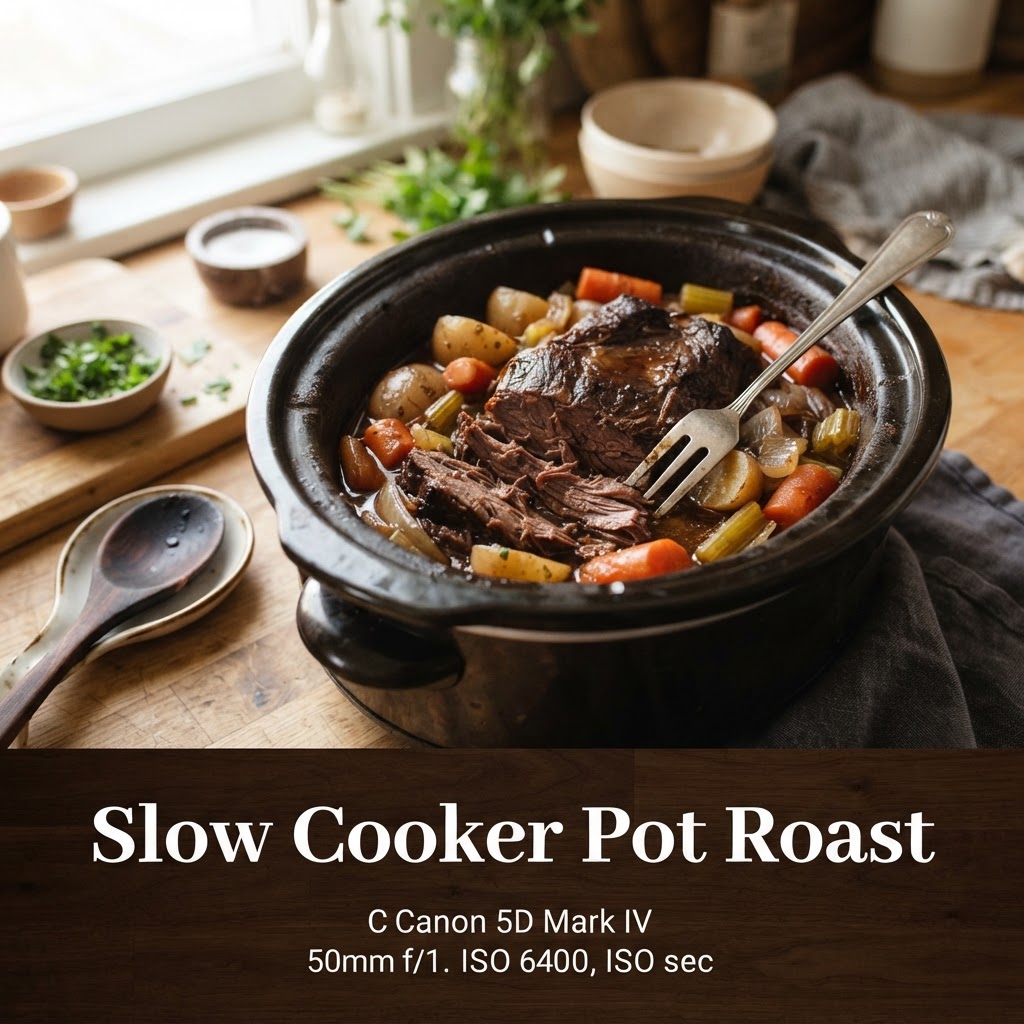
Quick reference
- Chuck roast: 2–3 lb Low 7–9 hr; high 4–5 hr
- Chuck roast: 3–4 lb Low 8–10 hr; high 5–6 hr
- Liquid: 1–1½ cups For a 3–4 lb roast
- Doneness: Fork-tender Probe should slide in easily
The short answer
For most 2- to 4-pound chuck roasts, plan on 7 to 10 hours on Low or 4 to 6 hours on High. The roast is ready when a fork or thin knife enters with little resistance and the meat pulls apart easily. Use the times as a starting range: slow cookers vary, and roast thickness, bone-in versus boneless cuts, and how full the cooker is can shift the finish time.
Choose the setting
Low is the better choice when you have time. It gives the connective tissue more opportunity to soften and makes the cooking window more forgiving. High works when dinner is closer, but begin checking earlier than the table suggests. Avoid switching between settings to compensate for a late start; instead, judge the roast by texture and use an instant-read thermometer to track its progress without repeatedly lifting the lid.
- Low: 7–10 hours for most roasts
- High: 4–6 hours for most roasts
- Keep the lid closed during cooking
How much liquid to add
Pot roast does not need to be submerged. Add about 1 to 1½ cups of broth, wine, water, or a combination for a 3- to 4-pound roast, adjusting for the size of your cooker and the vegetables you add. The roast and vegetables release juices as they cook. Too much liquid can dilute the sauce and make the dish taste boiled rather than richly braised.
- Pour liquid around, not over, the roast
- Season the liquid as well as the meat
- Thicken the cooking juices separately if desired
Add vegetables at the right time
Place sturdy vegetables such as carrots, potatoes, onions, and parsnips beneath or around the roast so they sit partly in the cooking liquid. Cut them into large, similar pieces; small pieces can become soft before the beef is ready. If you prefer firmer vegetables, add them partway through cooking, though opening the lid briefly may extend the total time.
How to check doneness
Whole beef is considered safe at 145°F with a 3-minute rest, but pot roast is usually cooked well beyond that point because chuck needs time to become tender. Temperature alone cannot tell you whether the texture is ready. Start checking near the early end of the range, then test the thickest part with a fork. If it feels tight or slices with resistance, continue cooking in 30- to 60-minute increments.
- Tender: fork slides in easily
- Not ready: meat feels springy or resists
- Rest the finished roast 10–20 minutes before slicing or shredding
Serving and storing
Transfer the roast to a board and spoon off excess fat from the cooking liquid. Slice across the grain if it holds together, or shred it when fully tender. Refrigerate leftover beef and vegetables within 2 hours, using shallow containers when practical, and eat them within 3 to 4 days. Reheat leftovers to 165°F. If the chilled roast seems dry, warm it gently with a little reserved cooking liquid.