Should You Wash Raw Chicken? What Food-Safety Guidance Says
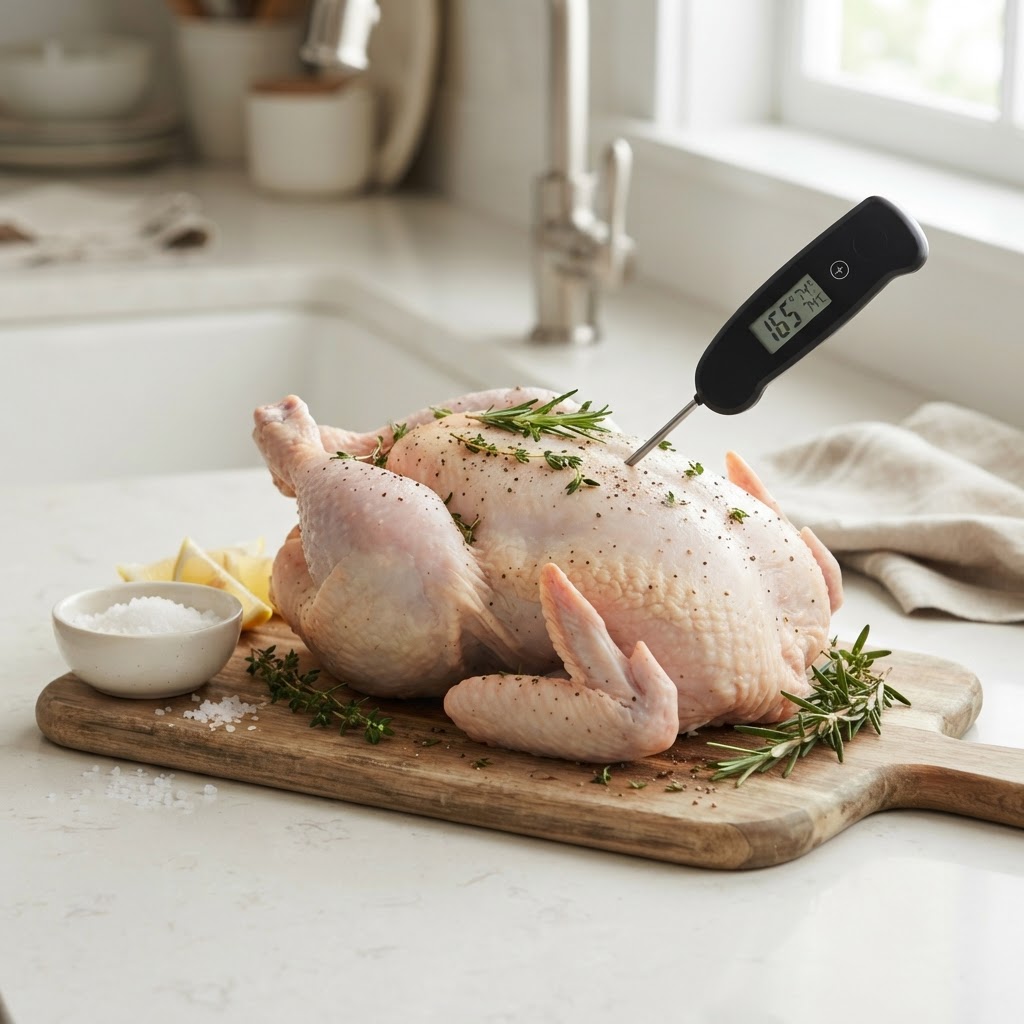
Washing raw chicken does not make it safer; it can spread bacteria around the sink and counter. Cook poultry to 165°F/74°C instead.
Quick reference
- Wash raw chicken?: No It is not a safety step.
- Safe cooking temperature: 165°F / 74°C Check the thickest part.
- After handling: Wash hands 20 seconds Use soap and running water.
- Raw-chicken cleanup: Clean, then sanitize Focus on sink and nearby surfaces.
The short answer: skip the rinse
No. Washing raw chicken does not remove the bacteria that safe cooking is meant to control, and splashing can spread raw juices to the sink, faucet, counter, utensils, or nearby food. The USDA and CDC advise against washing or rinsing raw poultry. Move it from its packaging to the pan or cutting board, and blot excess moisture with a disposable paper towel only if your recipe needs a drier surface.
- Do not rinse poultry under the tap.
- Keep raw chicken away from ready-to-eat foods.
- Discard packaging promptly.
Why rinsing creates cross-contamination
Water running over chicken can carry tiny droplets of raw poultry juice beyond the immediate work area. Even when the sink looks clean, contaminated hands, handles, or cutting boards can transfer bacteria to salad ingredients, bread, or cooked food. The risk is not limited to visible splashing, so a rinse is a poor tradeoff for a step that does not make the chicken safer.
- Use a separate cutting board for raw poultry when possible.
- Place the chicken directly into the cooking vessel.
- Do not wash raw poultry, including pieces marinated in liquid.
Safer preparation before cooking
Wash your hands with soap and running water for at least 20 seconds before and after handling raw chicken. Use clean utensils, plates, and boards, and keep raw poultry refrigerated until you are ready to cook it. If raw juices touch a surface, clean it with hot, soapy water; follow with a food-safe sanitizer according to the product label when appropriate. Never put cooked chicken back on the unwashed plate that held it raw.
- Open the package carefully to limit drips.
- Wash hands after touching packaging, poultry, or marinade.
- Never reuse raw-chicken marinade unless it is boiled first.
Cook chicken by temperature, not appearance
The reliable safety check is an instant-read thermometer: chicken, including ground poultry, should reach 165°F / 74°C. Insert the thermometer into the thickest part, avoiding bone, and check more than one piece when sizes vary. Color and clear juices are not dependable substitutes because cooking time changes with thickness, starting temperature, pan material, and appliance.
- Check the thickest portion.
- Clean the thermometer between foods if needed.
- Follow the recipe’s timing, then verify temperature.
If you prefer a cleaner-looking surface
Pat the chicken dry with a disposable paper towel instead of rinsing it. This can help browning without spreading water around the kitchen. Throw the towel away immediately and wash your hands afterward. If you are working with a very wet package, keep it low and close to the pan or board so any drips are easier to contain.
- Use paper towels rather than a reusable kitchen towel.
- Keep the sink area clear of produce and clean dishes.
- Clean and sanitize contact surfaces after prep.