Sheet-Pan Dinner Timing: What Goes on the Pan First
Master sheet pan dinner timing with simple rules for dense vegetables, proteins, quick-cooking vegetables, spacing, sauces, and doneness.
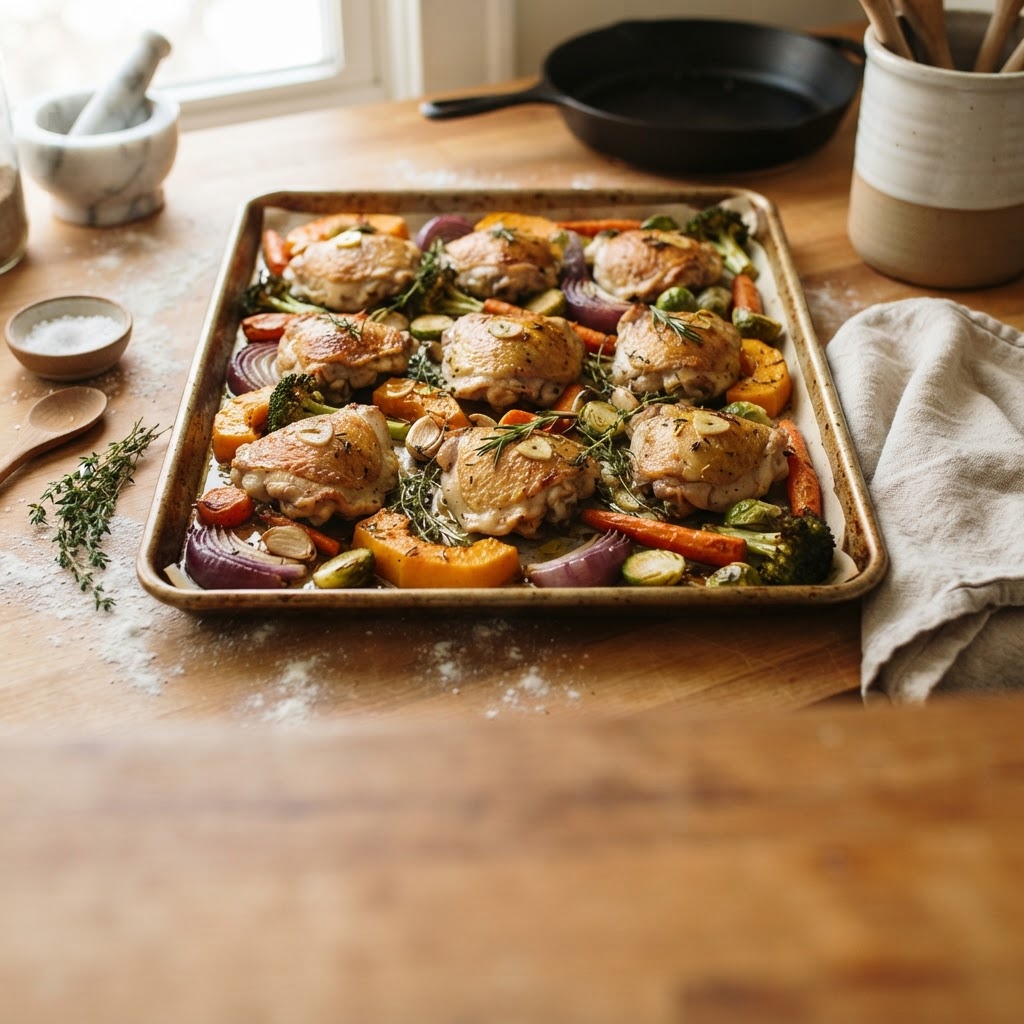
Quick reference
- Add first: Dense vegetables Potatoes, carrots, winter squash
- Add next: Proteins Chicken, sausages, fish, tofu
- Add last: Quick vegetables Asparagus, greens, sliced peppers
- Finish late: Sauces and sugars Brush on near the end
The basic order
For reliable sheet pan dinner timing, start with the ingredients that take the longest: dense vegetables. Roast them alone until they begin to soften, then add the protein. Quick-cooking vegetables go on last so they stay bright and retain some texture. The exact timing depends on the ingredient, its thickness, and your oven, but this sequence works for most mixed sheet-pan meals.
- Dense vegetables first
- Proteins in the middle
- Quick vegetables last
Cut size controls the schedule
Pieces cook at different speeds when their sizes differ. Cut potatoes, carrots, and squash into similarly sized pieces, about 1-inch chunks when pairing them with a typical protein. Smaller pieces need less time; thick wedges and whole portions need more. If one ingredient must remain larger, give it a head start rather than overcrowding the pan or leaving other food to overcook.
- Match pieces by size
- Use smaller cuts for faster cooking
- Give thick pieces extra time
Use high heat and leave room
A hot oven—usually 425°F to 450°F—helps vegetables brown while proteins cook through. Spread food in a single layer with space between pieces. Crowding traps moisture and slows browning, which can make timing unpredictable. Use two pans if needed, and rotate them or switch racks only if your oven browns unevenly. Toss ingredients with enough oil to coat, but avoid pooling oil on the pan.
- Preheat fully
- Keep food in one layer
- Use a second pan instead of crowding
When to add sauces and sugars
Add sweet glazes, barbecue sauce, honey, maple syrup, and sugary marinades near the end of cooking. Applied too early, they can darken or burn before the food is done. Brush or toss them on during the final 5 to 10 minutes, depending on the heat and thickness of the coating. For a sauce that must stay fresh or loose, serve it at the table instead.
- Glaze during the final 5–10 minutes
- Reserve delicate herbs for the finish
- Serve extra sauce separately
Check the protein, not just the clock
Timing is a guide; a thermometer is the dependable check for proteins. Insert it into the thickest part, avoiding bone and the pan. Poultry and ground poultry should reach 165°F / 74°C. Ground beef, pork, lamb, or veal should reach 160°F / 71°C. Whole cuts of beef, pork, lamb, and veal should reach 145°F / 63°C, followed by a 3-minute rest; fish should reach 145°F / 63°C. If the protein needs longer, remove quick vegetables first if they are already tender.
- Check the thickest section
- Account for bone and thickness
- Rest whole cuts as specified
A practical timing pattern
For a mixed meal, roast dense vegetables first, usually for 15 to 25 minutes, then add a similarly sized protein and roast until nearly done. Add quick vegetables for the final 8 to 15 minutes. These ranges are starting points, not guarantees: chicken thighs, sausages, fish fillets, tofu, and vegetables all vary. Begin checking early, especially with convection ovens, dark pans, thin cuts, or small portions.
- Start dense vegetables
- Add the main protein
- Finish with quick vegetables