Seafood Boil Timing Chart: What Goes In First
Use this seafood boil timing chart to layer potatoes, corn, sausage, shrimp, crab, and other shellfish without overcooking dinner.
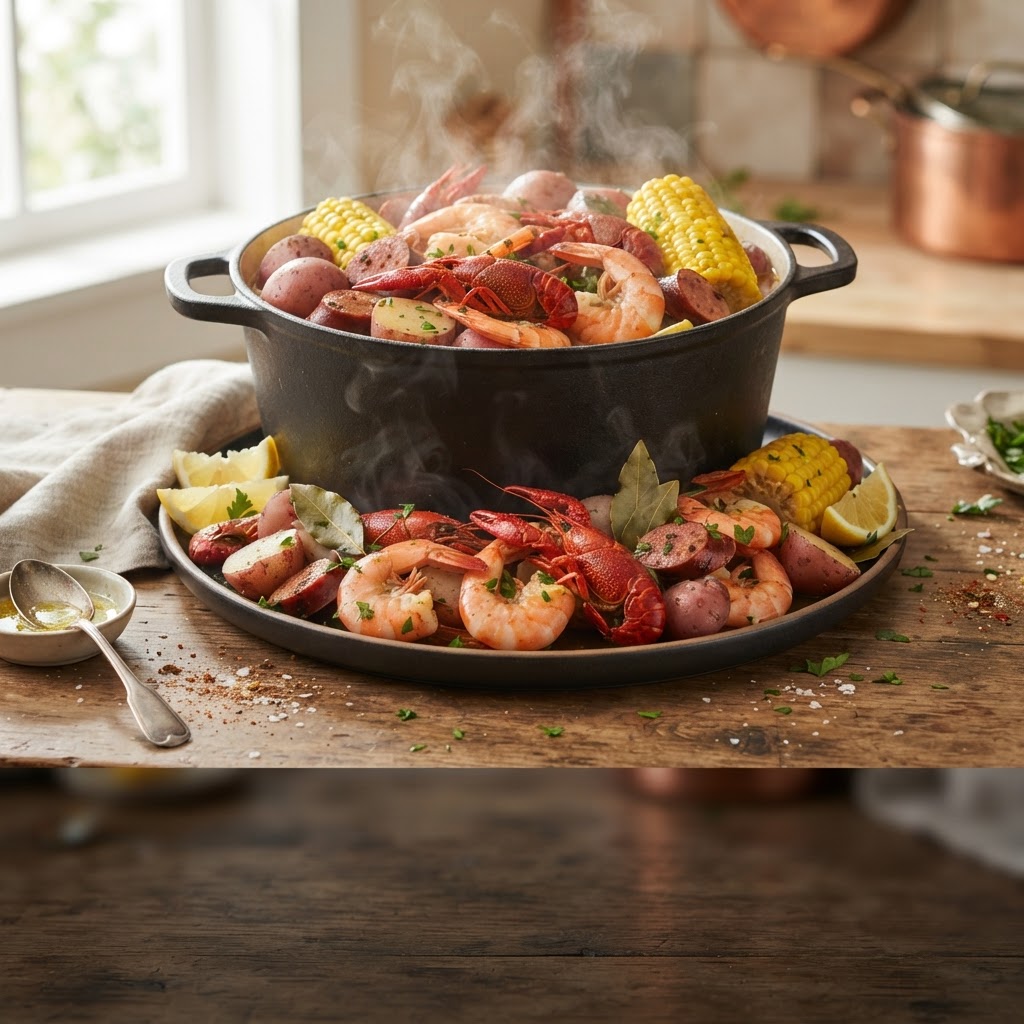
Quick reference
- Ingredient: Add when Typical simmer time
- Potatoes: First 15–25 minutes
- Corn: With potatoes or shortly after 8–12 minutes
- Precooked sausage: After potatoes soften 5–8 minutes
- Shellfish and shrimp: Last 3–8 minutes; check doneness
The short answer: build the pot in layers
For reliable seafood boil timing, start with the ingredients that take longest: potatoes first, followed by corn. Add precooked sausage once the potatoes have begun to soften. Put shrimp and other shellfish in last, because they can turn tough or dry quickly. Keep the liquid at a steady boil or lively simmer, and begin timing each ingredient when it enters the pot—not when the water first heats.
1. Start with potatoes
Cut potatoes into similarly sized pieces so they finish together. Small red or yellow potatoes usually need about 15 to 25 minutes, depending on size and how vigorously the pot is boiling. Test one with a fork before adding the quickest ingredients; it should be nearly tender but not falling apart. Larger pieces need more time, while very small potatoes may be ready sooner.
- Add potatoes to seasoned boiling water first.
- Check with a fork before moving to the next layer.
2. Add corn and precooked sausage
Add corn after the potatoes have had a head start, or place it in at the same time if the potatoes are small. Corn commonly needs 8 to 12 minutes. Precooked sausage only needs to heat through and release its flavor, so add sliced links during the final 5 to 8 minutes. If using raw sausage, do not follow this timing; cook it thoroughly according to its type and size before relying on the seafood schedule.
- Corn on the cob: about 8–12 minutes.
- Precooked sausage: usually the final 5–8 minutes.
3. Finish with shellfish and shrimp
Add crab legs, clams, mussels, and shrimp near the end. Shrimp cooks fastest: medium shrimp often need roughly 3 to 5 minutes, while larger shrimp may need longer. Clams and mussels are ready when their shells open, commonly within 5 to 8 minutes. Crab legs are usually already cooked and mainly need to warm through. Avoid crowding the pot, which can slow cooking and make timing less predictable.
- Shrimp is done when opaque and firm, with a curved shape.
- Discard any clams or mussels that remain unopened after cooking.
- Use a separate batch if the pot becomes too full.
Check doneness, not just the clock
Cooking times vary with ingredient size, starting temperature, pot volume, and burner strength, so use the chart as a guide. Seafood should reach 145°F (63°C). Check the thickest shrimp or fish if included, and confirm that shellfish has opened. Remove ingredients promptly once done; leaving shrimp or delicate shellfish in the hot broth while other items finish can overcook them.
A simple serving plan
Lift out the cooked ingredients with a spider, slotted spoon, or basket so they stop cooking quickly. Drain well, then spread the boil across a platter or lined table and serve immediately with lemon, melted butter, or the seasoned broth. If you are cooking several batches, return the liquid to a full simmer between batches and adjust timing for the second round.