Savory Porridge Beyond Oatmeal: Barley, Rice, Polenta, and Global Ideas
Savory porridge can be made from barley, rice, polenta, grits, oats, and more, then finished with broth, vegetables, eggs, herbs, or protein.
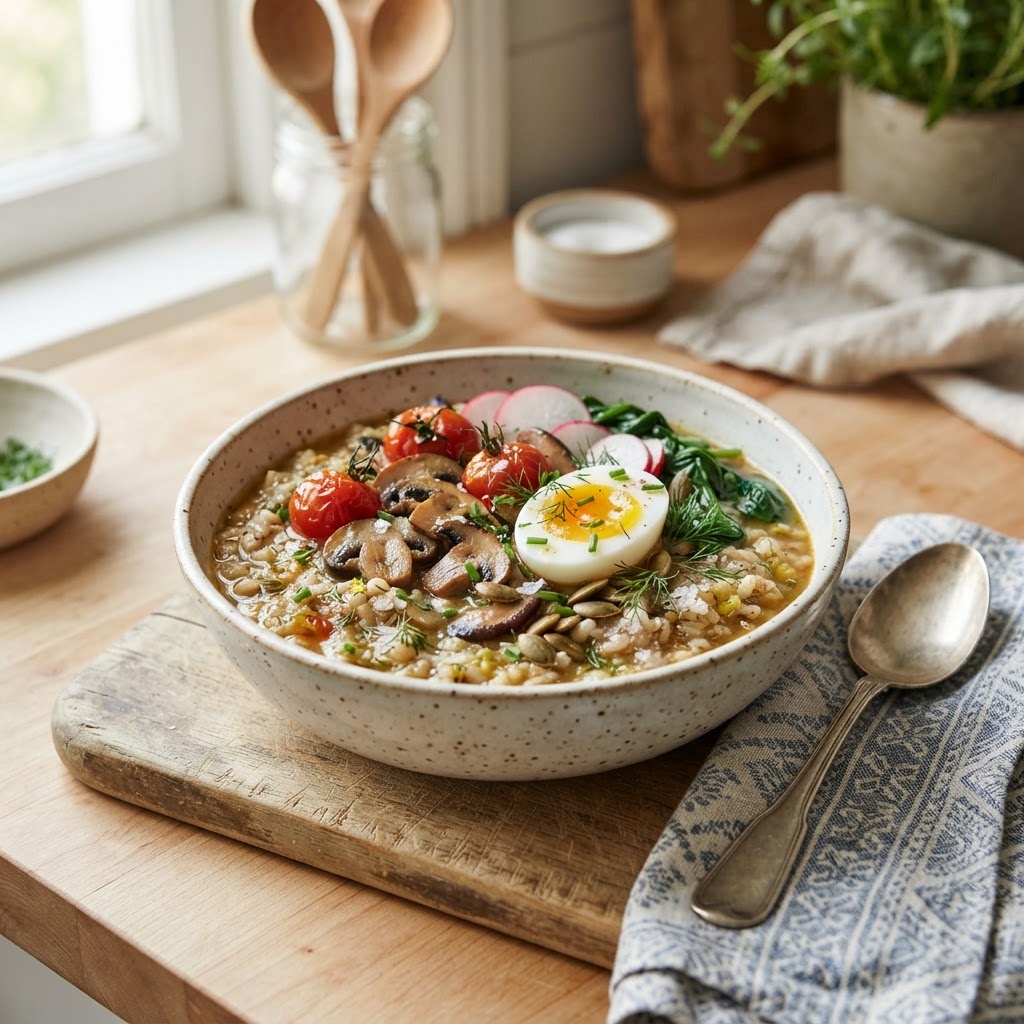
Quick reference
- Grain: Texture Good pairings
- Pearled barley: Chewy, creamy Mushrooms, greens, sausage
- Rice: Silky, spoonable Ginger, scallions, egg
- Polenta or grits: Soft, rich Tomatoes, beans, braised meat
- Oats: Creamy, hearty Cheese, fried egg, vegetables
Start with the grain
Nearly any grain can become savory porridge if it is cooked with enough liquid and stirred or simmered until tender. Barley stays pleasantly chewy while releasing enough starch to thicken a bowl. Rice can be cooked down into a smooth congee-style porridge. Cornmeal becomes polenta or grits, and oats turn creamy with stock instead of water. Farro, millet, buckwheat, and sorghum also work, though they keep more distinct texture.
- Use pearled barley for a quicker, softer result; hulled barley takes longer.
- Choose short- or medium-grain rice for the creamiest porridge.
- Toast grains briefly first for a deeper, nuttier flavor.
Build flavor in the cooking liquid
Water works, but broth makes savory porridge taste finished from the first spoonful. Use chicken, vegetable, mushroom, or seafood stock according to the toppings. Add aromatics early—onion, garlic, ginger, scallion, celery, or a bay leaf—and season gradually because stock and cheese may already be salty. For polenta and grits, a mixture of water and milk can add richness without making the base heavy.
- Keep extra hot broth nearby for loosening thick porridge.
- Stir more often as the grain softens and the liquid reduces.
- Finish with butter, olive oil, grated cheese, or sesame oil.
Think in contrasting toppings
A good bowl balances the soft base with color, texture, and something savory. Add roasted or sautéed vegetables, leafy greens, beans, shredded chicken, crisp bacon, browned mushrooms, or leftover braised meat. Eggs are especially versatile: poached or soft-boiled eggs suit rice porridge, while fried eggs pair well with oats, grits, and polenta. A bright finish—pickled onions, citrus, herbs, chili crisp, or vinegar—keeps the bowl from tasting flat.
- For crunch, try toasted seeds, nuts, fried onions, or crisp breadcrumbs.
- Add delicate herbs and acidic toppings just before serving.
- Use one rich topping and one fresh or sharp topping for balance.
Borrow ideas from around the world
Savory rice porridge appears in many forms, including congee, often seasoned with ginger, scallions, soy sauce, sesame oil, or meat. Italian-style polenta welcomes mushrooms, greens, tomato, or slow-cooked meat. Southern-style grits pair naturally with shrimp, cheese, eggs, or sautéed vegetables. Barley porridge works especially well with earthy mushrooms and broth, while oats can take cues from grain bowls with roasted vegetables, cheddar, and a runny egg. These are starting points, not fixed formulas.
- Use soy sauce, miso, or chili oil for an East Asian direction.
- Try Parmesan, herbs, and braised vegetables with polenta.
- Pair grits with shrimp, beans, greens, or smoked fish.
Control texture and make it useful
Cook until the grain is tender, then adjust the consistency to match the meal: loose and brothy for rice porridge, spoon-coating for barley, or thick and creamy for polenta and grits. Porridge continues to thicken as it stands, so serve it slightly looser than your target. Leftovers can be loosened with broth and reheated gently; thick polenta can also be chilled, sliced, and pan-seared. Store cooked leftovers promptly in the refrigerator and use them within 3–4 days.
- Taste for salt only after the liquid has reduced.
- Add water or broth a little at a time when reheating.
- Top each serving separately so leftovers stay adaptable.