Sardines, Anchovies, and Tuna: How Tinned Fish Behave Differently in Cooking
Sardines stay chunky, anchovies dissolve into savory depth, and tuna holds a flaky bite—use each where its texture and intensity fit.
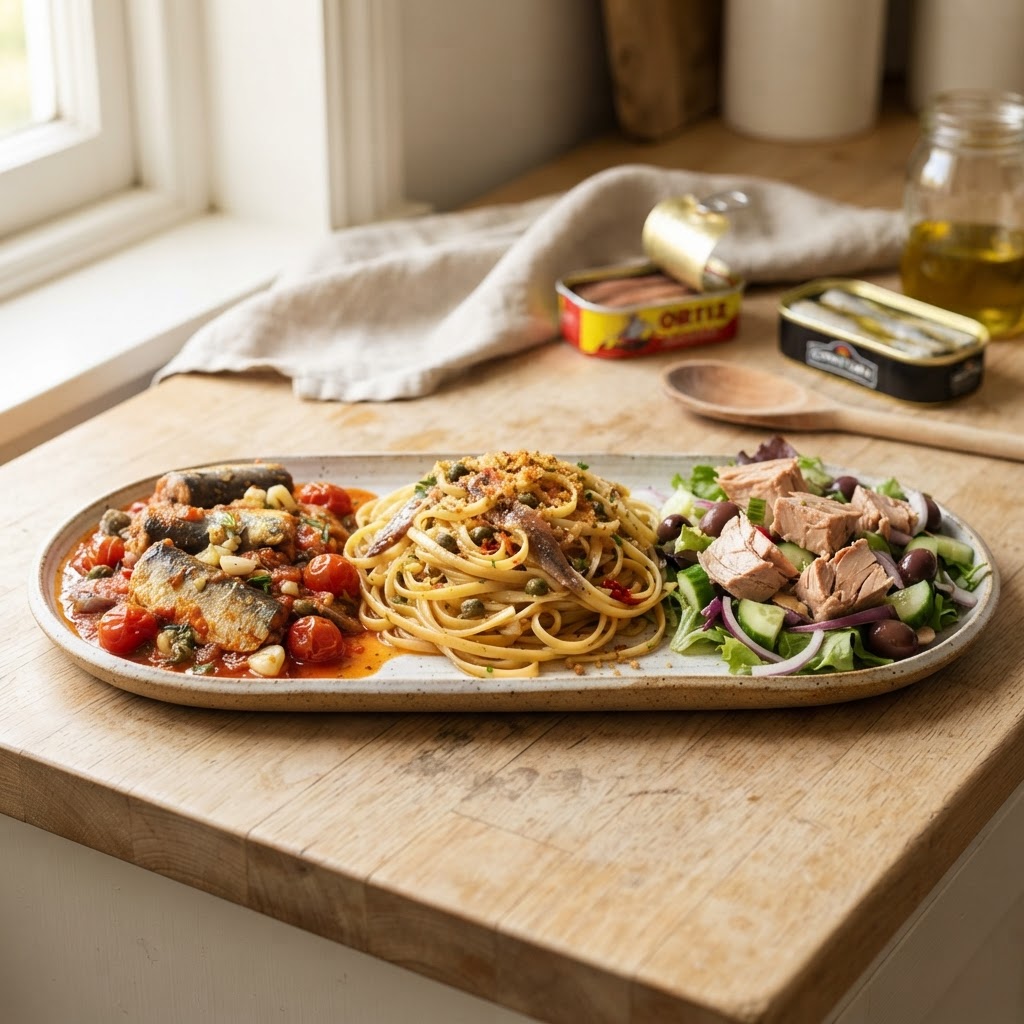
Quick reference
- Sardines: Chunky, soft flakes Mild to medium; usually stays intact
- Anchovies: Tender, almost paste-like Salty and intense; dissolves when heated
- Tuna: Firm, flaky pieces Mild; holds its shape best
The practical difference
Sardines, anchovies, and tuna are not interchangeable once they hit a pan. Sardines bring visible, rich flakes; anchovies mostly disappear and season the dish; tuna adds a familiar, meaty bite. Their salt levels vary by brand and packing liquid, but anchovies are generally the most forceful. Drain each well, taste before adding salt, and use the fish either as the main ingredient or as background seasoning.
Sardines: soft flakes with a distinct presence
Tinned sardines are tender, oily, and usually soft enough to break with a fork, but they remain recognizable in the finished dish. They work well when you want the fish to be seen and tasted without a delicate cooking time. Fold them into warm pasta at the end, layer them on toast, or add them to a tomato-based pantry dinner. Handle gently if you want larger pieces rather than a rough mash.
- Best with: lemon, parsley, tomatoes, chili, olives
- Use in: pasta, toast, grain salads, tomato sauces
Anchovies: a seasoning as much as a fish
Anchovies are the choice for depth rather than chunks. Warm them gently in olive oil with garlic, and they soften into the fat, leaving a savory, salty backbone without a strong piece of fish in every bite. They are useful in pasta sauces, vinaigrettes, braises, beans, and tomato dishes. Add them early enough to melt, but keep the heat moderate so the garlic or oil does not scorch.
- Start with a small amount, then taste
- Pair with: garlic, capers, greens, butter, tomatoes
Tuna: firm, mild, and easy to portion
Tinned tuna has the firmest, most familiar texture of the three. Solid or chunk varieties hold together in salads, sandwiches, toast, and skillet dinners; flaked tuna blends more readily into sauces, patties, or pasta. Because its flavor is comparatively mild, it benefits from bright or creamy partners such as lemon, mustard, mayonnaise, yogurt, herbs, or chili. Add it late to hot dishes to avoid drying it out.
- Best for: tuna salad, pasta, melts, rice bowls
- Choose oil-packed tuna for richness; water-packed for a lighter finish
How to choose for common dishes
For pasta, use anchovies when you want a sauce to taste deeper, sardines when you want substantial fish flakes, and tuna for a quick, filling topping. In salads, tuna gives structure, sardines add richness, and anchovies are best whisked into the dressing. On toast, sardines make the clearest centerpiece while anchovies pair well with butter or tomatoes. For pantry dinners, combine one fish with a bold supporting ingredient rather than stacking several salty elements.
Simple cooking rules
Drain packed fish according to the dish: reserve flavorful oil for frying aromatics or dressing, but avoid adding all of it automatically. Keep sardines and tuna in larger pieces by folding them in gently near the end. Let anchovies melt into the cooking fat at the beginning. Since canned fish is already cooked, the goal is to warm it and combine flavors—not to cook it for a long time.