Rice Vinegar Substitutes: Choosing by Acidity and Flavor
Replace rice vinegar with a balanced splash of white wine vinegar, apple cider vinegar, sherry vinegar, or citrus—then taste and adjust.
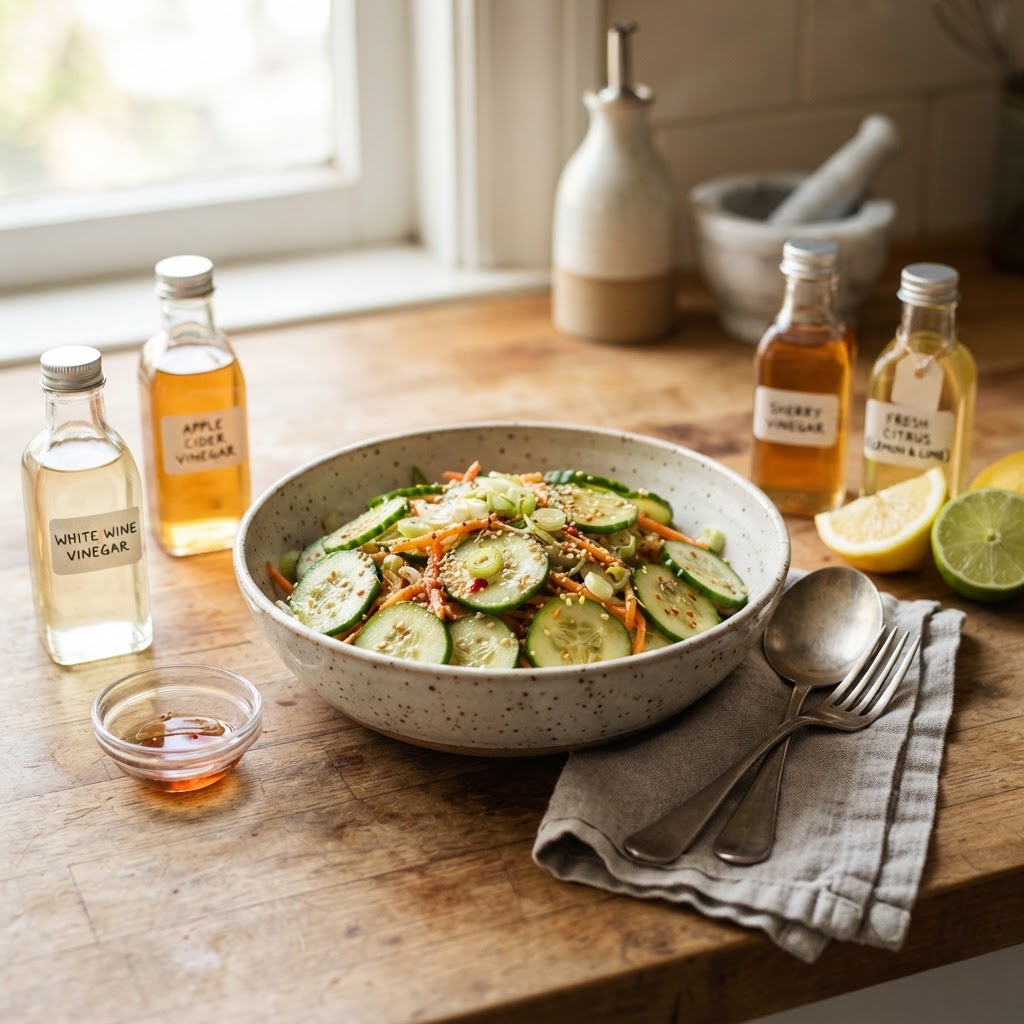
Quick reference
- Best all-purpose swap: White wine vinegar Use 1:1; mild and clean
- For sushi-style rice: White wine vinegar + sugar Start 1:1, then balance
- For dressings: Apple cider vinegar Use slightly less; fruity
- For sauces: Sherry vinegar Use 1:1; deeper flavor
- For quick pickles: White vinegar or citrus Sharper or fresher finish
Start with the mildest match
The easiest rice vinegar replacement is white wine vinegar, used in roughly the same amount. It has a clean acidity without overwhelming delicate ingredients. Apple cider vinegar also works, especially in slaws, dipping sauces, and dressings, but its fruitiness is more noticeable. Champagne vinegar is another gentle option. Because vinegars vary in strength and sweetness, add most of the suggested amount first, taste, and finish with small splashes.
For sushi-style rice
Rice vinegar contributes both acidity and a subtle sweetness to seasoned rice. Replace it with white wine vinegar, then add sugar and salt separately to recreate that balance. Begin with 1 tablespoon vinegar per cup of cooked rice, along with a small pinch of sugar and salt; the exact amount depends on the rice quantity and your preferred seasoning. Fold the mixture in while the rice is warm, tasting after it is evenly mixed.
- Avoid straight distilled vinegar unless diluted; it can taste harsh.
- Apple cider vinegar works, but it gives the rice a lightly fruity color and flavor.
For dressings and dipping sauces
Choose apple cider vinegar when a dressing contains mustard, maple syrup, honey, cabbage, or sturdy greens. White wine vinegar is better for cucumber, herbs, seafood, and lighter salads. Lemon or lime juice can replace vinegar when you want a brighter, fresher note; start with about three-quarters of the vinegar amount because citrus can taste more pointed. Add oil, sweetener, and salt gradually so the finished dressing stays balanced.
For cooked sauces and marinades
Sherry vinegar adds rounded, savory depth to pan sauces, bean dishes, and marinades, while champagne vinegar keeps creamier or delicate sauces bright. Distilled white vinegar is a practical option for bold sauces, but dilute it with water or use less than the recipe calls for. If the sauce already contains citrus, tomatoes, wine, or another acidic ingredient, reduce the substitute further and taste after simmering.
For quick pickles
Use white vinegar when you want a crisp, unmistakably tangy pickle, or apple cider vinegar for a softer, slightly sweet profile. Lemon juice is suitable for quick refrigerator pickles meant to be eaten soon, but it will not provide the same sharp, lasting vinegar flavor. Keep the vegetables submerged and refrigerate them; this is a flavor shortcut, not a shelf-stable canning method. Adjust sugar and salt only after the brine tastes balanced.
Why tasting beats a fixed ratio
There is no universal substitution ratio because rice vinegar is usually milder than distilled vinegar, while citrus and fruit vinegars bring different aromas and sweetness. Start with about three-quarters to one-for-one, depending on the substitute, then taste the whole dish—not the acid alone. Add more substitute for brightness, a pinch of sugar for roundness, or water and oil if the flavor has become too sharp.