Refrigerator Zones Explained: Where Raw Meat, Leftovers, Dairy, and Produce Belong
Store raw meat low, leftovers and dairy on stable middle shelves, and produce in humidity drawers to limit spills and keep food usable.
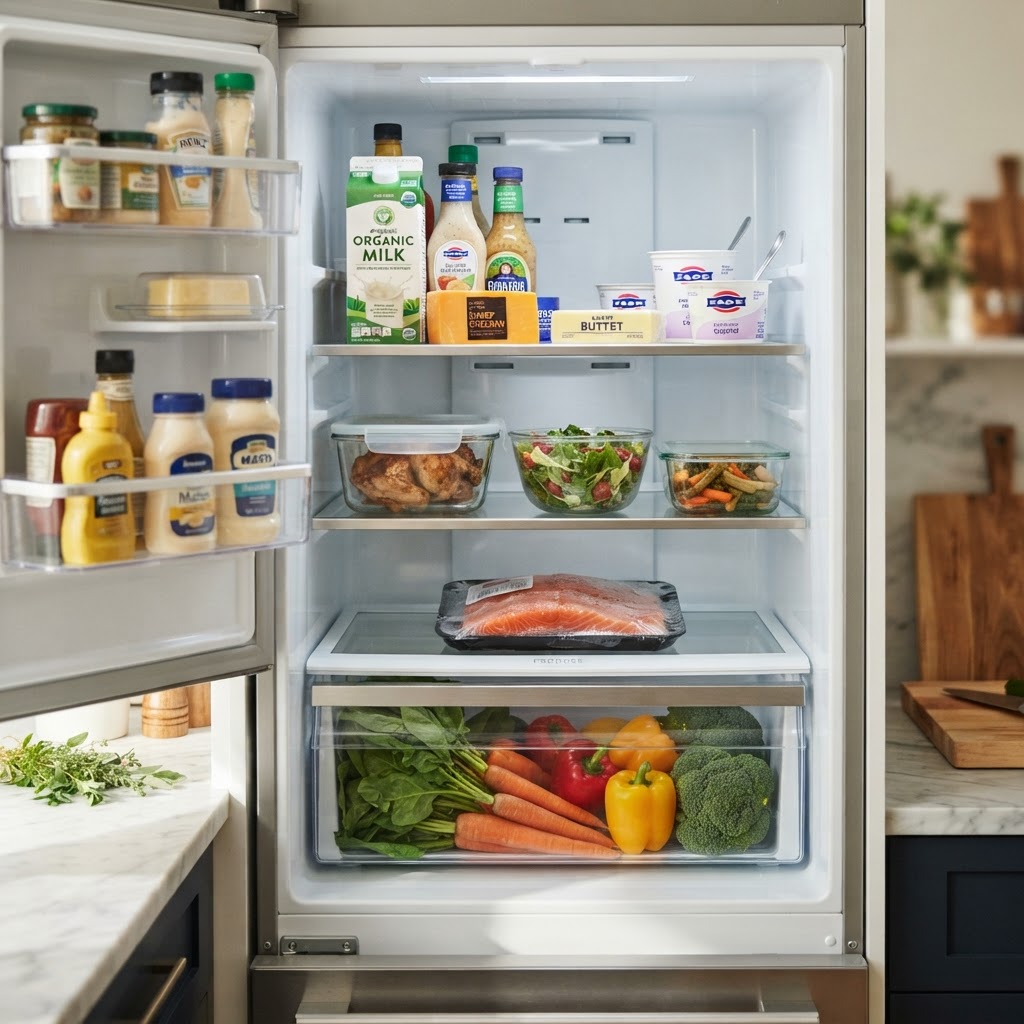
Quick reference
- Top shelf: Ready-to-eat foods Stable, visible storage
- Middle shelf: Leftovers and dairy Keep covered and dated
- Bottom shelf: Raw meat and poultry Use a leakproof tray
- Drawers: Produce Separate by humidity needs
The basic refrigerator map
Place foods according to the risks they create, not how tidy a shelf looks. The bottom shelf is best for raw meat because it reduces the chance that a leak will drip onto ready-to-eat food. Keep leftovers, cooked foods, and dairy on the upper or middle shelves, where temperature is generally more consistent than in the door. Use drawers for produce, and reserve the door for items that tolerate frequent temperature changes.
Raw meat belongs on the bottom
Keep raw poultry, ground meat, steaks, chops, and seafood in sealed packaging or a leakproof container on the bottom shelf. A tray adds protection if the package leaks. Store these foods separately from salad ingredients, fruit, and cooked food. Refrigerate perishable raw meat promptly, and never thaw it on the counter; thaw it in the refrigerator, cold water, or the microwave when cooking immediately.
- Use the bottom shelf, never above leftovers.
- Wipe spills promptly with hot, soapy water.
- Keep seafood sealed and separate from other foods.
Leftovers, cooked food, and dairy
Put covered leftovers and other ready-to-eat foods on the middle or top shelves. Label containers with the date and refrigerate cooked food within 2 hours, or within 1 hour when the room is above 90°F / 32°C. Most cooked leftovers keep for 3–4 days refrigerated. Reheat leftovers to 165°F / 74°C. Milk and soft dairy are also better on an interior shelf than in the door, where temperatures fluctuate more.
- Cool food in shallow containers for faster chilling.
- Keep containers closed to prevent spills and odors.
- Place older leftovers toward the front.
Produce drawers: use humidity to your advantage
Crisper drawers help produce retain quality by creating a more humid space than the main refrigerator. Leafy greens and herbs generally prefer higher humidity, while apples, citrus, peppers, and many fruits and vegetables do better with more airflow. If your refrigerator has one adjustable drawer, use its setting according to the produce you store most often. Keep raw meat out of produce drawers, even when packaged.
- High humidity: greens, broccoli, carrots, and herbs.
- Lower humidity: apples, pears, citrus, and peppers.
- Store ethylene-sensitive produce away from strongly ripening fruit when practical.
What belongs in the door?
The door is the warmest and most variable area, so use it for condiments, pickles, sauces, and other items labeled for refrigerated storage that do not need the coldest, steadiest location. Avoid storing raw meat, leftovers, milk, or delicate dairy there. Keep the refrigerator reasonably full but not packed tight; cold air needs room to circulate. Check your appliance manual if its layout or cooling system differs.