Quick Pickles at Home: Vinegar Ratio, Texture, Flavor, and Refrigerator Safety
Make crisp refrigerator pickles with the right vinegar strength, balanced salt and sugar, suitable vegetables, and safe cold storage—not shelf-stable canning.
Quick reference
- Vinegar: 5% acidity Use labeled distilled, cider, or wine vinegar
- Starter brine: 1:1 vinegar to water Adjust flavor, not vinegar strength
- Salt: 1–2 tsp per cup liquid Use to taste; it seasons and firms vegetables
- Storage: Refrigerate promptly Keep vegetables submerged and cold
How refrigerator quick pickles work
Quick pickles are vegetables covered with a seasoned vinegar brine, then chilled until the flavor moves into the food. Vinegar supplies acidity, while refrigeration slows spoilage. They are usually ready after a few hours and taste more developed after one to two days. This method is convenient for small batches because it does not require processing filled jars in a boiling-water canner.
Choose the right vinegar and ratio
Use vinegar labeled 5% acidity, such as distilled white, apple cider, or wine vinegar. A reliable starting point is equal parts vinegar and water. For a sharper pickle, use more vinegar; for a gentler flavor, use less only when the pickles will stay refrigerated and be eaten promptly. Do not dilute vinegar and then treat the result as shelf-stable. Avoid unmarked homemade or specialty vinegars when acidity is uncertain.
- For 2 cups brine: 1 cup 5% vinegar plus 1 cup water.
- Warm the brine only enough to dissolve salt and sugar.
- Never substitute vinegar strength casually in a canning recipe.
Salt, sugar, and texture
Salt makes the brine taste complete and can help vegetables stay pleasantly firm; too much makes them harsh. Sugar rounds out vinegar’s bite without making the pickles sweet unless you use a larger amount. Start with a modest quantity of each, taste the cooled brine, and adjust before adding vegetables. Slice evenly, and leave cucumbers, carrots, radishes, onions, green beans, or cauliflower in pieces thick enough to resist softening.
Build crisp, flavorful pickles
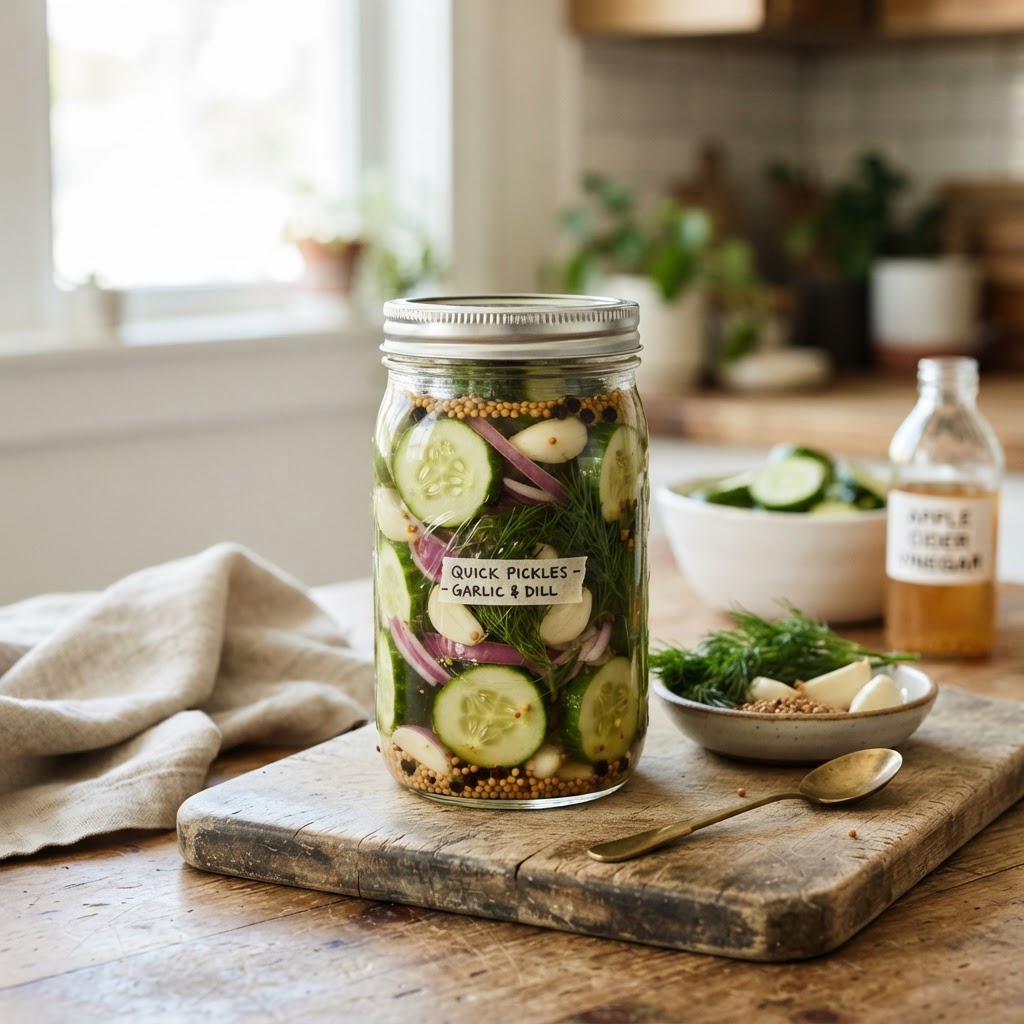
Use very fresh, firm produce and pack it into a clean jar without crushing it. Add garlic, dill, peppercorns, mustard seed, chili, ginger, or citrus peel for character. Pour warm—not boiling—brine over the vegetables, let the jar cool briefly, then cover and refrigerate. Thin slices absorb flavor fastest but soften sooner; spears and thicker coins keep more crunch. Keep the vegetables beneath the brine so exposed pieces do not dry out.
Refrigeration and the canning distinction
Refrigerator pickles are not shelf-stable pickles. Store them in the refrigerator as soon as practical, keep the jar cold, and use clean utensils when serving. A sealed lid or an acidic taste does not make a refrigerator recipe safe for the pantry. For shelf-stable storage, use a tested canning recipe with the specified vinegar acidity, proportions, jar preparation, processing time, and altitude adjustments. Do not improvise those controls.
- Label the jar with the date.
- Discard pickles with mold, bubbling, a swollen lid, or an unpleasant odor.
- When in doubt, throw them out rather than tasting questionable food.
A simple small-batch method
Pack about 2 cups prepared vegetables into a clean pint jar. Combine 1 cup 5% vinegar, 1 cup water, 1 to 2 teaspoons salt, and 1 to 2 tablespoons sugar, plus chosen spices. Heat until the seasonings dissolve, pour over the vegetables, cool, cover, and refrigerate. Taste after 4 hours; the flavor will deepen overnight. Keep the pickles refrigerated and follow the storage guidance for your specific recipe and ingredients.