Pumpkin Puree vs Pumpkin Pie Filling
See how pumpkin puree and pumpkin pie filling differ, read the labels, and choose the right can for pies, soups, breads, and more.
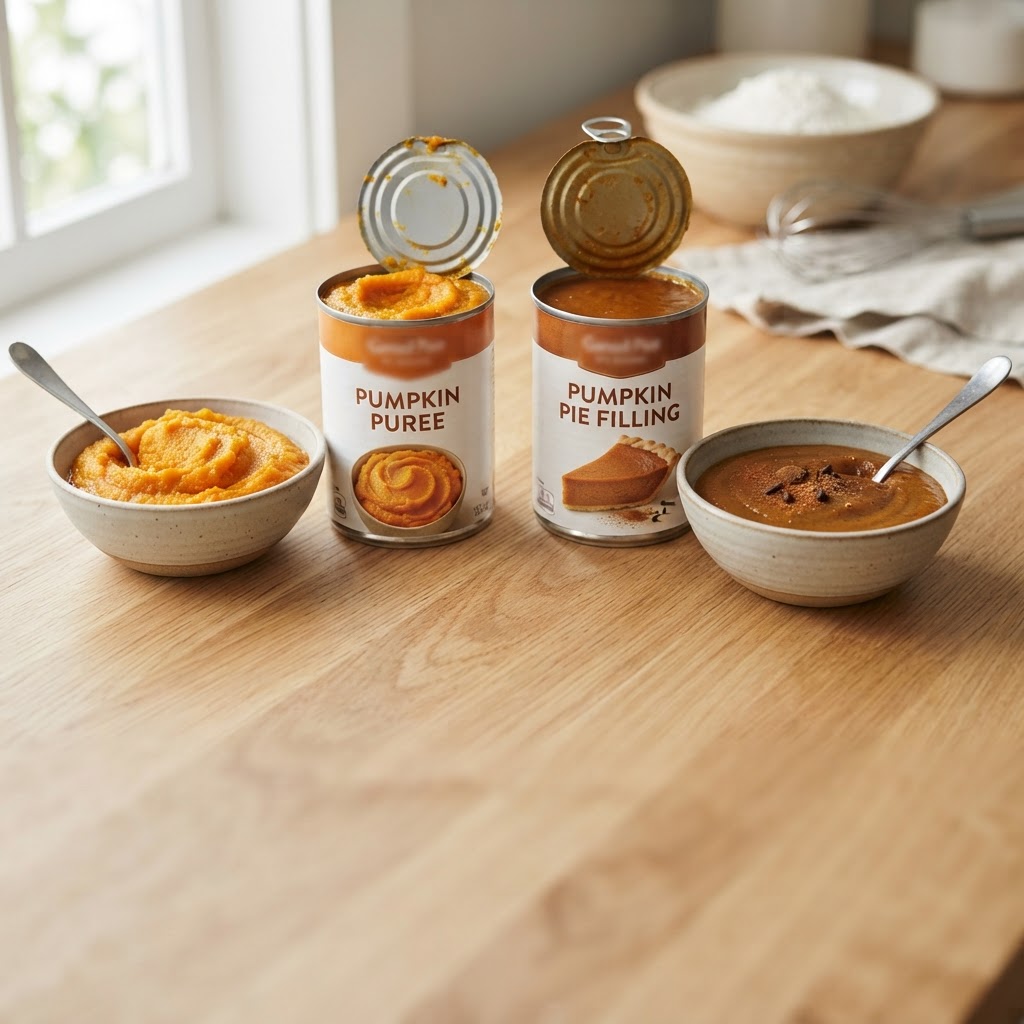
Quick reference
- Plain pumpkin puree: Pumpkin only Unsweetened and unseasoned
- Pumpkin pie filling: Pumpkin plus sugar and spices Usually ready for pie
- Best for puree: Soups, sauces, breads Season to taste
- Best for filling: Pumpkin pie Follow the recipe’s liquid and egg ratios
The short answer
Pumpkin puree is plain cooked pumpkin, usually canned without added sugar, salt, or spices. Pumpkin pie filling is a prepared mixture that typically contains pumpkin, sweetener, cinnamon or other spices, and sometimes additional ingredients. They are not interchangeable 1:1 in most recipes: swapping one for the other can change sweetness, seasoning, texture, and the amount of liquid a dish needs.
How to read the label
Start with the product name and ingredient list rather than the picture on the can. Look for “100% pure pumpkin” or “pumpkin puree” when you want a neutral ingredient. “Pumpkin pie filling” or “pumpkin pie mix” indicates a seasoned, sweetened product. Ingredient lists vary by brand, so check whether salt, sugar, spices, or other sweeteners are included.
- Plain puree: pumpkin is the main or only ingredient.
- Pie filling: sugar and spices appear in the ingredient list.
- Do not rely on “pumpkin” alone; confirm the full product name.
Why the swap usually fails
A recipe made with plain puree expects you to control the sugar, spices, and salt. Using pie filling can make muffins, quick breads, soups, or sauces unexpectedly sweet and spiced. Conversely, using plain puree in a pie recipe designed for prepared filling may leave the pie bland unless you add the missing sugar and seasonings. Filling can also have a different thickness, so the final texture may not match.
Common uses for each
Use plain pumpkin puree when the recipe gives its own seasoning or when you want flexibility. It works well in pumpkin bread, pancakes, oatmeal, custards, pasta sauces, soups, and smoothies. Pumpkin pie filling is designed for convenience in pumpkin pie, though it can also work in desserts specifically written for a sweet, spiced pumpkin mixture. Follow the recipe’s directions instead of assuming the cans measure the same.
- Choose puree for savory dishes and custom-seasoned baking.
- Choose filling for recipes that specifically call for pie mix.
- For homemade puree, drain excess water if it is looser than canned puree.
Can you substitute one for the other?
Sometimes, but adjust the recipe rather than making a straight swap. To replace pie filling with plain puree, add the recipe’s intended sugar and spices, then compare the mixture’s consistency. To replace plain puree with pie filling, reduce or omit added sugar and pumpkin spices, and consider whether the filling’s texture suits the dish. For a first attempt, use the product named in the recipe; it is the most predictable choice.