Pistachios in Savory Cooking: Where They Add More Than Crunch
Pistachios bring color, richness, and contrast to savory sauces, crusts, grains, salads, and vegetables—use them raw for freshness or toasted for depth.
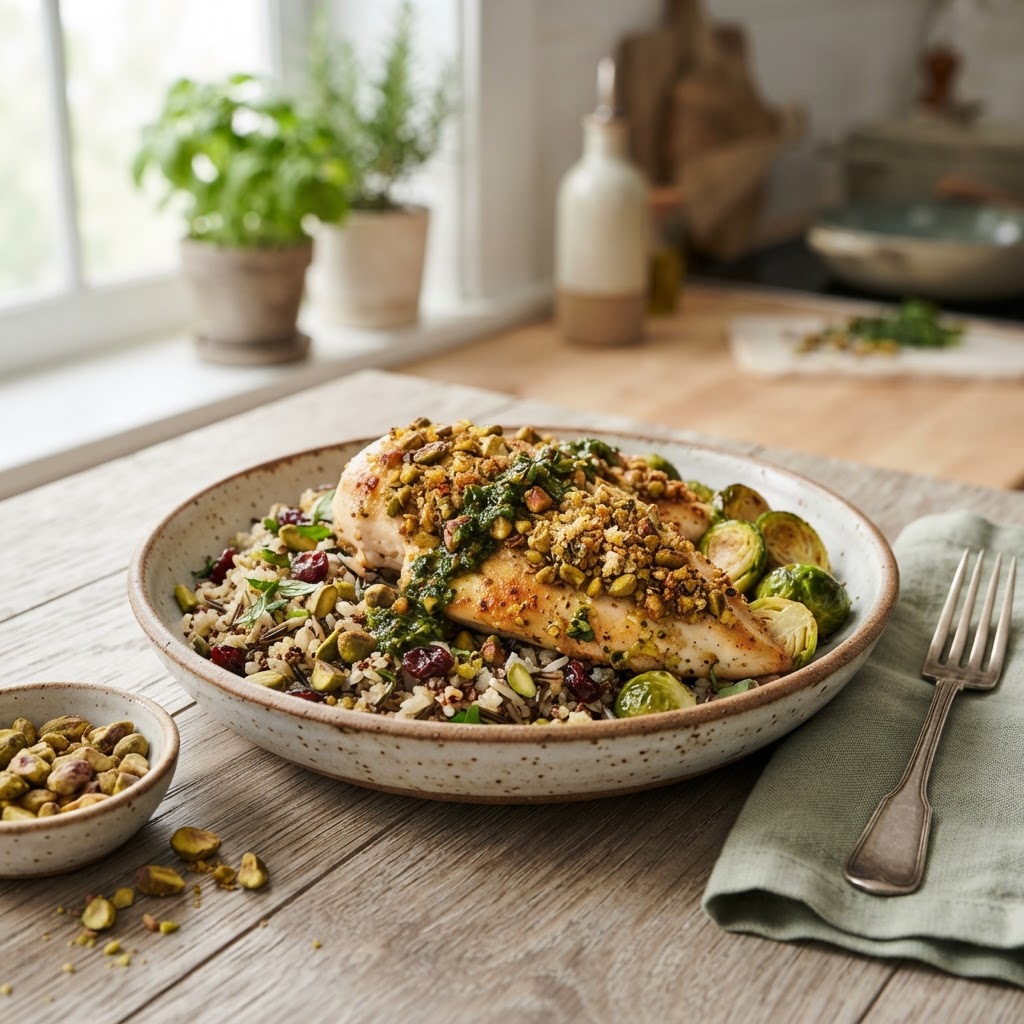
Quick reference
- Use: Best form Why it works
- Sauces: Raw Brighter, smoother flavor
- Crusts: Toasted or raw Toasted gives depth; raw stays delicate
- Grains: Toasted Adds aroma and contrast
- Salads: Raw or lightly toasted Choose freshness or richness
Start with the right treatment
Pistachios can contribute more than crunch: they add gentle sweetness, a buttery texture, and a green, roasted aroma. Use raw pistachios when you want a fresh flavor and softer blend, especially in sauces or herb-heavy dishes. Toasted pistachios suit warm grains, roasted vegetables, and hearty salads, where their deeper flavor can stand up to other ingredients. Toast them in a dry skillet over medium-low heat until fragrant, then cool before chopping.
Blend them into sauces
For a quick pistachio sauce, blend shelled pistachios with olive oil, lemon juice, garlic, herbs, and enough water to loosen the mixture. Keep it coarse for spooning over fish, chicken, roasted carrots, or pasta; blend longer for a smoother spread. Raw nuts preserve the sauce’s fresh color and flavor. A small amount of toasted pistachio can make the same sauce more savory, but too much may overpower delicate herbs.
- Add mint, parsley, or basil for a bright sauce.
- Use yogurt for a creamy dressing or spread.
- Thin with pasta water when serving with noodles.
Build a crust without making it heavy
Finely chopped pistachios make an effective crust for fish, chicken, pork, or vegetables. Combine them with breadcrumbs, lemon zest, herbs, and a little oil, then press the mixture onto a lightly coated surface before baking. Raw pistachios work well when the food needs time to cook, while pre-toasted nuts are useful for quick-cooking fillets or finishing under the broiler. Watch closely: the nuts can darken before the center is done.
Use them in grains and salads
Fold chopped toasted pistachios into couscous, rice, bulgur, farro, or quinoa just before serving. Their aroma becomes more noticeable when paired with warm spices, dried fruit, scallions, or citrus. In salads, raw pistachios keep the flavor clean alongside greens, cucumber, and fresh herbs. Lightly toasted nuts are better with roasted beets, grains, cheese, or sturdy greens. Add them at the end so dressings do not soften them too quickly.
Pair them with vegetables
Pistachios are especially useful with vegetables that bring sweetness or earthy flavor. Try them with roasted carrots, cauliflower, squash, green beans, asparagus, or Brussels sprouts. A spoonful of pistachio sauce can replace a heavier topping, while chopped nuts scattered over the finished dish provide contrast. Balance their richness with lemon, vinegar, yogurt, chile, or fresh herbs. For delicate vegetables, choose raw or barely warmed pistachios; robust roasted vegetables can handle a darker toast.
- Carrots: lemon, cumin, and mint.
- Cauliflower: garlic, chile, and yogurt.
- Green beans: shallot, vinegar, and toasted pistachios.
A practical rule for the trend
The current interest in pistachios is most useful when you treat them as a flavor ingredient, not a garnish added automatically. Decide whether the dish needs freshness, richness, or texture, then choose raw, toasted, or blended nuts accordingly. Chop them to match the food: fine for crusts and sauces, medium for grains, and coarse for salads and vegetable toppings. Buy shelled nuts when convenience matters, and taste before salting because packaged pistachios may already be seasoned.