Parmesan Substitutes for Pasta, Risotto, and Finishing
Choose the right Parmesan alternative by use: melting cheeses for pasta, creamy binders for risotto, and sharper options for finishing.
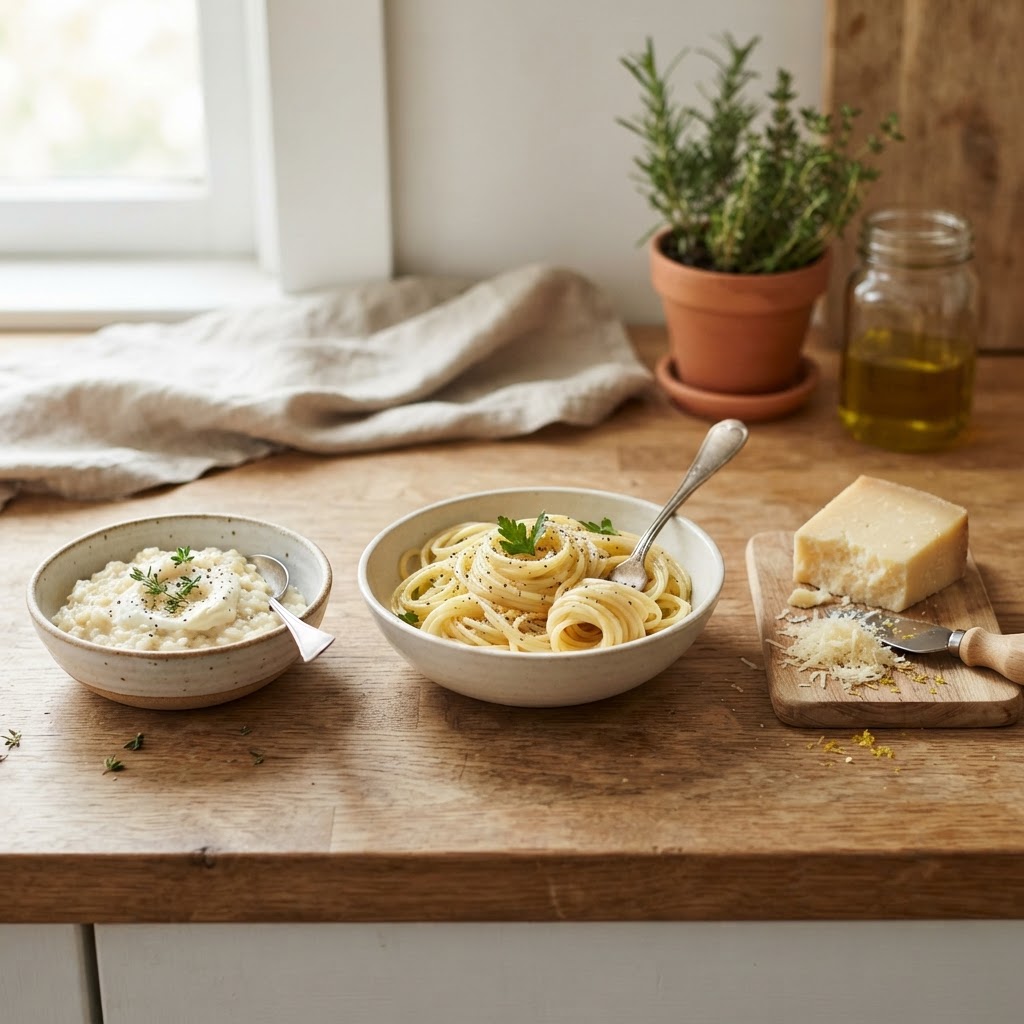
Quick reference
- Use: Best alternatives What to expect
- Melting pasta: Pecorino Romano, Grana Padano Salty, smooth, savory
- Risotto: Grana Padano, aged Asiago Creamy with moderate salt
- Finishing: Pecorino Toscano, aged Asiago Sharper or more aromatic
- Dairy-free: Nutritional yeast, toasted crumbs Flavor and texture differ
Choose by the job
The best Parmesan substitute depends on whether the cheese must melt into a sauce, help thicken risotto, or add a final savory accent. Pecorino Romano is a strong choice when you want a bold, salty finish, while Grana Padano is milder and more forgiving in cooked dishes. Aged Asiago brings nuttiness but can taste more pronounced than Parmesan. Treat these cheeses as alternatives with different behavior, not as exact one-for-one matches.
For melting into pasta
Use finely grated Pecorino Romano or Grana Padano in cacio e pepe, Alfredo-style sauces, and buttered noodles. Add the cheese off the heat with a splash of pasta water, tossing until glossy. Pecorino melts into a smooth sauce but is saltier and sharper, so reduce added salt. Grana Padano is gentler and works well when the sauce already contains salty ingredients such as pancetta, olives, or anchovies.
- Grate the cheese very finely for quicker melting.
- Add pasta water gradually; too much can thin the sauce.
- Avoid pre-shredded cheese when a smooth emulsion matters.
For risotto and thickening
Risotto needs a cheese that melts smoothly while reinforcing its creamy texture. Grana Padano is usually the closest practical swap for Parmesan: it is nutty, less aggressive, and easy to fold in during the final mantecare. Aged Asiago also works, though its flavor is fuller and its moisture can vary by age. Pecorino Romano can be delicious, but use less at first and taste before adding salt.
- Stir cheese in after the rice leaves the heat.
- Use a little butter with the cheese for a rounder finish.
- If the cheese is very dry and crumbly, add it gradually.
For finishing soups, vegetables, and pasta
When cheese is sprinkled over a finished dish, flavor matters more than melting performance. Pecorino Romano gives pasta, beans, and roasted vegetables a distinctly salty, peppery edge. Aged Asiago offers a nuttier, slightly sweeter note and is good over baked pasta or polenta. Pecorino Toscano is softer and milder, making it useful when you want a creamy bite without Parmesan’s sharper aged character.
Non-cheese options and salt control
For a dairy-free topping, nutritional yeast adds savory depth but does not melt like Parmesan. Toasted breadcrumbs provide the missing crunch on pasta, vegetables, and casseroles; season them with garlic, lemon zest, or herbs rather than trying to mimic cheese exactly. Check the salt level of every substitute before seasoning. Hard cheeses lose moisture as they age, concentrating flavor, so the same spoonful can taste much saltier than a milder cheese.
- Start with about three-quarters of the usual amount of a saltier cheese.
- Taste after the cheese is incorporated, not before.
- Combine nutritional yeast with toasted crumbs for flavor and texture.
A simple substitution rule
For cooked sauces and risotto, begin with an equal volume of finely grated Grana Padano and adjust to taste. For a sharper result, replace part or all of it with Pecorino Romano, adding it gradually. For a finishing garnish, choose the flavor you want rather than matching the original quantity: use aged Asiago for nuttiness, Pecorino for bite, or seasoned crumbs for crunch. This approach keeps salt, moisture, and texture in balance.