Orzo vs Rice: How They Cook Differently
Orzo cooks like small pasta, while rice absorbs liquid differently. Compare timing, texture, starch, and the best one-pot uses for each.
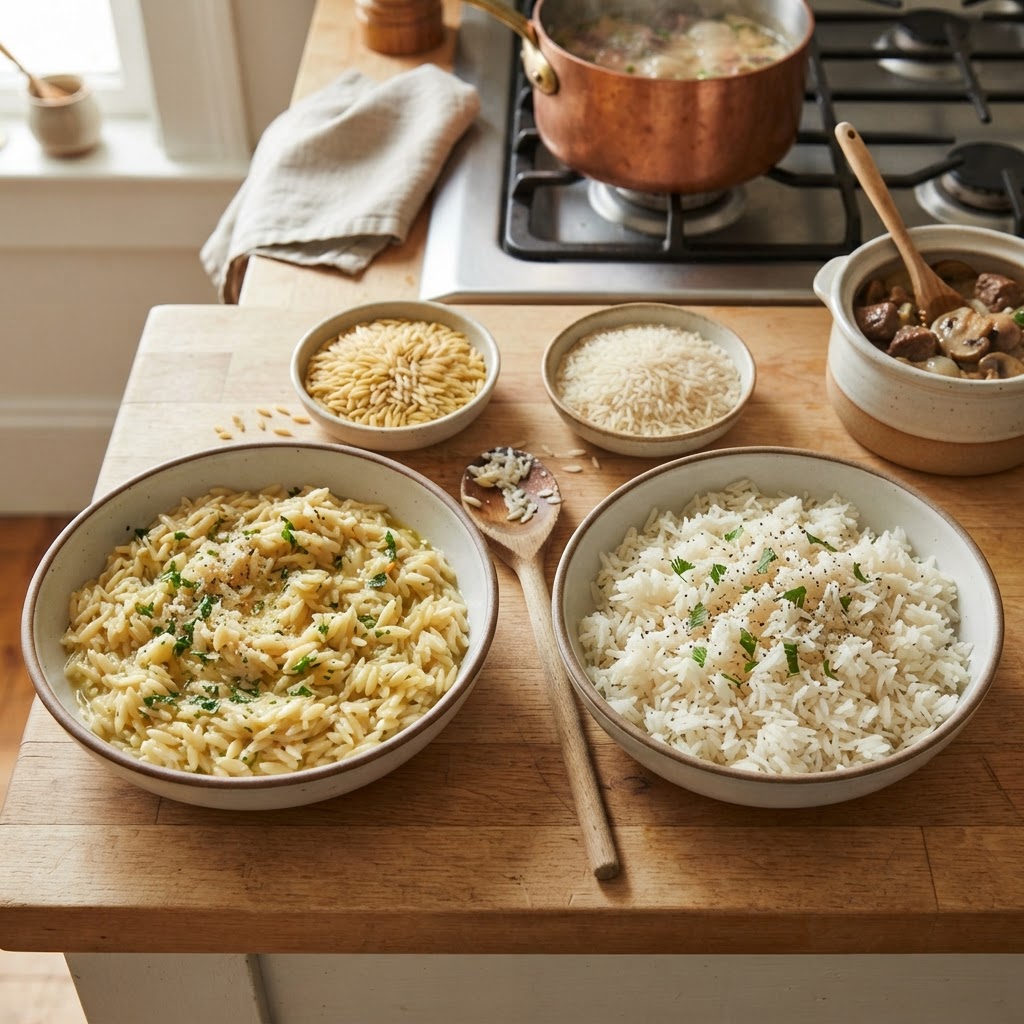
Quick reference
- Ingredient: Orzo Small pasta; usually 8–12 minutes
- Ingredient: White rice Usually 15–20 minutes
- Liquid behavior: Absorbs broth quickly Stir to prevent sticking
- Finished texture: Creamy or firm Depends on liquid and stirring
The key difference
Orzo is pasta shaped like rice, so it cooks in boiling liquid and releases more surface starch as it moves. Rice is a grain whose grains absorb water while staying more separate when cooked correctly. That difference affects everything from the liquid quantity to the finished texture. You can use both in one-pot meals, but they are not interchangeable without adjusting the method.
Liquid and starch behavior
Orzo generally needs enough broth or water to soften fully, but it can turn thick and sticky if the liquid is allowed to disappear too early. Stirring helps distribute heat and prevents pasta from settling on the bottom. Rice usually benefits from a measured liquid ratio, a covered pot, and minimal stirring; agitation can make some varieties gummy.
- Add orzo to simmering sauce or broth and stir periodically.
- For rice, keep the lid on and avoid frequent stirring.
- Check the pan near the end because sauces vary in thickness.
Timing and texture
Many orzo dishes finish in about 8–12 minutes once simmering, though the package and recipe determine the exact time. White rice commonly takes about 15–20 minutes, while brown rice takes longer and needs more liquid. Orzo is tender with a pleasantly pasta-like bite and can become creamy. Rice ranges from fluffy and separate to sticky, depending on the variety and technique.
Choosing the right one-pot base
Use orzo when you want a fast, saucy skillet meal that brings ingredients together—especially creamy dishes such as QuickDinner’s One-Pot Beef Stroganoff Orzo. Its starch helps the sauce cling to the pasta. Choose rice for pilafs, bowls, fried rice, and meals where distinct grains provide structure. QuickDinner’s rice version of beef stroganoff needs its own liquid and timing rather than a direct orzo swap.
How to substitute carefully
Replacing rice with orzo usually means using a pasta-style cooking method and checking the pan earlier. Replacing orzo with rice may require more liquid, a lid, and additional simmering time. Do not rely on a one-to-one volume swap: the shape, brand, rice variety, sauce thickness, and pan all change absorption. If the mixture looks dry before the center is tender, add hot broth a little at a time.
- Taste for doneness rather than following time alone.
- Rest rice covered briefly after cooking for a more even texture.
- Serve orzo promptly; it thickens as it stands.