October Produce Guide: What to Cook as Fall Gets Colder
October cooking favors sturdy squash, roots, apples, pears, and brassicas—ideal for roasting, braising, soups, gratins, and crisp desserts.
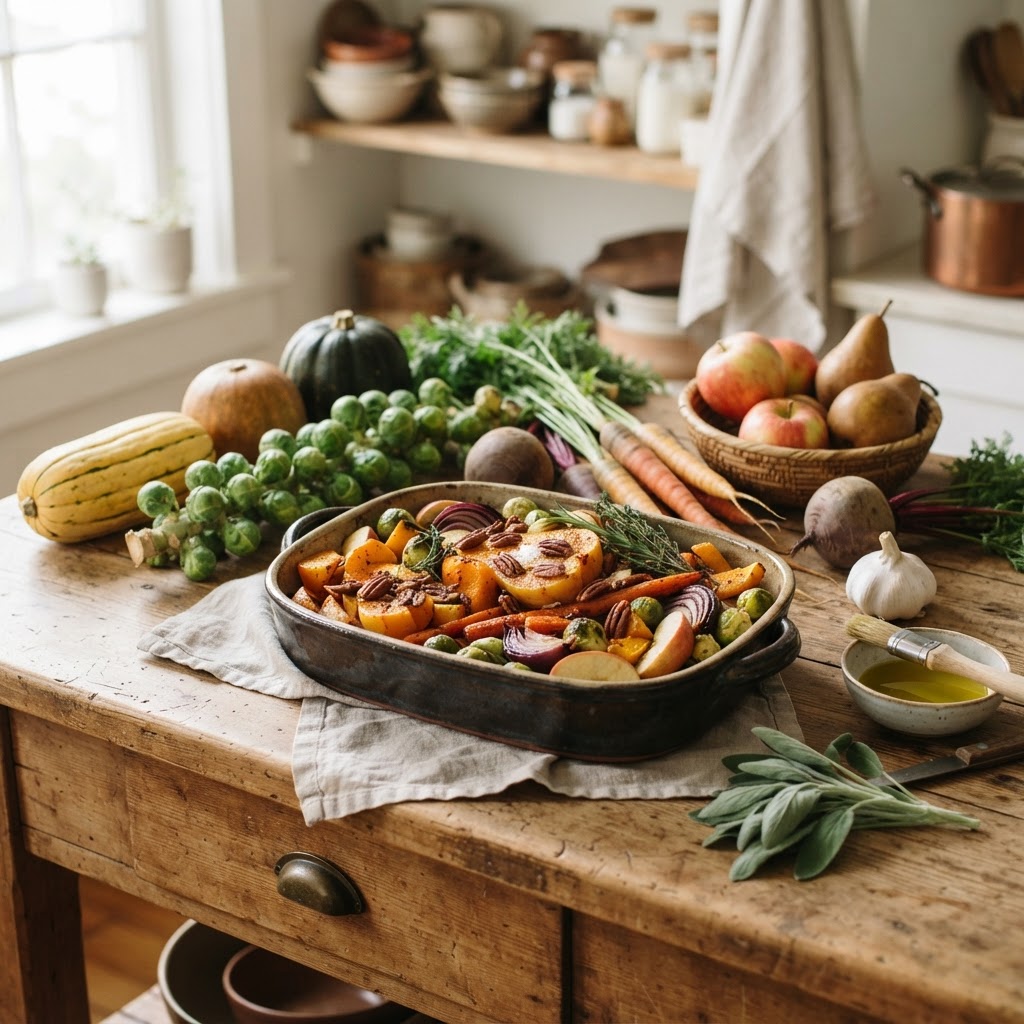
Quick reference
- Produce: Best method Texture to aim for
- Winter squash: Roast or simmer Tender, caramelized
- Root vegetables: Roast or braise Soft centers, browned edges
- Brassicas: Roast or sauté Tender with crisp edges
- Apples and pears: Bake or poach Soft, fragrant fruit
What is useful in October?
As temperatures drop, October produce shifts toward ingredients that hold their shape in the oven or improve with slow cooking. Look for winter squash, sweet potatoes, carrots, beets, turnips, cabbage, Brussels sprouts, cauliflower, apples, pears, and sturdy greens. These fruits and vegetables work in soups, sheet-pan dinners, braises, gratins, and warm desserts—methods that bring out sweetness while softening firmer textures.
Roast for concentrated flavor
Roasting is the easiest way to handle October vegetables. Cut squash, carrots, parsnips, beets, cauliflower, or Brussels sprouts into similarly sized pieces, coat lightly with oil, and spread them out so they brown rather than steam. Use higher heat for crisp edges and check early if pieces are small; dense vegetables may need more time. Add delicate herbs or a splash of acid after roasting to keep the flavors clear.
- Pair squash with sage, chili, or browned butter.
- Finish roots with lemon, vinegar, or fresh herbs.
- Roast cabbage in wedges for sweet, browned layers.
Simmer, braise, and build texture
Cool-weather vegetables are especially useful in one-pot cooking. Add diced roots and squash to soups, or braise cabbage and greens with beans, stock, or tomatoes until tender. For a thicker result, blend part of the cooked vegetables and return them to the pot. Add hardy greens near the end so they soften without losing all of their texture. Cut ingredients to different sizes when you want some pieces to remain distinct.
Use October fruit beyond snacking
Apples and pears are versatile cooking ingredients, not just dessert toppings. Bake them with oats, poach them in gently simmering liquid, or fold them into a savory salad with cabbage and toasted nuts. Apples hold their shape well in pies and skillet desserts, while ripe pears soften faster and suit poaching or roasting. Taste before adding sugar: sweetness varies widely by variety and ripeness.
- Pair apples with pork, cheddar, or mustard.
- Use pears with blue cheese, walnuts, or bitter greens.
- Add cranberries for a sharper fall accent.
A practical October cooking plan
Buy sturdy vegetables for several meals, then prepare them according to texture. Roast a tray of roots or squash for grain bowls, soups, and side dishes; shred cabbage for slaws or braises; and keep apples or pears ready for quick desserts. Store cut produce covered and refrigerated, and cook ingredients in batches that will be used promptly. This approach makes October’s slower, warmer cooking feel manageable on weeknights.