Natural vs Dutch-Process Cocoa: What Changes in Baking
Natural cocoa is acidic and suits baking soda; Dutch-process cocoa is milder and darker. Substitution works best when you match the leavener.
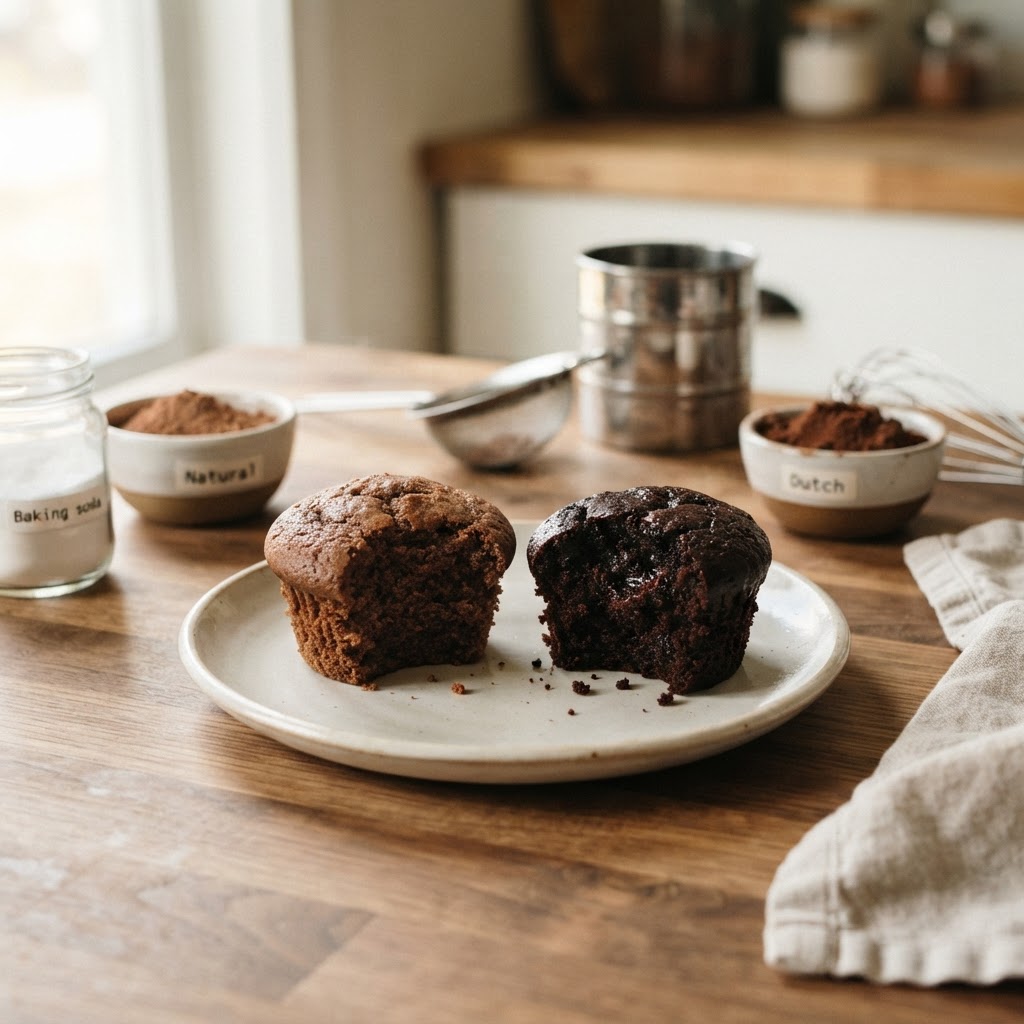
Quick reference
- Natural cocoa: Acidic; lighter brown Often pairs with baking soda
- Dutch-process cocoa: Alkalized; darker brown Often pairs with baking powder
- Flavor: Sharper, fruitier chocolate Can taste brighter
- Best swap: Use recipe leavener as a guide Texture may change
The short answer: sometimes, but not blindly
Natural and Dutch-process cocoa can often replace one another in brownies, cookies, mousse, and other chocolate recipes, especially when cocoa is mainly providing color and flavor. The important difference is acidity. Natural cocoa remains acidic; Dutch-process cocoa has been treated to reduce that acidity. That change can affect how batter rises, how dark the finished bake looks, and whether the chocolate flavor tastes sharp or mellow.
Acidity and leavening
Natural cocoa can contribute acid that reacts with baking soda, helping create lift. Dutch-process cocoa contributes much less acid, so recipes using it commonly rely on baking powder or another acidic ingredient. If a recipe specifically calls for natural cocoa and baking soda, replacing it with Dutch cocoa may leave the result flatter or denser. If it calls for Dutch cocoa and baking powder, natural cocoa will usually still bake, but may add a little extra tang.
- Baking soda needs acid to work effectively.
- Baking powder carries its own acid.
- Do not change the leavener casually in a delicate cake.
Color and flavor changes
Dutch-process cocoa usually makes cakes, cookies, and brownies look deeper brown, sometimes nearly black, with a smooth, rounded chocolate flavor. Natural cocoa is lighter in color and can taste more pronounced or slightly fruity. In a brownie or cookie, the swap may be pleasantly subtle. In a chocolate cake or mousse where color and flavor are prominent, the difference is easier to notice.
How to substitute it in common recipes
For brownies and sturdy cookies, a one-for-one swap is often practical if the recipe has enough liquid and does not depend heavily on a precise rise. For cakes, check the leavener first: natural cocoa with baking soda and Dutch cocoa with baking powder are common pairings. In mousse, frosting, and no-bake fillings, substitution is usually straightforward because there is no leavening reaction; adjust sugar or another flavoring only if the cocoa tastes noticeably sharper or milder.
- Brownies: usually the most forgiving swap.
- Cakes: match cocoa to the leavener when possible.
- Mousse and frosting: swap by volume and taste.
A reliable swap strategy
Start with the recipe’s stated cocoa and leavener rather than changing both at once. If using Dutch-process cocoa in a recipe built around natural cocoa and baking soda, expect less lift and consider choosing a recipe designed for Dutch cocoa instead. If using natural cocoa in a Dutch-cocoa recipe, the result may be lighter and tangier. For the most predictable QuickDinner chocolate recipes, use the specified type; substitute freely in recipes where rise is not central.