Miso Substitutes: What Works for Soups, Marinades, and Sauces
Replace miso by matching its salt, savory depth, and creamy texture with soy sauce, tahini, fermented bean pastes, or broth-based blends.
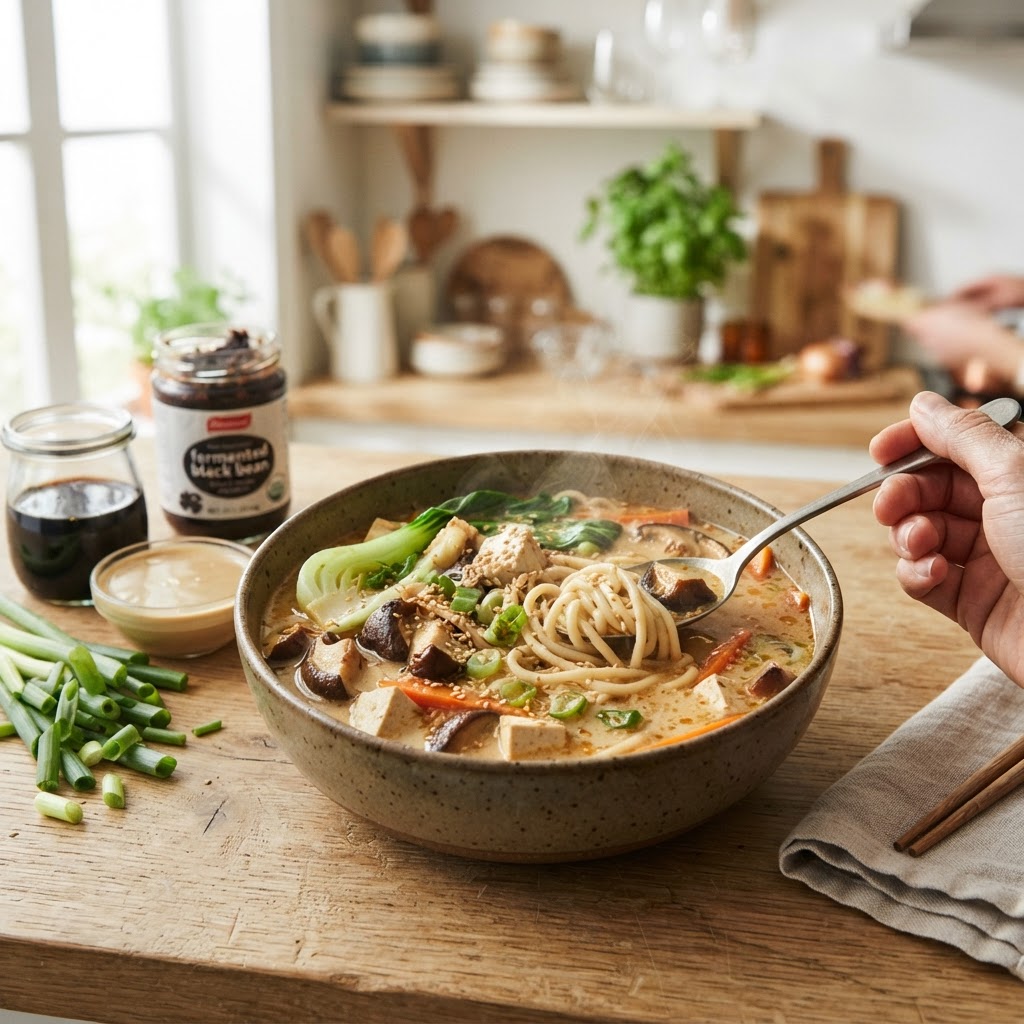
Quick reference
- Soup: Soy sauce + tahini Add gradually; blend smooth
- Marinade: Soy sauce + brown sugar Include oil and acid
- Sauce: Tahini + soy sauce Thin with warm water
- Deepest flavor: Doenjang or fermented bean paste Use less; it may be saltier
Start with the job miso is doing
Miso contributes three things: salt, fermented savoriness, and a thick, spoonable texture. A substitute works best when you replace each element separately rather than swapping in an equal volume. Soy sauce or tamari supplies salt and umami; tahini, peanut butter, or blended beans add body; a small amount of vinegar, lemon juice, or sugar restores balance. Taste after mixing, since brands vary widely in saltiness.
Best miso substitute for soup
For brothy soups, stir in soy sauce or tamari a teaspoon at a time, then add tahini for roundness and body. Start with 1 tablespoon soy sauce plus 1 tablespoon tahini for about 4 cups of soup, adjusting to taste. For a stronger fermented note, use a little doenjang or another fermented bean paste, but reduce other salty ingredients. Whisk the blend with warm broth before adding it to prevent lumps.
- Clear broth: soy sauce or tamari
- Creamier soup: tahini or blended white beans
- More fermentation: doenjang, used sparingly
For marinades and glazes
Miso substitute for marinade mixtures should provide salt, sweetness, and enough body to cling. Combine soy sauce or tamari with brown sugar, honey, or maple syrup, then add oil and a little rice vinegar or citrus. Tahini makes the mixture creamy; grated garlic and ginger add aromatic depth. Because soy sauce is thinner than miso, use less liquid elsewhere and brush on the marinade near the end if it contains sugar, which can scorch over high heat.
For sauces, dressings, and spreads
Use tahini plus soy sauce when you need a smooth, emulsified sauce. Whisk 2 tablespoons tahini with 1 to 2 teaspoons soy sauce, then loosen with warm water until pourable. Add lemon juice for brightness and a small pinch of sugar if the sauce tastes sharp. Peanut butter works in noodle sauces and stir-fries, while blended white beans are a mild option for creamy sauces. Adjust salt only after the sauce reaches its final texture.
What to expect from each alternative
No replacement tastes exactly like miso. Soy sauce gives a clean, salty umami but little thickness. Tahini supplies richness and a subtle bitterness without fermentation. Doenjang comes closest in savory depth but is usually more assertive and may contain a different level of salt. Nutritional yeast can add savory flavor to dairy-free sauces, though it will not provide miso’s fermented character. Combine two alternatives when one ingredient leaves a noticeable gap.
- Too salty: dilute with broth, water, or unsalted ingredients
- Too thin: add tahini, blended beans, or a small amount of nut butter
- Too flat: add acid, ginger, garlic, or a pinch of sugar