Masa Harina vs Cornmeal: Why They Aren’t Interchangeable
Masa harina is nixtamalized corn flour for tortillas and tamales; cornmeal is ground dried corn for cornbread, polenta, and crunchy coatings.
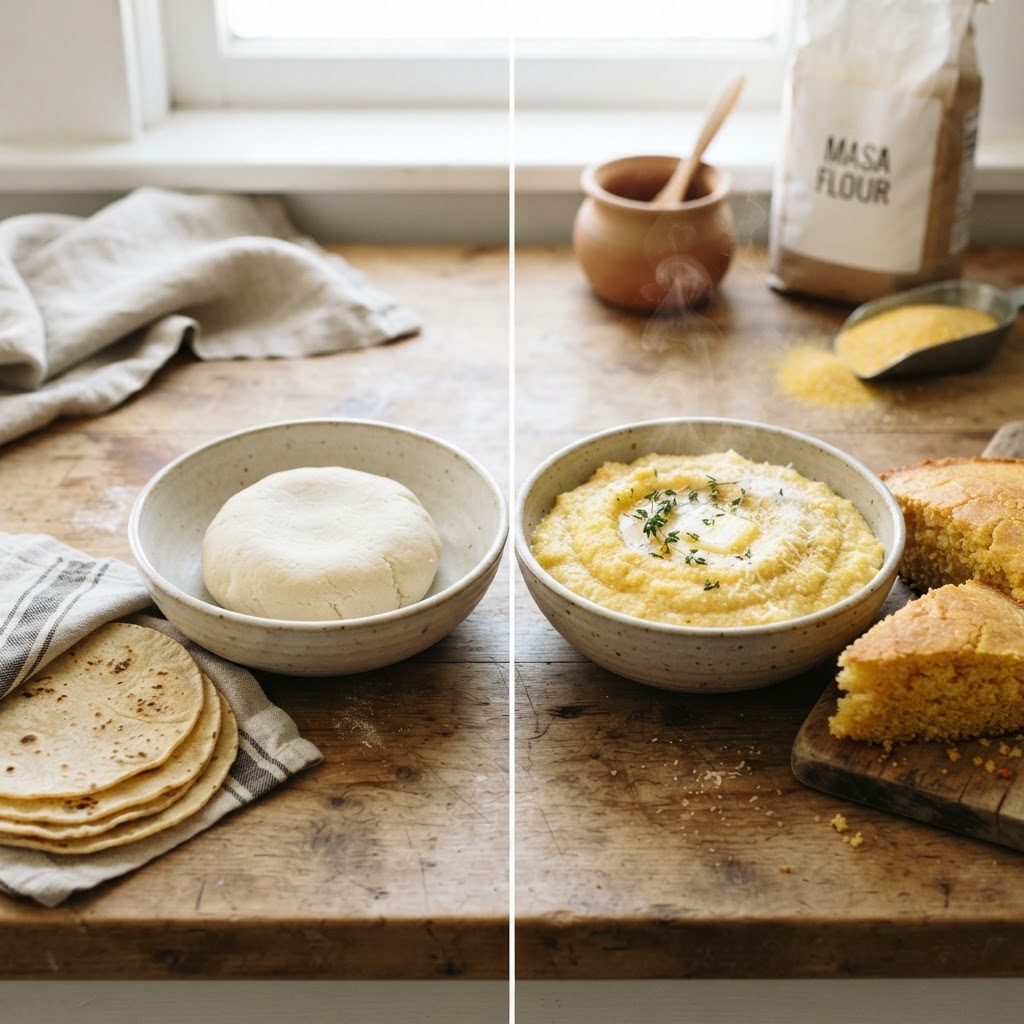
Quick reference
- Ingredient: Masa harina Fine, treated corn flour
- Hydration: Forms pliable dough Add water gradually
- Flavor: Toasty, savory, mineral Distinctive nixtamal flavor
- Best uses: Tortillas, tamales, sopes Recipes built around masa
- Cornmeal: Ground dried corn Granular; not a tortilla dough
The short answer
Masa harina and cornmeal both come from dried corn, but they are processed and ground for different jobs. Masa harina is made from nixtamalized corn—corn softened in an alkaline solution, then washed, dried, and milled. Mixed with water, it becomes cohesive, pliable masa. Cornmeal is simply ground dried corn, usually with a more noticeable grain. Because their structure, hydration, and flavor differ, swapping one for the other can change a recipe completely.
How processing changes the result
Nixtamalization gives masa harina its characteristic savory, toasted-corn aroma and helps the flour absorb water into a smooth dough. It is designed to be rehydrated and shaped. Cornmeal retains a straightforward sweet-corn flavor and comes in fine, medium, or coarse grinds. It hydrates into a batter, porridge, or crumbly mixture rather than the elastic dough needed for tortillas.
- Masa harina: fine and cohesive after mixing.
- Cornmeal: granular and more textured.
- “Corn flour” can mean different products by region; check the label.
Where each ingredient belongs
Use masa harina when the recipe depends on masa: corn tortillas, tamales, pupusas, sopes, gorditas, and many dumpling-style preparations. Use cornmeal for cornbread, polenta, spoon bread, muffins, hush puppies, and crunchy coatings. A recipe may call for a small amount of cornmeal to add texture, but that does not make it a substitute for masa harina in a tortilla dough.
Why a direct substitution fails
Replacing masa harina with cornmeal usually produces a dough that cracks, crumbles, or refuses to press thinly. Replacing cornmeal with masa harina can make cornbread or a coating unusually soft and dense, while removing the texture the recipe expects. Even within one category, grind matters: fine masa harina makes smoother dough, while coarse cornmeal needs more cooking time and liquid.
- For tortillas, use masa harina labeled for tortillas or tamales.
- For polenta, choose cornmeal or a product labeled polenta.
- Do not assume extra water will fix the wrong grind or process.
Can either one be substituted?
Only with a recipe-specific adjustment. Masa harina can sometimes replace a little cornmeal in a savory batter when a softer, more integrated corn flavor is welcome, but the liquid and texture will need testing. Cornmeal is not a reliable masa harina substitute for tortillas or tamales. If you need masa harina, look for it in the Latin foods aisle; white, yellow, and blue varieties generally work according to the recipe, though color and flavor will differ.