Marinade Safety: Raw-Meat Marinades, Basting, Boiling, and Reserved Sauce
A marinade that touched raw meat is safe as sauce only after a full boil; reserved marinade stays sauce-ready when kept separate from raw meat.
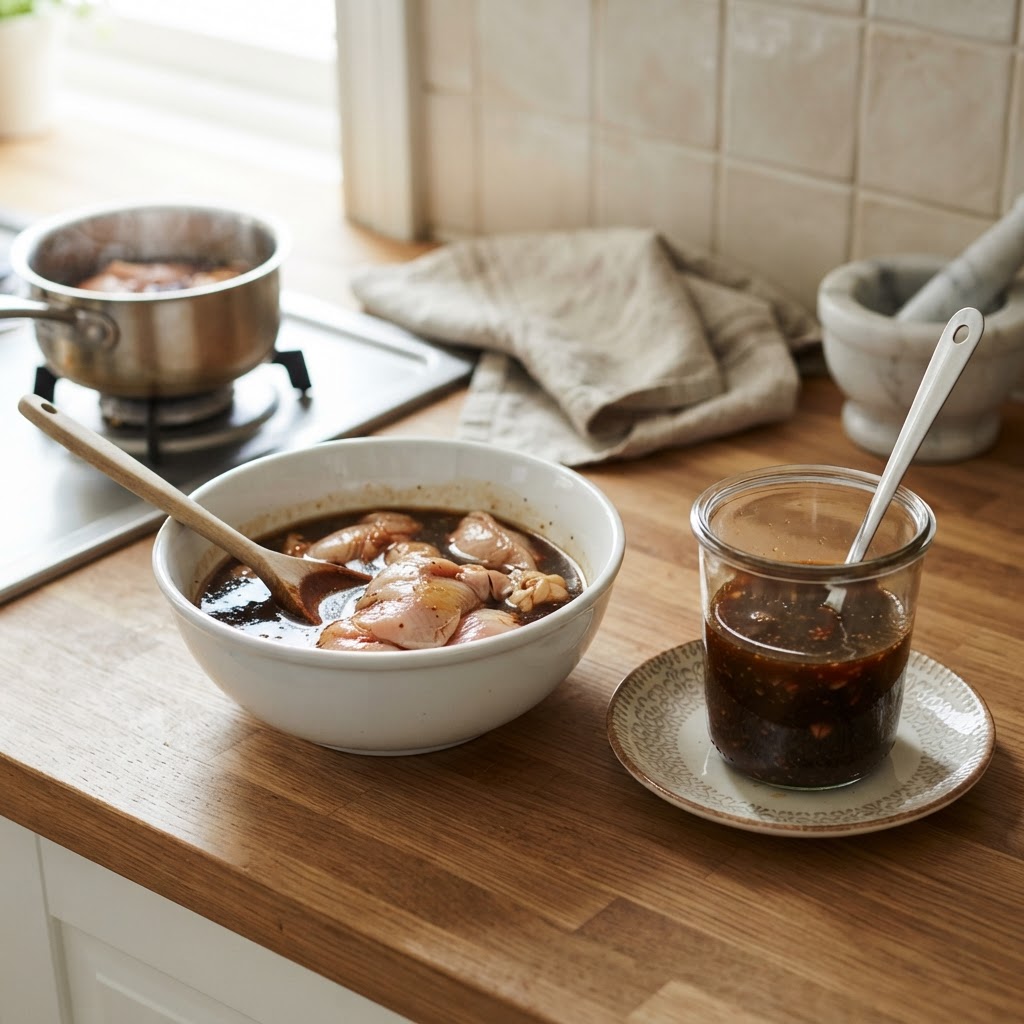
Quick reference
- Unused marinade: Use as sauce Keep separate from raw meat
- Used marinade: Boil fully Then use immediately or chill
- Basting during cooking: Use carefully Apply before the meat is done only if it will cook through
- Marinating time: Refrigerate Never marinate perishable food on the counter
The short answer
A marinade that touched raw meat should not be served as sauce unless you bring it to a full boil first. Boiling makes it suitable for serving, but the flavor and texture may change as it reduces. The easiest option is to set aside a clean portion before adding the meat and use that portion for dipping, drizzling, or finishing.
- Label or cover the reserved portion.
- Use a clean spoon for serving.
- Discard marinade left in the raw-meat container unless it is boiled.
How to reserve sauce safely
Before marinating, pour the amount you want for serving into a separate container. Refrigerate it promptly, covered, while the meat marinates. Do not pour unused sauce back into a container that held raw meat, and do not return a used spoon to the clean portion. This simple separation prevents cross-contamination and preserves a ready-to-use sauce.
- Reserve before the meat goes in.
- Keep raw and ready-to-eat utensils separate.
- Follow the recipe’s refrigeration directions for ingredients such as dairy or fresh herbs.
Using marinade for basting
Basting with the same marinade is acceptable while the meat cooks, provided the marinade will be heated thoroughly on the food. Apply it with a clean brush or spoon, and avoid using the brush on cooked portions unless it has been washed. For the cleanest process, use a reserved portion for basting near the end of cooking or make a separate basting sauce.
- Do not baste cooked food with untreated used marinade.
- Discard leftover basting liquid unless it is boiled.
- Keep the cooking surface and utensils clean.
How to boil a used marinade
Transfer the used marinade to a saucepan and bring it to a true, vigorous boil. Stir as needed so the entire liquid heats, then continue boiling briefly before reducing it to a sauce consistency. Use a clean pan, spoon, and serving container. If the marinade is thick, sugary, or likely to scorch, add a little water and watch it closely; boiling does not guarantee a pleasant sauce if it burns.
- Never taste it before boiling.
- Do not rely on reheating until steaming.
- Discard it if it has been left unrefrigerated too long.
Refrigeration, thawing, and final checks
Keep meat marinating in the refrigerator, never on the counter. Thaw frozen meat in the refrigerator, cold water, or the microwave—not at room temperature. Cook meat to a safe internal temperature: poultry and ground poultry to 165°F/74°C; ground beef, pork, lamb, and veal to 160°F/71°C; whole cuts of beef, pork, lamb, and veal to 145°F/63°C with a 3-minute rest; and fish to 145°F/63°C. Refrigerate cooked food within 2 hours, or within 1 hour when the temperature is above 90°F/32°C. Use most cooked leftovers within 3–4 days and reheat them to 165°F/74°C.
- Use a thermometer in the thickest part.
- When in doubt, discard sauce that was mishandled.
- Keep sauce chilled until serving.