Korean Pantry Beyond Gochujang: Gochugaru, Doenjang, Sesame Oil, and Fermented Staples
Beyond gochujang, build Korean flavor with smoky gochugaru, savory doenjang, fragrant sesame oil, and fermented staples for soups, marinades, and banchan.
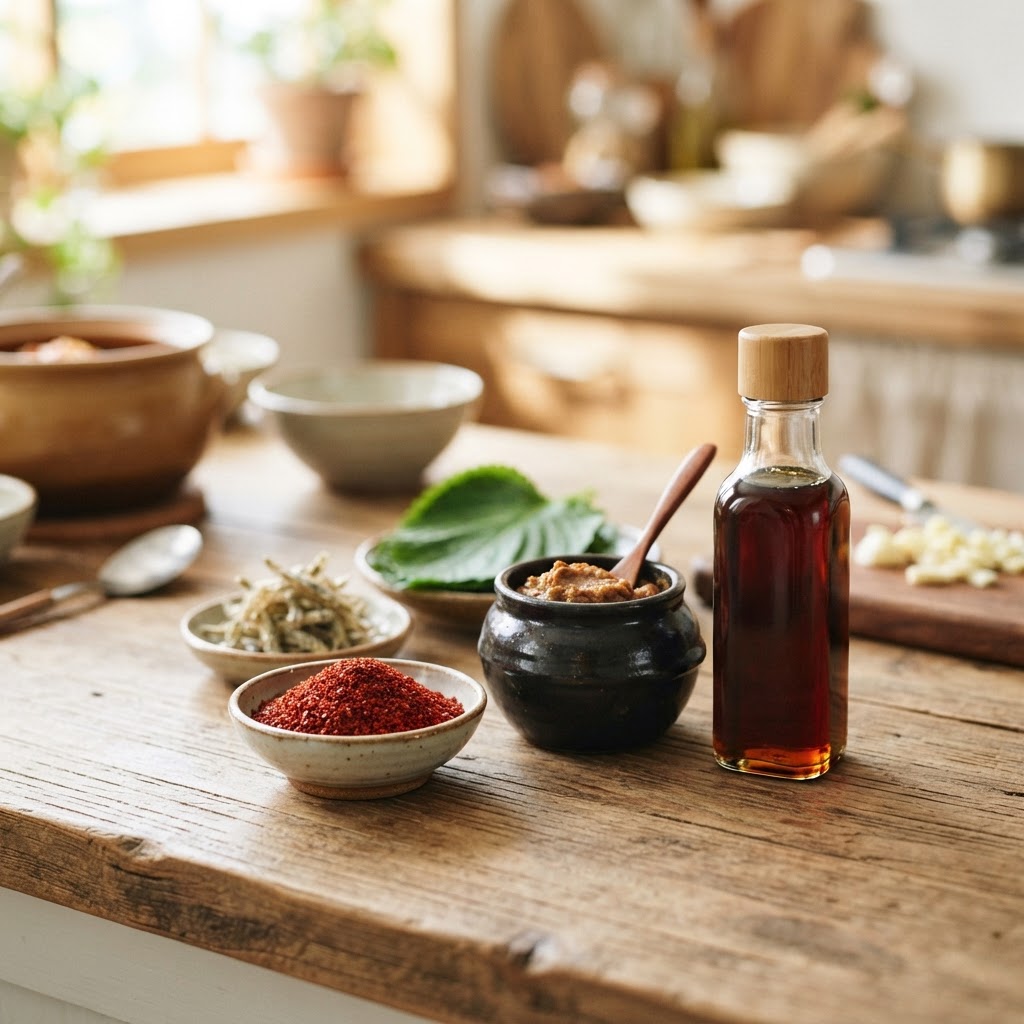
Quick reference
- Gochugaru: Chili flakes or powder Heat, color, gentle fruitiness
- Doenjang: Fermented soybean paste Deep savory flavor
- Sesame oil: Toasted finishing oil Nutty aroma
- Ganjang: Korean soy sauce Salt and umami
- Rice vinegar: Light acidic seasoning Balances rich dishes
The short answer: start with four staples
Useful Korean pantry ingredients beyond gochujang are gochugaru, doenjang, toasted sesame oil, and Korean soy sauce. Together they cover heat, savoriness, aroma, and salt. Add rice vinegar, toasted sesame seeds, dried anchovies or kelp, and toasted seaweed as your cooking expands. You do not need every ingredient at once: choose one paste, one chili, and one finishing seasoning to make soups, marinades, stir-fries, and vegetable sides taste distinctly Korean.
Gochugaru brings adjustable heat
Gochugaru is Korean red pepper, sold as coarse flakes or a finer powder. Flakes work well in kimchi-style vegetables, cucumber salad, braises, and spice pastes; powder blends smoothly into sauces and soups. Its flavor is typically warmer and fruitier than ordinary crushed red pepper. Start with a small amount, then increase after tasting. Brands vary in heat, so treat the first batch as a calibration rather than relying on a fixed measure.
- Use flakes for texture and visible color.
- Use powder for smooth marinades and broths.
- Store airtight away from heat and light.
Doenjang supplies depth, not just salt
Doenjang is a fermented soybean paste with a dense, earthy, savory flavor. Stir it into doenjang jjigae, whisk it with garlic for a vegetable dip, or add a small spoonful to braises and mushroom sauces. It is more assertive and rustic than miso, though miso can substitute in a pinch. Dissolve it in warm broth or water before adding it to a pot so the paste distributes evenly and does not form salty pockets.
Sesame oil is usually a finishing move
Toasted sesame oil is prized for aroma, so add it near the end of cooking or drizzle it over rice, noodles, dumplings, soups, and seasoned greens. A little goes a long way. For high-heat frying, use a neutral oil and finish with sesame oil; prolonged high heat can flatten its fragrance. Toasted sesame seeds add crunch and reinforce the same flavor without making a dish oily.
Build balance with fermented and salty staples
Ganjang, or Korean soy sauce, seasons broths, dipping sauces, and marinades; its varieties differ, so taste before adding extra salt. Rice vinegar or maesil syrup can sharpen or soften a sauce, while minced garlic and scallions provide freshness. Dried kelp and anchovies create a quick stock base, and kimchi adds acidity, spice, and fermented complexity. For a practical starting point, browse QuickDinner’s gochujang guide, then explore the site’s Korean-tagged recipes for ways to use these staples across everyday meals.
A simple pantry strategy
Buy gochugaru, doenjang, toasted sesame oil, Korean soy sauce, and rice vinegar first. Keep pastes and sauces tightly sealed according to their package directions, and refrigerate opened products when the label recommends it. Begin with familiar foods: toss greens with soy sauce, garlic, sesame oil, and seeds; enrich soup with doenjang; or season roasted vegetables with gochugaru. Once those combinations feel natural, add kimchi, dried seafood, and specialty syrups.