Kitchen Measurement Conversion Chart
Use this kitchen measurement conversion chart to move between teaspoons, tablespoons, cups, pints, quarts, gallons, and common weight measures.
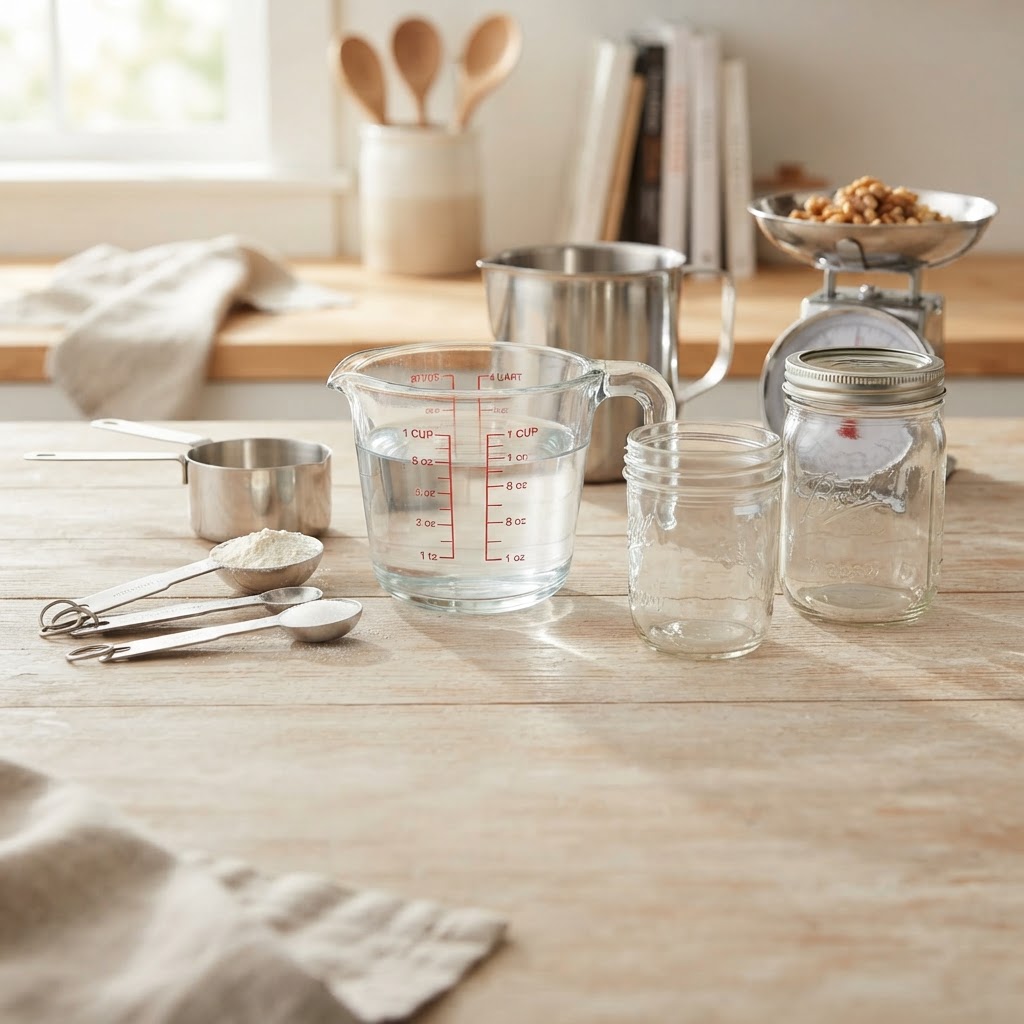
Quick reference
- Teaspoons: 3 tsp = 1 tbsp Small-volume measure
- Tablespoons: 16 tbsp = 1 cup US volume measure
- Cups and pints: 2 cups = 1 pint US volume measure
- Pints and quarts: 2 pints = 1 quart US volume measure
- Quarts and gallons: 4 quarts = 1 gallon US volume measure
Kitchen measurement conversions at a glance
For most home recipes, these US volume conversions cover the measurements you use most often. A teaspoon is smaller than a tablespoon, while cups, pints, quarts, and gallons scale up for larger amounts. Keep this chart near your prep area when doubling a recipe or working without a full set of measuring tools.
- 3 teaspoons = 1 tablespoon
- 16 tablespoons = 1 cup
- 2 cups = 1 pint
Core volume conversion chart
Use the following sequence to convert common recipe amounts without relying on memory. Moving to a larger unit means dividing; moving to a smaller unit means multiplying. For example, 3 cups equals 1½ pints, and ½ cup equals 8 tablespoons.
- 2 pints = 1 quart
- 4 quarts = 1 gallon
- 1 cup = 8 fluid ounces
Useful smaller conversions
Small quantities are easiest to measure with spoons. These equivalents are especially useful for spices, extracts, baking powder, sauces, and other concentrated ingredients. When a recipe calls for a fraction of a tablespoon, measuring in teaspoons can be more precise.
- 1 tablespoon = 3 teaspoons
- ½ tablespoon = 1½ teaspoons
- ¼ cup = 4 tablespoons
Measuring dry and liquid ingredients
Use liquid measuring cups for water, milk, oil, and other pourable ingredients; place the cup on a level surface and read at eye level. Use dry measuring cups for flour, sugar, rice, and similar ingredients. For flour, spoon it into the cup and level the top rather than packing it down unless the recipe specifically says to.
- Level dry measures with a straight edge.
- Read liquid measures at eye level.
- Use a scale when the recipe gives weights.
Volume versus weight
Volume and weight are not interchangeable across ingredients. A cup of flour does not weigh the same as a cup of sugar, butter, or chopped nuts, and packing changes the result for some foods. Weight conversions therefore depend on the ingredient and, sometimes, how it is prepared. Follow the recipe’s stated unit whenever possible; if it lists grams, use a kitchen scale.
- Ingredient density affects weight.
- Packing can change a cup’s weight.
- Do not convert ounces to cups without an ingredient-specific reference.