Jasmine Rice Water Ratio and Stovetop Method
Use a lower-water jasmine rice ratio, a tight lid, and a gentle simmer for tender, separate grains on the stovetop every time.
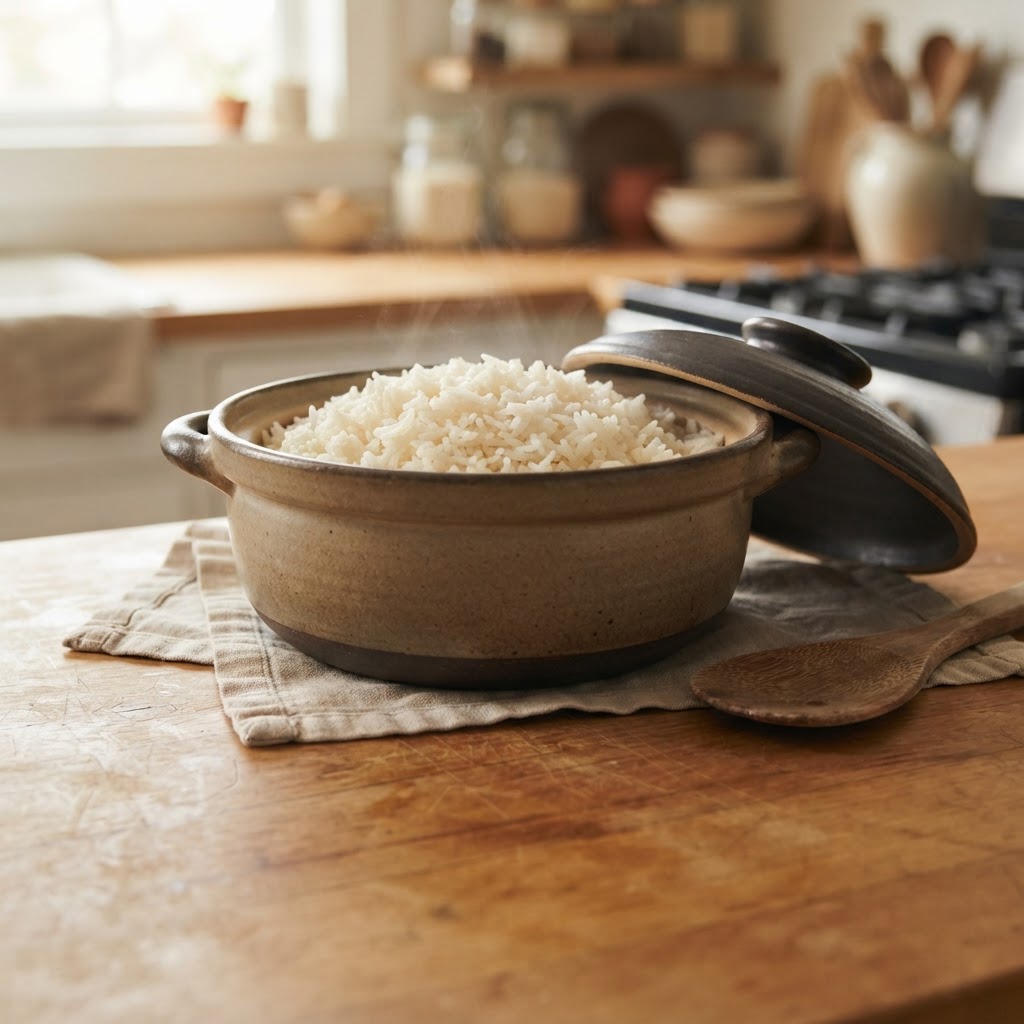
Quick reference
- Rice: 1 cup jasmine rice Uncooked
- Water: 1 1/4 cups Lower than generic long-grain ratios
- Simmer: 15 minutes Keep the lid on
- Rest: 10 minutes Covered, off heat
The jasmine rice water ratio
For 1 cup of jasmine rice, use 1 1/4 cups water. This lower-water approach works better than the often-used 1:2 ratio for generic long-grain rice, which can leave jasmine rice soft or wet. This amount suits standard white jasmine rice cooked in a covered saucepan. Very old rice, unusually wide pans, or strong burners may need a small adjustment, so use the texture of your first batch as a guide.
Rinse the rice first
Put the rice in a fine-mesh strainer or bowl and rinse under cool water until the water looks noticeably clearer. Drain thoroughly; excess rinse water changes the intended ratio. Rinsing removes loose surface starch and helps the cooked grains stay defined. You do not need perfectly clear water, and avoid soaking unless your package specifically calls for it.
Stovetop method
Combine the rinsed, well-drained rice, water, and a pinch of salt in a saucepan with a tight-fitting lid. Bring it to a full boil over medium-high heat. Immediately reduce the heat to the lowest setting that maintains a gentle simmer, then cover. Cook for 15 minutes without lifting the lid. Avoid stirring: it can disturb the cooking and make the grains gummy.
- Use a heavy saucepan if available.
- Keep the lid closed during simmering.
- Do not increase the heat to speed cooking.
Rest before fluffing
Turn off the heat and leave the saucepan covered for 10 minutes. This covered rest lets the remaining moisture distribute through the rice without additional active cooking. After resting, remove the lid and fluff gently with a fork or rice paddle. If the center is still firm, replace the lid and rest for 5 more minutes rather than stirring or adding water immediately.
Troubleshooting the next batch
If the rice is wet, reduce the water by 1 to 2 tablespoons next time and confirm that the rice was drained well after rinsing. If it is firm or dry, add 1 to 2 tablespoons more water, check that the lid seals tightly, and make sure the burner is maintaining a gentle simmer. Pan size, lid fit, brand, and altitude can all affect the result.