Indian Tadka Explained: How Tempering Spices Changes a Dish
Tadka is whole spices bloomed in hot fat, then added at the start or finish to give lentils, vegetables, rice, and yogurt dishes aroma and depth.
Quick reference
- Spice: Best timing Watch for
- Cumin seeds: First Fragrance and crackle
- Mustard seeds: First Popping
- Curry leaves: After seeds Splattering
- Ground spices: Last Burn quickly
What tadka does
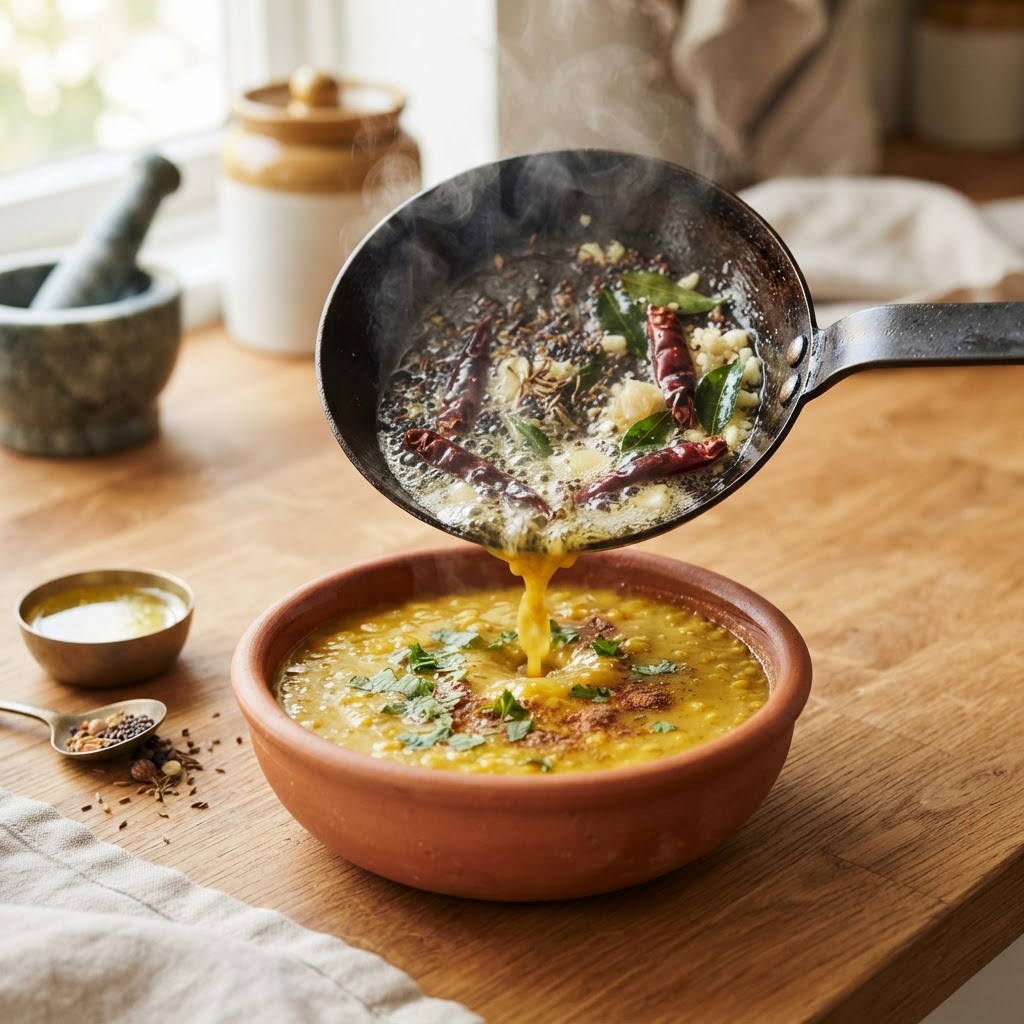
Tadka, also called tempering, means briefly frying spices and aromatics in hot oil, ghee, or another cooking fat. The fat carries their aroma through the dish, while heat changes raw, sharp flavors into toasted, rounded ones. The seasoned fat can begin a dish as its flavor base or be poured over a finished dish as a fragrant topping. It is a small step with a noticeable effect on aroma, texture, and balance.
Build the tempering in order
Use a small skillet or saucepan so the spices stay in close contact with the fat. Heat the fat over medium heat, then add whole spices according to how long they need. Hard seeds generally go first; delicate leaves, dried chilies, and ground spices follow. Add minced garlic, ginger, or shallot after the seeds have started to release their aroma, and stir briefly so they color without scorching.
- Whole seeds: cumin, mustard, fennel, or fenugreek
- Then: dried chilies, curry leaves, or fresh aromatics
- Last: turmeric, chili powder, or other ground spices
Control the heat
The fat should be hot enough to make seeds sizzle quickly, but not so hot that spices darken immediately. If mustard seeds do not pop or cumin does not crackle within a few seconds, raise the heat slightly. If smoke appears, move the pan off the burner and cool it briefly. Keep a lid nearby for popping seeds and splattering curry leaves. Add the tempering to the dish promptly once the aromatics smell toasted.
Starting versus finishing with tadka
A starting tadka becomes part of the dish’s foundation. Bloom spices in the cooking fat, then add onions, vegetables, lentils, or rice so their flavor spreads throughout. A finishing tadka stays brighter and more distinct: pour it over cooked dal, beans, rice, or yogurt just before serving. For a layered result, use a mild tempering at the start and a smaller, fresh one at the end.
Where to use it
For lentils and beans, cumin, garlic, dried chilies, or asafoetida can make a plain base more aromatic. Vegetables welcome mustard seeds, curry leaves, or coriander seeds at the start of cooking. Rice benefits from whole spices fried before the grains are added. For yogurt dishes such as raita or kadhi, cool the tempering for a moment and pour it over the surface so the yogurt stays smooth and the aroma remains vivid.
- Dal and beans: garlic, cumin, dried chili
- Vegetables and rice: mustard, curry leaves, whole spices
- Yogurt dishes: cumin, chili, curry leaves
Common mistakes to avoid
Using too much fat can make the dish feel heavy, while too little prevents even blooming. Do not add ground spices to very hot oil for long; they can turn bitter before they become fragrant. Wet ingredients may splatter, so add them carefully and keep the pan stable. Taste the finished dish before adding more salt or chili: a well-made tadka should sharpen the main ingredients, not cover them.