How to Use Suya Spice Beyond Skewers
Use suya spice on chicken, vegetables, potatoes, rice bowls, and sauces with simple ratios, cooking ideas, and serving tips beyond classic skewers.
Quick reference
- Chicken: 1–2 tsp per pound Rub with oil before cooking
- Vegetables: 1 tsp per pound Add before roasting
- Potatoes: 1–2 tsp per pound Coat with oil evenly
- Rice bowls: ¼–½ tsp per serving Sprinkle at the finish
- Sauce: ½–1 tsp per cup Stir into creamy or tomato bases
What suya spice brings to a dish
Suya spice is associated with West African street food, especially Nigerian-style suya: seasoned meat cooked over high heat and served with sliced onions, tomatoes, and sometimes extra ground peanuts. Blends vary, but they often combine ground peanuts, ginger, paprika or cayenne, garlic, and other warm spices. Because the mix is nutty, savory, smoky, and spicy, it works as a finishing seasoning as well as a meat rub. Check the label before serving anyone with a peanut allergy.
Coat chicken before roasting or grilling
For boneless chicken thighs, breasts, wings, or drumsticks, mix suya spice with a little neutral oil and coat the meat evenly. Rest it for 20 to 30 minutes if convenient, then roast, grill, or pan-cook until done. Chicken should reach 165°F / 74°C in the thickest part. For a milder result, combine the seasoning with yogurt or mayonnaise; the mixture clings well and spreads the heat across each piece.
- Use thighs for a juicier weeknight option.
- Add lemon or lime after cooking, not enough to hide the spice blend.
- Reserve a clean portion of seasoning for sprinkling at the table.
Roast vegetables and potatoes
Suya seasoning gives roasted vegetables a crisp, savory edge. Toss cauliflower, carrots, mushrooms, squash, or broccoli with oil and a modest amount of spice, then roast in a single layer until browned and tender. For potatoes, coat wedges or cubes with oil first, then add the blend so it sticks evenly. Start lightly: some commercial mixes are much saltier or hotter than others. Finish with fresh herbs, sliced scallions, or a squeeze of citrus.
Build a suya rice bowl
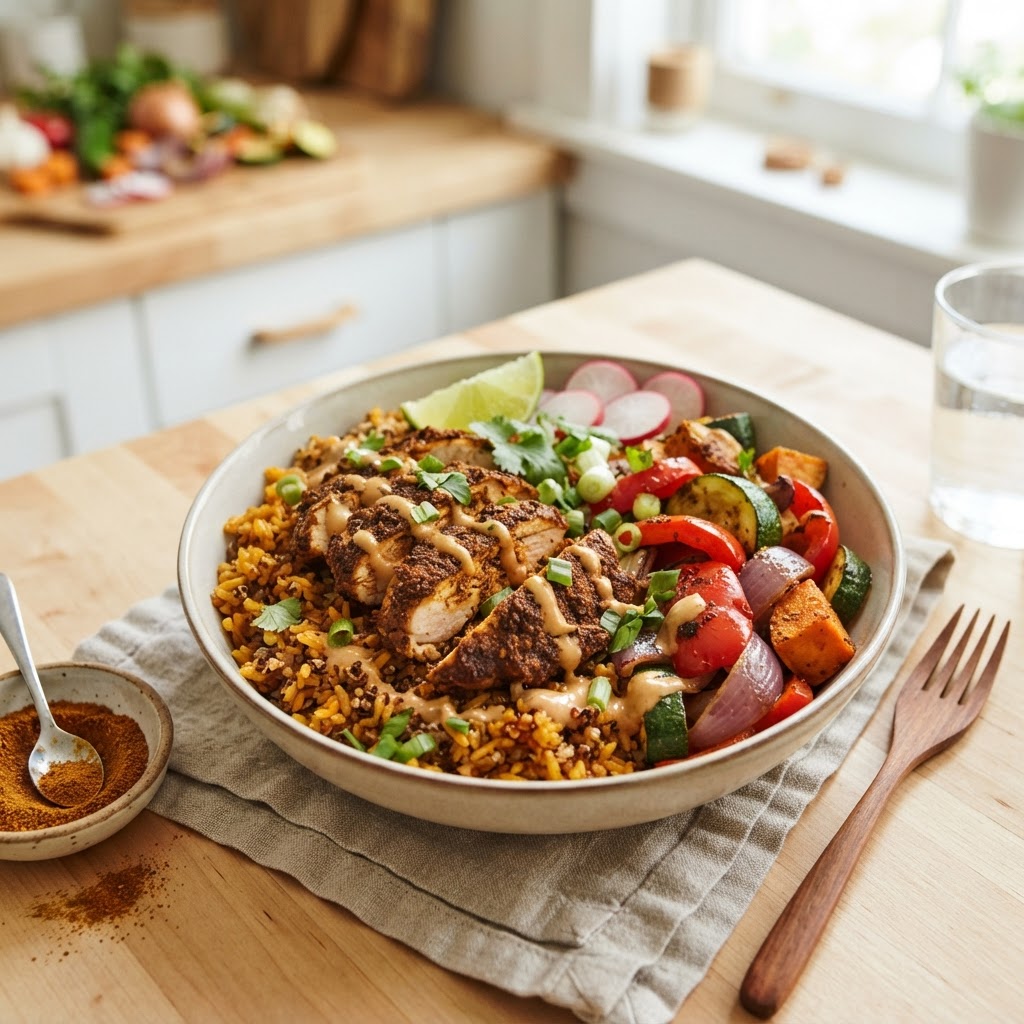
Use suya spice to season the components of a rice bowl rather than treating it only as a meat rub. Stir a pinch into warm rice, dust it over black beans or chickpeas, or toss it with sautéed greens. Add roasted chicken or vegetables, cucumber, tomato, and pickled onions for contrast. A spoonful of plain yogurt, tahini, or a simple tomato relish can soften the heat while keeping the seasoning’s roasted, aromatic character.
Turn it into a sauce or finishing sprinkle
For a quick sauce, whisk ½ to 1 teaspoon suya spice into a cup of mayonnaise, yogurt, tahini, or tomato sauce. Add water a teaspoon at a time if it needs loosening, then balance with citrus or vinegar. Use it with grilled chicken, roasted potatoes, sandwiches, or grain bowls. You can also sprinkle a small amount over popcorn, fried eggs, avocado toast, or sautéed shrimp just before serving. For more ideas, browse QuickDinner’s suya recipe cluster and adapt the same seasoning across different formats.
A few practical seasoning rules
Treat suya spice like a concentrated finishing blend. Start with less than you think you need, especially when the mix contains salt, cayenne, or ground peanuts. Add it before cooking when you want the spices to toast onto an ingredient; add it afterward when you want a brighter, more pronounced aroma. Store the blend sealed in a cool, dry cupboard and use the package date as a guide for freshness.
- Taste the blend before seasoning a whole dish.
- Avoid adding extra salt until the food is cooked.
- Keep sauces and cooked leftovers refrigerated promptly.