How to Use Late-Season Tomatoes Before They’re Gone
Use soft, ripe late-season tomatoes in roasted dishes, sauces, soups, freezer-ready components, and easy meals before the harvest ends.
Quick reference
- Best for: Soft, ripe tomatoes Trim bruises; discard moldy fruit
- Roasting: 400°F–425°F Until collapsed and browned
- Sauce: Simmer 30–60 minutes Cook until thick
- Freezing: Whole or chopped Cool first; label portions
Start with a quick sort
Use tomatoes with tender spots, wrinkles, or small splits promptly. Cut away minor bruises and blemishes, then use the remaining flesh in cooked dishes. Tomatoes with mold, a fermented smell, or extensive spoilage should be discarded. Keep the best-looking fruit for fresh meals, and direct the softest tomatoes to roasting, sauce, soup, or freezing.
- Rinse just before using and dry well.
- Remove stems and tough cores.
- Work in batches if your counter is full.
Roast them for concentrated flavor
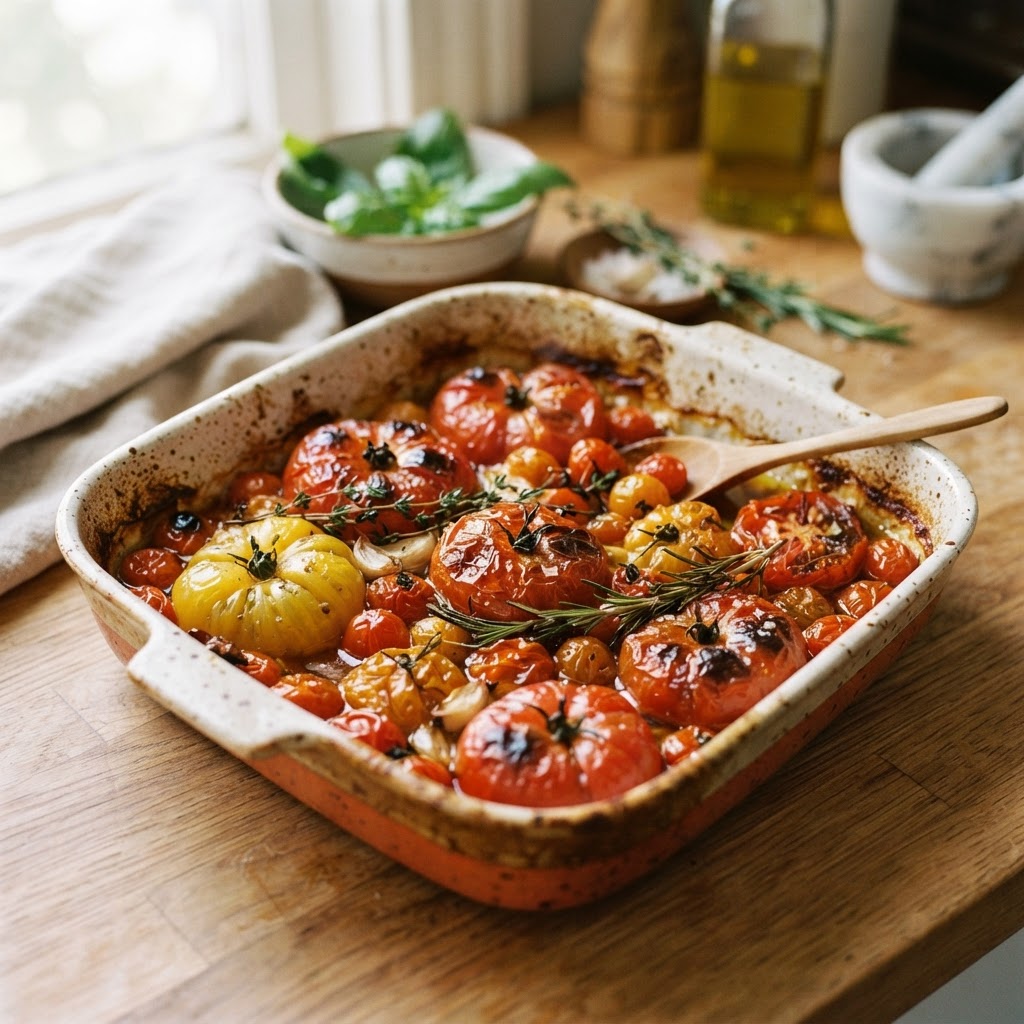
Halve or quarter tomatoes, toss with olive oil, salt, and pepper, and arrange them cut-side up on a sheet pan. Roast at 400°F to 425°F until collapsed, browned at the edges, and no longer watery; the exact time depends on size and juiciness. Add garlic, onion, herbs, or chili for a ready-to-use base. Spoon roasted tomatoes over toast, grains, pasta, or chicken.
- Leave space between pieces so they roast instead of steam.
- Save the pan juices for sauces or soups.
- Blend smooth or keep chunky.
Turn the softest tomatoes into sauce or soup
For a quick tomato sauce, cook chopped tomatoes with olive oil, onion, garlic, and herbs until thick enough to coat a spoon. Peeling is optional; blend the finished sauce if you prefer a smoother texture. For soup, add stock and roasted or sautéed tomatoes, then simmer until the flavors come together. Finish with cream, beans, pasta, or toasted bread as desired. Browse QuickDinner’s tomato recipes for more combinations.
- Taste near the end and adjust salt or acidity.
- Use a wide pan to reduce liquid faster.
- Freeze extra sauce in meal-sized portions.
Freeze components, not just whole tomatoes
Freeze ripe tomatoes whole, chopped, or roasted on a parchment-lined tray until firm, then transfer them to labeled freezer bags or containers. They will soften after thawing, so reserve them for sauces, soups, stews, and braises rather than salads. You can also freeze tomato paste in tablespoon-sized portions or freeze cooled roasted tomato purée for fast weeknight cooking.
- Remove excess air from bags.
- Label with the date and portion size.
- Thaw in the refrigerator or add frozen tomatoes directly to a simmering dish.
Build easy meals around them
Late-season tomatoes are ideal for dishes where softness is an advantage: shakshuka, tomato-braised beans, ratatouille, pasta, curry, pizza topping, and baked fish. Combine roasted tomatoes with white beans and greens, or simmer fresh tomatoes with ground meat for a quick sauce. For a simple dinner, toss cooked pasta with tomato, garlic, olive oil, herbs, and grated cheese. Pair these ideas with QuickDinner tomato recipes and ingredient pages for flexible substitutions.
- Use fresh tomatoes first; frozen portions can wait.
- Add delicate herbs after cooking.
- Keep a batch of sauce ready for fast meals.