How to Use Harissa in Weeknight Cooking
Use harissa paste or dry spice blends to season chicken, vegetables, beans, grains and yogurt sauces with adaptable heat and bold North African flavor.
Quick reference
- Form: Harissa paste Chili heat, acidity and moisture
- Form: Dry harissa blend Toasty spice; add oil or liquid
- Best starting amount: 1 teaspoon per serving Increase after tasting
- Cooling partner: Yogurt, lemon or olive oil Balances heat
Choose the right harissa
Harissa paste is a thick chili condiment usually seasoned with spices, garlic and oil. It brings heat, salt and moisture, so it works well as a marinade, pan sauce starter or finishing spoonful. Dry harissa blends are powdered spice mixes: they are less saucy and may vary widely in salt and heat. Bloom a blend briefly in olive oil, or stir it into broth, tomato sauce or yogurt before using.
Start with chicken and vegetables
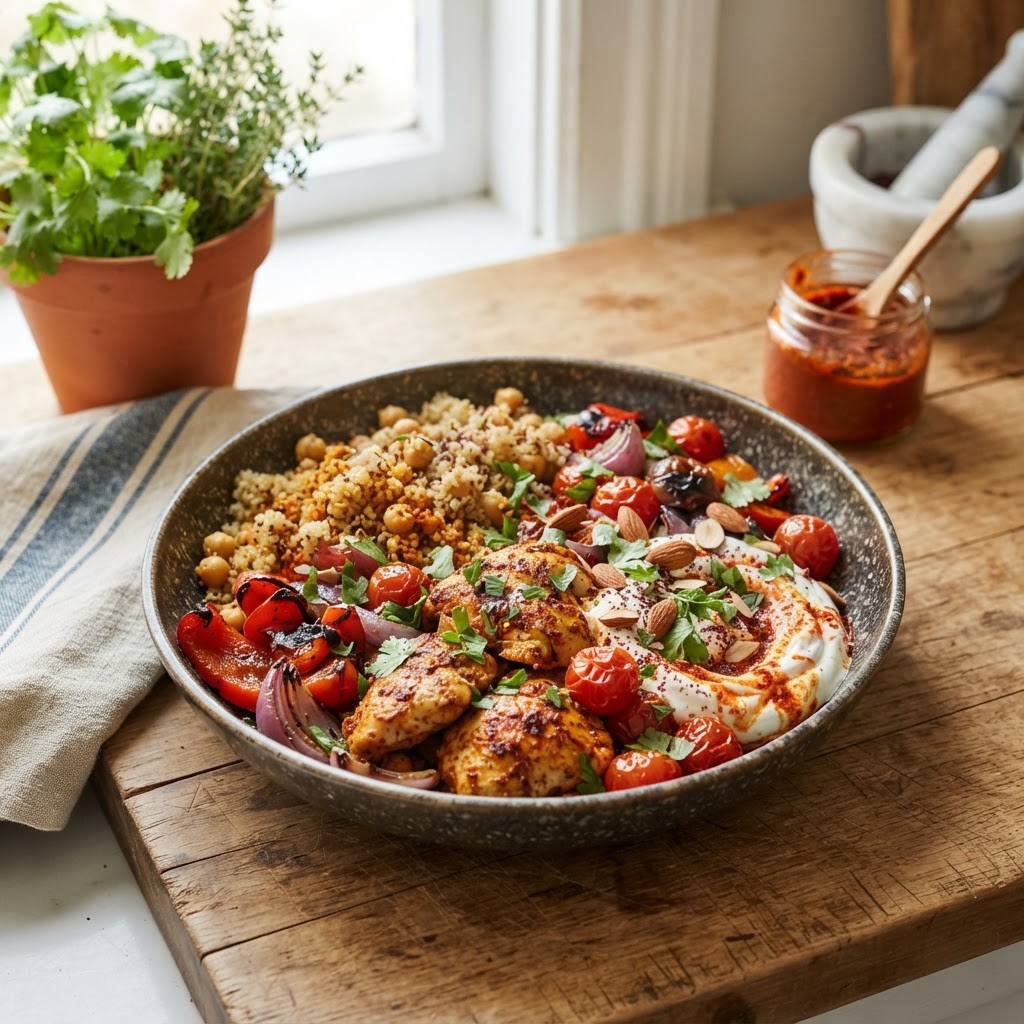
For quick harissa chicken, rub boneless thighs or breasts with paste, olive oil and a squeeze of lemon, then roast or pan-cook until the thickest part reaches 165°F / 74°C. The same mixture coats cauliflower, carrots, squash, onions or potatoes before roasting. For a fast skillet meal, sauté vegetables first, add a small spoonful of harissa with a splash of water, and toss until glossy.
- Use paste directly on chicken or sturdy vegetables.
- Add delicate greens near the end so they stay fresh.
- Taste before adding salt; many pastes are already seasoned.
Build beans and grains into dinner
Harissa gives canned chickpeas, white beans and lentils a full-flavored base in minutes. Sauté it with olive oil and garlic, add beans and a little stock or tomato, then simmer until saucy. Fold the mixture through couscous, rice, bulgur or quinoa, or spoon it over a grain bowl with roasted vegetables. A dry blend can season the cooking liquid, but check its salt level first.
Make a cooling yogurt sauce
Stir harissa into plain yogurt for a quick sauce that works with roasted vegetables, chicken, beans and grains. Start with one teaspoon harissa per half cup yogurt, then add lemon juice and a pinch of salt. For a looser drizzle, add olive oil or water. If the harissa is especially hot, increase the yogurt rather than adding sugar; the sauce should still taste savory and bright.
A simple weeknight formula
Think of harissa as a flavor concentrate, not a fixed recipe ingredient. Combine one protein or bean, one vegetable and one starch, then use harissa in either the cooking base or the finishing sauce. Try QuickDinner’s North African-inspired harissa chicken with couscous, or pair the paste with Mediterranean-style roasted vegetables, chickpeas and yogurt. Serve lemon wedges at the table so everyone can adjust the balance.
- Mild meal: use less harissa and more olive oil or yogurt.
- Bolder meal: add harissa at the end for a sharper chili flavor.
- Keep a dry blend for rubs and paste for sauces.