How to Use a Meat Thermometer Correctly
Use a meat thermometer correctly by checking the thickest part, avoiding bone and fat, and cleaning the probe between foods.
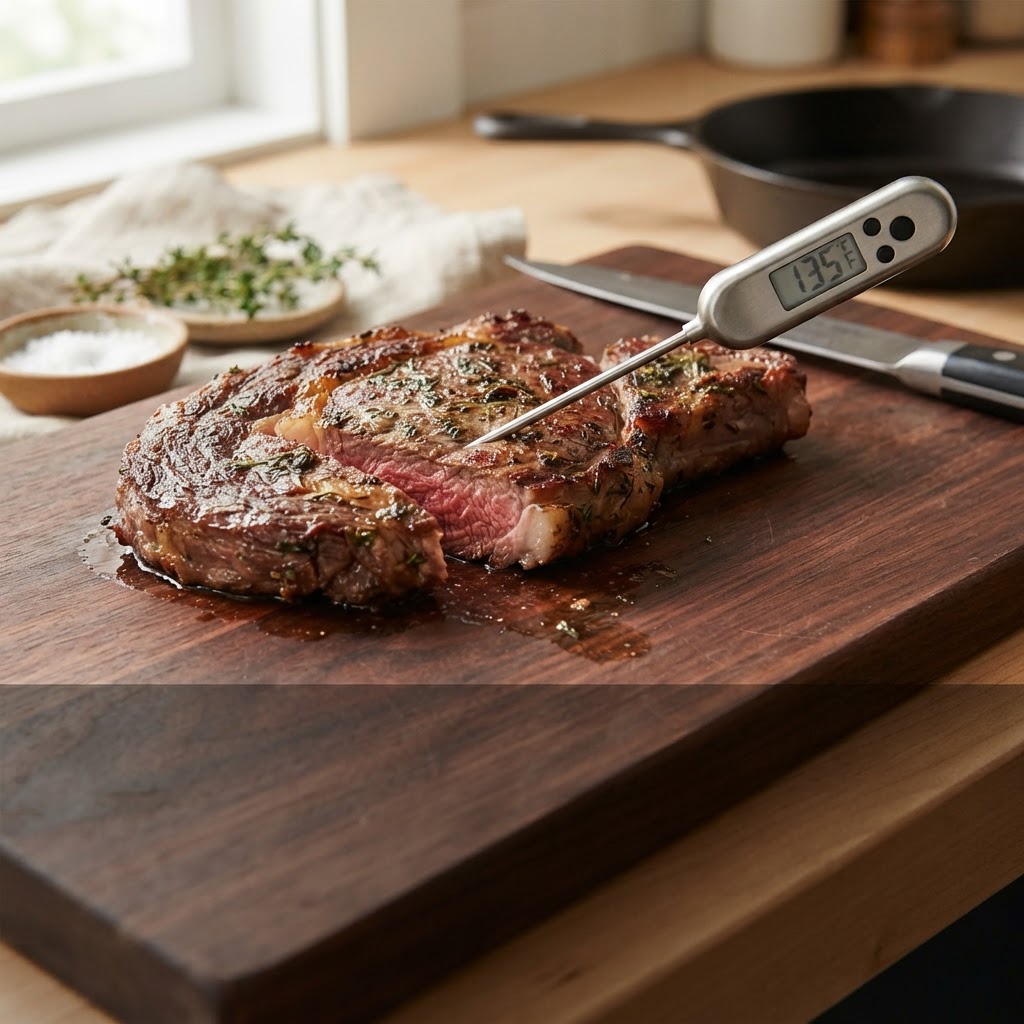
Quick reference
- Food: Target temperature Check the thickest area
- Poultry: 165°F / 74°C Whole cuts and ground poultry
- Ground beef, pork, lamb, veal: 160°F / 71°C Check more than one spot
- Whole beef, pork, lamb, veal: 145°F / 63°C Rest 3 minutes
- Fish: 145°F / 63°C Check the thickest portion
1. Start with a clean, working thermometer
For reliable readings, use a digital thermometer with a clean probe and enough battery power. Turn it on before opening the oven, grill, or pan so you can check quickly. If the display seems inconsistent, compare it with the manufacturer’s instructions or test it according to the model’s calibration method. Keep the probe away from hot cookware surfaces, which can distort the reading.
- Wash and dry the probe before use.
- Have a clean plate ready for cooked food.
- Do not rely on color or cooking time alone.
2. Insert it into the right place
Insert the probe into the thickest part of the food, aiming for the center. Avoid touching bone, gristle, or large pockets of fat because these areas can give a misleading reading. For a roast or thick chicken breast, insert from the side when possible so the tip reaches the middle. With irregularly shaped food, choose the section that appears slowest to cook.
- Thickest part: center of the food.
- Avoid: bone, fat, gristle, and the pan.
- Keep the tip fully surrounded by food.
3. Use side-entry for burgers and thin cuts
For burgers, chops, fish fillets, and other thin foods, push the thermometer in horizontally from the side. The tip should reach the center rather than pass through the food. A top-down insertion can place the sensor too close to the surface and produce a reading that is higher than the interior. Check the thickest burger or cut first, then verify others as needed.
- Insert parallel to the cooking surface.
- Check the center, not just the browned exterior.
- Use multiple spots when pieces vary in thickness.
4. Check multiple spots and use safe temperatures
Take readings in several locations, especially in a roast, casserole, batch of burgers, or mixed-size pieces. The lowest reading is the one that matters. Remove food only when it reaches the appropriate target, then follow any required rest time. Cooking equipment, food thickness, and thermometer design affect timing, so temperature is a more dependable guide than a fixed number of minutes.
- Poultry: 165°F / 74°C.
- Ground beef, pork, lamb, and veal: 160°F / 71°C.
- Whole cuts of beef, pork, lamb, and veal: 145°F / 63°C, then rest 3 minutes.
5. Clean the probe between foods
Clean the thermometer probe every time it moves from raw food to cooked food or from one raw ingredient to another. Wash it with hot, soapy water, rinse, and dry it, following the manufacturer’s care instructions. Do not immerse the display or cable unless the thermometer is specifically designed for it. Store the thermometer clean and dry so it is ready for the next meal.
- Clean between separate foods and batches.
- Sanitize according to the product instructions when appropriate.
- Never place a wet probe into its storage case.